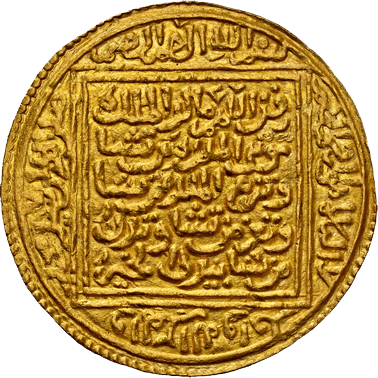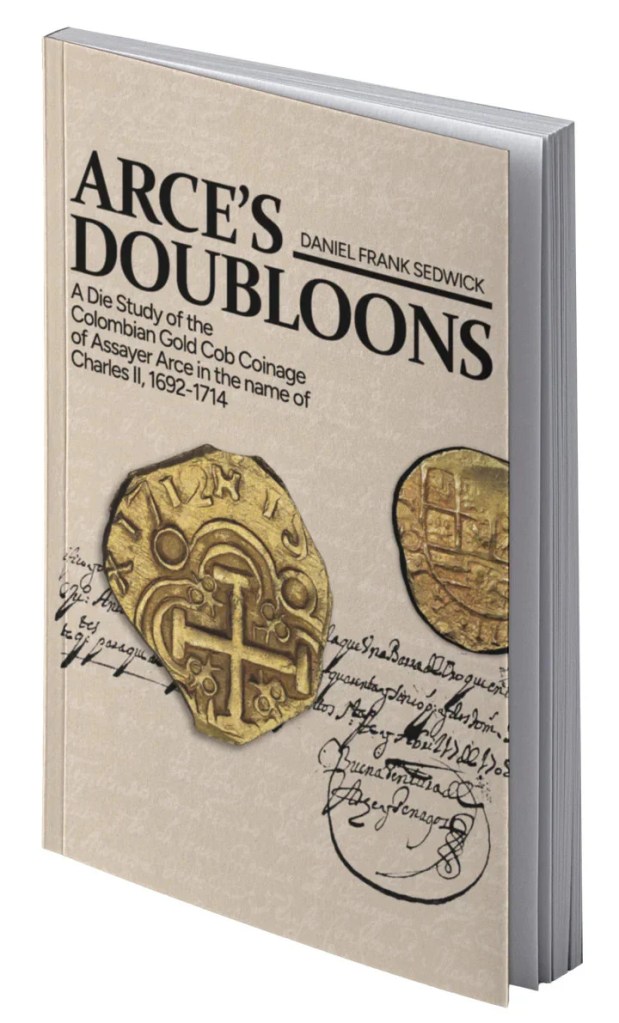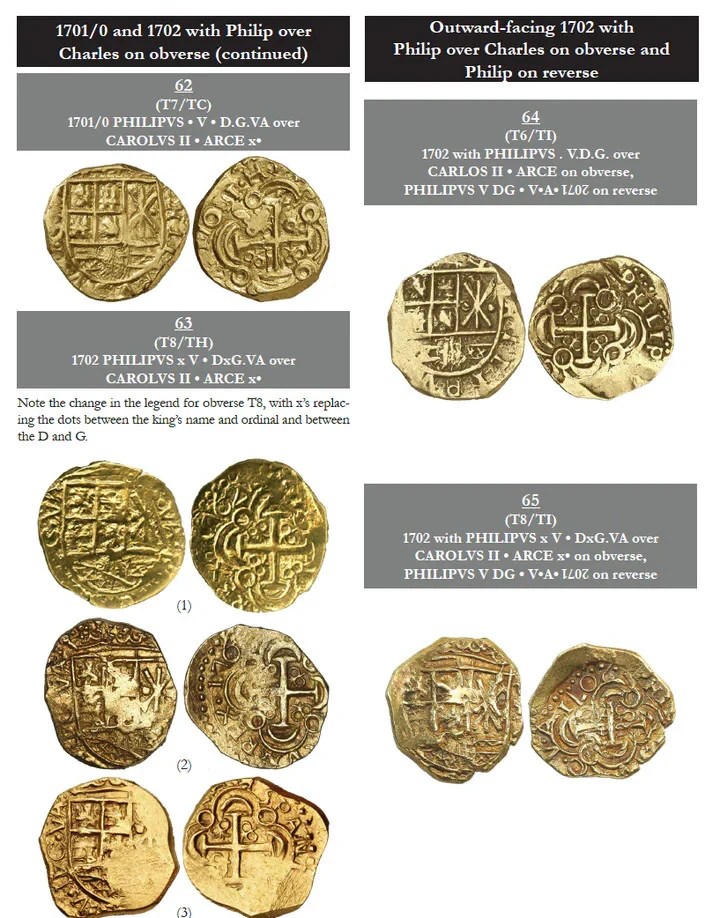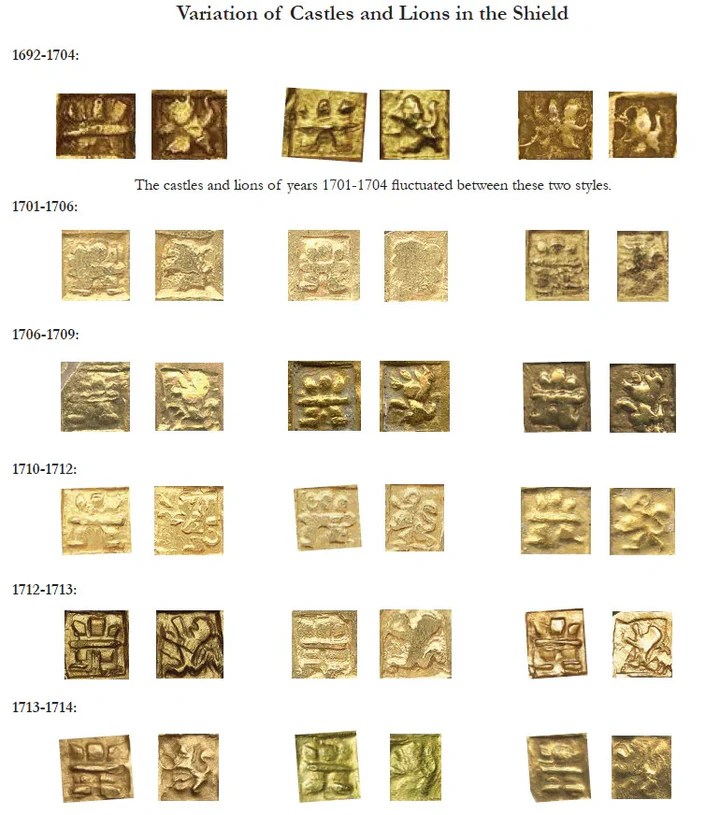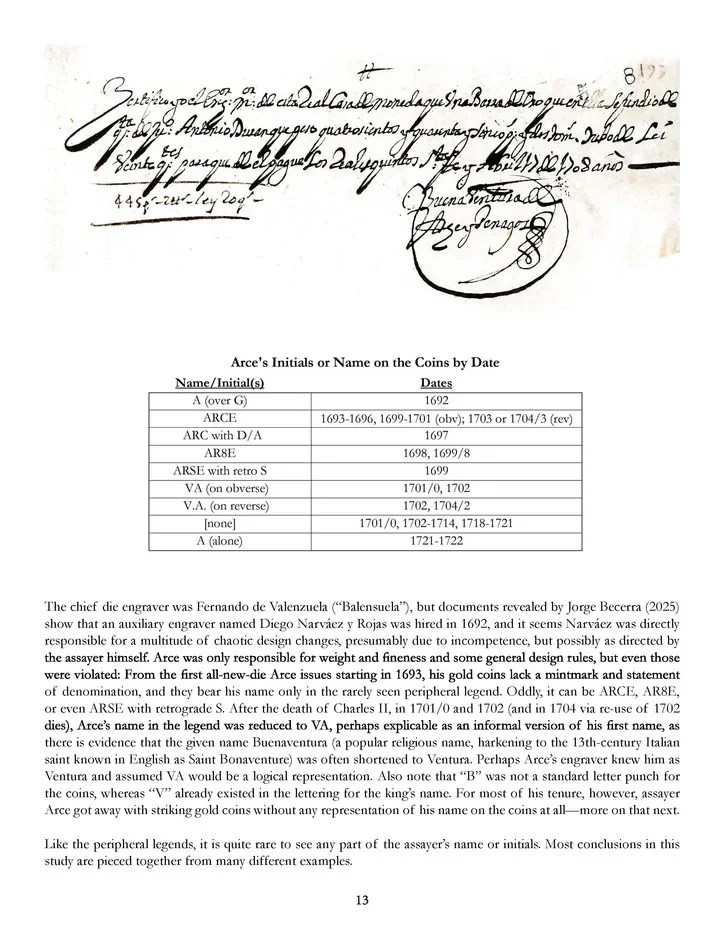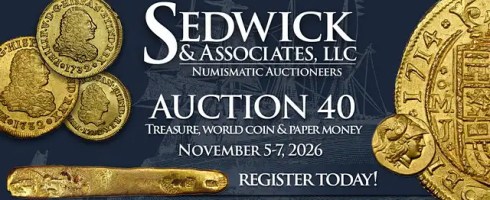
Scheduled for November 5 to 7, 2026, Sedwick & Associates’ Treasure, World Coin and Paper Money Auction 40 brings together nearly 1,950 cataloged lots across six sessions. More than 500 shipwreck coins sit within a broader offering of gold and silver ingots, colonial and republican coinage, historical objects, medals and paper money. The scale matters because it allows collectors to examine connected series as well as individual rarities: dates beside varieties, certified pieces beside uncertified examples, and famous pedigrees beside coins appearing with less familiar histories.
Explore the highlights
- Gold cobs: High grades and distinguished pedigrees
- Treasure fleet ingots: gold, silver and the marks of colonial commerce
- The Special Collection of Odd Shaped Mexican Cobs
- The first Mexican machine struck gold of 1732
- Chilean gold with exceptional pedigrees
- Chilean silver through independence and monetary change
- Chilean banknotes from provincial issues to fiscal emission
- Colombian gold from royal portraits to republican rarities
- Colombian experiments, patterns and scarce silver
- Colombian paper money and the institutions behind it
- Landmark silver from the earliest colonial mints to Lima’s Royals
Auction schedule and catalog access
1. Gold cobs: maritime survival and distinguished pedigrees
A Royal was a specially prepared issue whose broad, carefully shaped flan allowed the design a completeness rarely possible on an ordinary cob. That distinction is central to the 1714 Mexican eight escudos, but the opening gold selection also shows how rarity can develop through a different route. The Lima 1709 four escudos remained absent from standard references for generations, while the Bogotá 1753 eight escudos became a repeatedly illustrated reference specimen. Manufacture, recovery and publication each provide a reason to study these coins beyond their grades.
Lot 21: Mexico City 1714 J Royal gold 8 escudos

The extraordinary feature of this Royal is how much of the intended design remains visible. The round flan accommodates the complete legends, distinctive ornaments and strong central devices, with rich color and bright mint luster. Sedwick reports ten known examples of the 1714 date and identifies this as only the third distinct specimen offered publicly. The catalog finds no wear or shipwreck damage, although minor doubling and localized weakness remain part of the strike. Its 1715 Fleet provenance supplies the maritime connection; its dies provide a further line of inquiry. Those dies also appear on irregular and intermediate flans, making this coin a valuable reference for studying the relationship between Royals and ordinary Mexico City production.
Lot 37: Lima 1709 M gold 4 escudos

The final 9 descends into the waves, a small detail that has sometimes caused this rare date to be read as 1700. The visible assayer M helps resolve the attribution. Sedwick traces four examples, two in the State of Florida Collection, and records this lustrous McGregor specimen as the highest graded in the NGC census. All four share the same pillars die, an unusually close connection within such a small surviving group. Dr. Frank Sedwick brought the previously unlisted date to scholarly attention in 1988. With its 1715 Fleet origin, June 1998 Stack’s pedigree and well preserved pillars and cross, the coin combines a documented recovery with a particularly instructive history of identification.
Lot 39: Bogotá 1753 gold cob 8 escudos

Its nearly circular flan and unusually complete shield give this Bogotá eight escudos an immediate visual distinction. The deeper attraction is its documented identity. The coin appeared in the Lonja del Almidón sale in Madrid on March 30, 1936, and became a plate coin in Calicó’s 1953 study of Bogotá. Later specialists repeatedly selected the same specimen for illustration, including Ponterio and Pedraza, Tauler, Restrepo and Gutiérrez. The clear date, balanced cross and warm original color make those choices understandable. Sedwick describes a striking quality approaching a Royal while retaining the coin’s classification as a regular cob. The long sequence of photographs and published references makes this an especially rewarding object for collectors who value provenance as evidence.
2. Treasure fleet ingots: gold, silver and the marks of colonial commerce
The bullion carried aboard the Atocha and Santa Margarita in 1622 retained information that would disappear if the metal were melted again. Assay cavities, fineness marks, tax stamps and accounting numbers identify stages in the handling of precious metal before its intended arrival in Spain. Modern recovery adds another documented history. The three bars below allow a particularly useful comparison: incised information on a high fineness gold bar, multiple official stamps on another gold ingot, and a Potosí silver bar bearing a date, manifest number and distinctive series mark.
Lot 56: Atocha gold finger bar 13 from the Morse Collection

Recovered in 1982, this gold bar belongs to an early Atocha find and carries the J. M. Morse III pedigree. Its 684 grams and 23.5K fineness give it considerable intrinsic weight, but the markings are what distinguish it. Both the weight and fineness were incised into the surface. They were not applied with the ordinary tax and assay stamps found on many other bars. Modern testing supports the recorded fineness, and the old weight notation corresponds closely to the surviving mass. The absence of tax stamps has encouraged a possible Church association, which remains unproven. Coral traces, smooth casting surfaces and the original Fisher photographic certificate complete an unusually tangible record of bullion transport and modern recovery.
Lot 57: Santa Margarita gold finger bar 20

The Santa Margarita bar preserves a much fuller set of official marks than the Atocha gold bar. Its 18K fineness appears repeatedly, accompanied by royal tax stamps and a foundry or assayer cartouche. A cylindrical cavity at one end records the removal of metal for assay. The identity behind the cartouche remains uncertain, but the purpose of the testing and marking is visible in the object itself. This complete 546 gram ingot also belongs to the early recovery that established the wreck’s location. Its Fisher photographic certificate, 1980 expedition investor’s certificate and early salvage seal connect the colonial object to that episode of modern exploration. It is especially attractive as an intact bar with both administrative detail and recovery documentation.
Lot 67: Potosí silver bar 387 from the Atocha

A date, a fineness and a manifest number survive together on this substantial Potosí bar: 1621, 2360/2400 and 4627. Their clarity makes the ingot unusually informative. Tax stamps flank the characteristic assay cavity, while a bold letter A identifies a group that lacks the ordinary owner or shipper markings. Researchers have suggested that such bars represented payments to the Crown, although that explanation remains an interpretation. The bar’s original Fisher photographic certificate and J. M. Morse III pedigree provide a documented modern identity. Its appeal rests on the concentration of readable evidence: this is silver preserved at a stage when its purity, accounting and shipment mattered more than any denomination or monetary portrait.
3. The Special Collection of Odd Shaped Mexican Cobs
The 67 pieces in the Special Collection of Odd Shaped Mexican Cobs preserve the physical evidence of an expedient minting process. Daniel Frank Sedwick’s study of Mexican blanks describes silver poured into long straps, or rieles, then divided and hammered before striking. Uneven flowing edges, cuts and natural openings produced the extraordinary outlines seen here. Assembled over more than fifteen years, the collection extends from half reales to eight reales, principally under Charles II and Philip V. Its descriptive names make individual specimens memorable: the Worm follows a sinuous curve, the Keyhole surrounds an opening in the metal, and the Cardinal suggests a bird in profile. Dates, die varieties and recovery pedigrees give these striking silhouettes substantial numismatic depth.
Lot 593: Mexico City Charles II cob 8 reales known as the Worm

The Worm stretches the familiar eight reales into an extraordinary, sinuous strip of silver. Its weight of 27.59 grams makes the point particularly well: the narrow, curving outline contains the substance of a substantial coin. Most of the shield and cross survive, with a prominent cross pattée in the surrounding legend and attractive toning across the surfaces. Sedwick assigns Fine for actual wear. The accompanying collector tag places it in the collection’s S4 class, reserved for its most dramatic or complex shapes, and the original tag from Sedwick Auction 13, lot 980, preserves an earlier auction appearance. Here the shape itself provides the strongest evidence to study, especially the relationship between the undulating edges and the portions of the design that the blank could receive.
Lot 629: Mexico City 1730 over 1729 R cob 8 reales known as the Keyhole

The Keyhole has a natural void large enough to dominate both faces, yet the thick flan still weighs 26.55 grams. Shield, cross, crown and mint details survive around the opening, accompanied by light toning and wear cataloged as XF. The date requires closer attention: Sedwick identifies 1730 over 1729 from the surviving lower portions of the numerals, with elements of 29 visible inside 30. It is only the second example of this overdate the firm has encountered, a statement of its experience rather than a complete population census. That detail gives the coin a second identity beyond its memorable outline. The central opening records the preparation of the silver blank; the overdate records the reuse of the die that struck it.
Lot 642: Mexico City Philip V cob 4 reales known as the Cardinal

A pointed crest, projecting beak and sweeping tail give the Cardinal its immediately recognizable profile. This Philip V four reales also has a documented place in the modern recovery of the 1715 Fleet: Sedwick traces it to Lou Ullian’s celebrated 40 pound clump, with Frank Noga recorded in its provenance in 2015. The narrow flan retains a full cross and much of the shield, with light toning and VF+ detail. Its attribution to approximately 1705 to 1712 rests on the style of the design; the assayer initial is not visible. The name describes the accidental resemblance of the outline to a bird. Its appeal lies in that particular combination of shape and history, a distinctive product of the Mexican mint preserved among the coins of a lost treasure fleet.
4. The first Mexican machine struck gold of 1732
The date 1732 marks a fundamental change at Mexico City. Banco de México records the introduction of the screw press that year, allowing round coins with a protective edge. Auction 40 presents the first year of Mexican machine struck gold through three exceptionally rare denominations: the 4 escudos, 2 escudos and 1 escudo of Philip V, each bearing assayer F. Offered individually, they combine closely comparable manufacture with distinct survival histories. The 4 escudos and 1 escudo were recovered from the 1733 Fleet, while the 2 escudos has a published identity in Calicó. All three stand at the head of their respective NGC censuses as reported in the catalog, with the 1 escudo sharing its highest grade with another specimen.
Lot 1205: Mexico City 1732 F gold 4 escudos

Recovered by Geoff Zitver from the San Ignacio site of the 1733 Fleet, this 4 escudos carries the first year of Mexican machine struck gold into the history of maritime salvage. Its modern pedigree is unusually tangible: it appeared on both covers of Ponterio’s October 1993 catalog and later returned in Sedwick Auction 22, lot 144. Sharp portrait detail, extensive luster and nearly complete rims explain its prominence. The present catalog identifies it as the sole certified Mint State example known to the firm, graded NGC MS 60, and the highest in the NGC census. Sedwick has traced six specimens of the 1732 F issue. This survivor combines the inaugural date with an individually documented wreck recovery and exceptional preservation.
Lot 1206: Mexico City 1732 F gold 2 escudos

The 2 escudos carries a published identity within the 1732 group, appearing as a rubbing on page 458 of Calicó’s 2008 Numismática española. Sedwick reports four confirmed examples and only three in the NGC census at cataloging, headed by this AU 58. Its broad planchet received complete rim detail, framing a forceful portrait of Philip V and substantial remaining luster. Close examination reveals slight wear or softness in the wig, together with faint marks in the fields around the portrait. The importance of the published rubbing is practical as well as historical: it allows this individual specimen to be recognized beyond a succession of auction descriptions. For the collector of early Mexican gold, the combination of inaugural date, rarity and documented identity gives this small denomination considerable stature.
Lot 1207: Mexico City 1732 F gold 1 escudo

The Rudman Collection 1 escudo brings a second 1733 Fleet survivor into the group. Its broad flan, centered strike and luminous fields give the small portrait a clarity seldom associated with such a rare early issue. Circular friction traces remain on the obverse, and a die crack appears before ET in the legend. Sedwick records approximately six surviving specimens, several with significant condition limitations. This coin’s NGC MS 61 places it jointly at the highest grade in the NGC census cited by the catalog, alongside another MS 61. The Rudman pedigree and documented shipwreck association make it a substantial historical piece independently of its appeal beside the larger 1732 denominations.
5. Chilean gold with exceptional pedigrees
Chile’s gold offering is particularly strong in the smaller colonial denominations. An extended selection of four, two and one escudos brings difficult dates and assayer varieties into the same sale, supported by established collection pedigrees. The Segarra 1758 two escudos provides the celebrated rarity, while the Norweb 1817 four escudos reveals the persistence of colonial coin designs during the transition to Republican government. The 1779 one escudo adds exceptional preservation to the group. Taken together, these selections demonstrate why the Chilean section merits attention beyond its highest estimate: a collector can examine rarity, mint practice and political change across denominations seldom encountered in such depth.
Lot 860: Santiago 1758 J gold 2 escudos

The Santiago 1758 J two escudos names Ferdinand VI while preserving the portrait of Philip V. That unusual pairing belongs to an issue confined to a single date, with a reported production of 443 pieces. Sedwick records only three survivors: the Segarra example offered here, a holed coin from the Norweb Collection and the Medina specimen held by the Banco de Chile.
The present coin appeared on the cover of Superior’s December 1990 catalog and is illustrated in the Standard Catalog references. Its rich red toning and remaining luster give the portrait considerable presence, with light wear and a slightly displaced strike consistent with the AU 53 grade. An exceptional opportunity to acquire the finest example identified in Sedwick’s account, carrying a pedigree familiar to generations of Chilean specialists.
Lot 859: Santiago 1817 FJ gold 4 escudos

The Norweb 1817 FJ four escudos carries Ferdinand VII’s name around the portrait of Charles IV. Its colonial appearance conceals a more complicated production history. Although only 68 pieces are reported for 1817, Sedwick notes that minting continued under the Republic, apparently preserving both the date and the royal design. The issue therefore bridges political change through the persistence of familiar money.
Only five or six survivors are reported, and this AU 50 specimen stands above the other certified examples cited in the catalog. The Norweb pedigree reaches the Spink America sale of March 1997. Reddish toning, underlying luster and strong peripheral detail enhance the coin, while characteristic softness at the center remains visible. The combination makes it a particularly desirable representative of Chile’s elusive four escudos denomination.
Lot 866: Santiago 1779 DA gold 1 escudo

On the Santiago 1779 DA one escudo, a small detail invites close inspection: the final 9 in the date was repunched. That correction survives within a sharply defined design, surrounded by complete rims and pale gold surfaces with strong luster. The coin’s preservation gives this modest denomination the visual presence often associated with much larger gold pieces.
The reported mintage is 6,324, but available certified material is considerably scarcer: at cataloging, Sedwick recorded two NGC entries, both MS 62, and none at PCGS. Its pedigree includes the May 2007 Ira and Larry Goldberg sale. For specialists in Chile’s smaller gold denominations, the combination of mint luster, sharp detail and surviving evidence of the engraver’s work makes this a particularly attractive example.
6. Chilean silver through independence and monetary change
The Val y Mexía Collection gives Chile’s portrait silver offering substantial depth, with dates, overdates and assayer varieties inviting comparison throughout the section. Its 1788 eight reales represents the final date of an early royal type. The 1817 volcano peso then introduces an unmistakably Chilean design, followed by the La Serena countermarked four reales, an Argentine coin officially accepted into Chile’s monetary system. Together, these pieces show three ways authority could appear on silver: a king’s portrait, a national emblem and a Treasury stamp. Their histories also explain why a modestly preserved host coin can become one of the sale’s most important rarities.
Lot 876: Santiago 1788 DA silver 8 reales

The Santiago 1788 DA eight reales closes the early Charles III portrait type, and this Val y Mexía specimen gives that final date a distinguished collecting pedigree. Sedwick reports a production of 187,000 pieces and notes that most were melted. The original mintage consequently offers little guidance to the difficulty of obtaining a surviving coin in this condition.
At AU 50, the example stands alone below a single MS 62 in the NGC census cited by the catalog. Full rims and light golden toning frame a clear portrait and shield, with remaining luster, hairlines and mild wear on the central details. It is a strong introduction to the extensive Chilean portrait silver offering, where dates, overdates and assayer combinations reward comparison across the surrounding lots.
Lot 912: Santiago 1817 FJ volcano peso

An erupting volcano gives the Santiago 1817 FJ peso a distinctly Chilean identity. The design belongs to the first silver coinage of independent Chile, struck a year before the formal declaration of independence in 1818. Its imagery makes political change immediately visible, replacing the familiar royal portrait with a national emblem that remains among the most recognizable designs in South American numismatics.
This first date example is graded PCGS MS62, with strong luster and subtle rainbow toning across surfaces described by Sedwick as undisturbed. The slightly rough rims are characteristics of manufacture. Such preservation allows the design to be appreciated with unusual clarity. Alongside the colonial portrait issues and later Treasury countermarks in the sale, the coin marks a decisive point in the development of Chile’s own monetary identity.
Lot 916: La Serena 1833 countermark on an 1815 Potosí 4 reales

The La Serena countermarked four reales began as an Argentine coin struck at Potosí in 1815. A Chilean decree of March 29, 1833, authorized Treasury offices to validate the earlier Argentine issues following the ban on later La Rioja issues. The volcano above SER. identifies the office that approved this particular piece for circulation.
Sedwick records only three genuine examples of the La Serena mark on four reales. The Virgil Brand pedigree, documented in Schulman’s November 1964 sale, gives this specimen an especially valuable early reference in a series requiring careful authentication. The deeply impressed VF countermark remains much sharper than the Fair 2 host, whose date and denomination are still legible. The catalog also corrects the holder’s erroneous four soles description. A substantial rarity connecting the monetary histories of both countries.
7. Chilean banknotes from provincial issues to fiscal emission
The 32 Chilean lots in the main paper money section cover an unusually broad field, from local Treasury currency to private banks, collective merchant emissions and government overprints. The Valdivia 1840 four reales preserves an early provincial issue; the Banco de la Alianza 1872 twenty pesos records the reuse of another bank’s printed notes; and the 1898 fiscal ten pesos shows the government adapting private currency for its own emission. These are substantial historical documents whose rarity often outweighs their circulated grades. Seals, signatures and overprints deserve the same attention that coin specialists give to mintmarks, assayer initials and changes of royal portrait.
Lot 1472: Valdivia 1840 4 reales

Official seals dominate the Valdivia 1840 four reales, giving this early note the appearance of an administrative document. It was issued by the combined Treasury and Customs authorities of Valdivia, within a provincial series comprising four and eight reales that circulated between 1840 and 1844. Nearly the entire issue was recalled, making surviving examples especially important witnesses to the beginnings of Chilean paper currency.
The present note retains clear printing and stamped seals on both sides. Its PMG Choice F 15 NET grade reflects a distinctly fragile survivor, with a sewn horizontal split explicitly recorded in the catalog. Sedwick lists only two PMG census examples, the other graded VF 25. The appeal lies in this remarkable survival and the unusually direct evidence it preserves of early provincial currency administration.
Lot 1455: Banco de la Alianza 1872 20 pesos

A red overprint on the Banco de la Alianza 1872 twenty pesos records an unusual relationship between two banks. Banco de la Alianza and Banco Nacional shared the same shareholders; the former was established to enlarge their authorized note issue. Existing Banco Nacional remainders supplied the printed notes, with the overprint changing the issuing institution.
The arrangement ended with Alianza’s closure in 1879, following the 1878 crisis and suspension of redemption in precious metal. This Leon Burstyn specimen preserves a bold agricultural vignette, Chilean arms and a legible overprint, with circulation and pinholes acknowledged in the description. Graded PMG VF 20, it was the only example in that census at cataloging. Pick lists the type as rare without assigning a price, reinforcing its standing among the auction’s most significant Chilean private bank notes.
Lot 1441: Republic of Chile 1898 fiscal 10 pesos

By 1898, Chile’s government was taking responsibility for note issuance as private banks lost their authority to issue currency. The Republic of Chile fiscal ten pesos makes that change visible on a single sheet. A Banco Nacional remainder received official overprints, black on its face and red on the back, adapting an existing private bank design for government use.
Its August 1 date differs from the date recorded in Pick, adding an important detail for specialists. The PMG F 12 grade describes a circulated note with a central pinhole and faded but identifiable overprints. Sedwick recorded only one other PMG example, graded F 15. Within the wider Chilean paper money offering, this provisional issue provides a particularly clear endpoint to the progression from local Treasury notes through private banking to state emission.
8. Colombian gold from royal portraits to republican rarities
Colombian gold unfolds across several monetary systems in this sale, from colonial cobs to royal portraits and republican Liberty designs. These three selections follow two mints and more than a century of change. The 1757 J 8 escudos illustrates Bogotá’s early adoption of milled production. The 1769 JV 8 escudos adds an exceptional assayer rarity with a substantial collection pedigree. Popayán’s 1870 10 pesos carries the story into the republic and the closing phase of a provincial mint. Together, they show why Colombia rewards attention to mint, date, assayer and die characteristics, with preservation providing another important dimension of comparison.
Lot 955: Bogotá 1757 J gold 8 escudos of Ferdinand VI

Ferdinand VI’s 1757 J 8 escudos captures Bogotá’s transition to milled gold with unusually complete preservation of its design. Struck soon after the Nuevo Reino mint adopted machinery, it gives the royal portrait and surrounding legends a regularity that helps explain the visual transformation of Colombian coinage. This example retains complete rims, a well defined bust and muted luster beneath rich gold color. NGC graded it AU 58; Sedwick records four other examples at that grade and none higher when the catalog was prepared. The distinction matters because this is both a rare early milled date and a coin whose restrained circulation has left its design unusually coherent. It establishes the technical and aesthetic starting point for the later Bogotá portrait rarities.
Lot 958: Bogotá 1769 JV gold 8 escudos with rat nose portrait

The key to the 1769 JV 8 escudos lies in the paired assayer initials on its reverse. This is the exceptionally elusive JV issue, distinct from the more available V variety of the same year. Sedwick traces five examples and records this NGC MS 62 coin above two lower graded NGC specimens. Its luster, detailed bust and residual die polish are especially remarkable given the visible cracks and early die buckling. Those defects suggest a short working life for the dies, although no production total is established. The pedigree runs through Numismatica Ars Classica in March 2002 and the Eldorado Collection in January 2018. Its estimate of USD 25,000 to 50,000 places it among the leading Colombian gold rarities in the sale.
Lot 1057: Popayán 1870 gold 10 pesos

Popayán’s 1870 10 pesos brings the republican gold series to one of its most elusive dates. Sedwick identifies five known examples, including the Banco de la República specimen, and ranks this NGC MS 62 coin as the finest. It is also the only example recorded by NGC in the catalog census. The sharp Liberty portrait and lively luster are accompanied by repunched stars and a conspicuous die crack at the U of UNIDOS, useful characteristics for studying the issue. This is the final date of the Popayán 10 pesos type, struck a decade before the mint closed in 1880. Its importance therefore rests on a rare conjunction of survival and institutional history, with unusually strong preservation for a coin from this provincial mint.
9. Colombian experiments, patterns and scarce silver
The Colombian section also reaches into the difficult edges of monetary history: experimental alloys, proposals that never entered circulation and provincial issues surviving in tiny numbers. The Cartagena quarter real attributed to 1626 raises questions about early mint technology and metal standards. The 1825 copper quarter real pattern preserves a republican currency proposal abandoned before regular production. Popayán’s 1869 5 décimos supplies an established silver rarity whose importance survives substantial wear. These pieces broaden the selection beyond gold and portrait types, asking collectors to consider how attribution, legislation, institutional history and documentary survival determine the significance of an individual coin.
Lot 927: Cartagena quarter real attributed to 1626

The Cartagena quarter real attributed to 1626 preserves unusually consequential evidence. Its NR mintmark was punched over S, connecting the piece to reused dies and the early organization of New Granada’s coinage. A pomegranate stands between the pillars on the reverse. Sedwick calls this the only known example of the variety and links its manufacture to machinery devised by Alonso Turrillo. The date is not visible, while environmental damage prevents a conclusive XRF determination of the alloy. The suggested association with the roughly 25 percent silver plata baja standard of 1626, rather than the approximately 18 percent standard of 1622, is therefore an attribution, not a precise assay result. NGC’s VF details grade acknowledges that deterioration; the surviving marks still make this a significant discovery piece.
Lot 1029: Colombia 1825 copper pattern quarter real

The 1825 copper quarter real pattern gives physical form to a monetary project that never reached regular production. Colombia’s legislation of May 1823 called for copper small change bearing Liberty, the republic’s name and a denomination inside a laurel border. The authorization was repealed in March 1826, but trial pieces bearing the date 1825 survive. Sedwick describes this quarter real as unique and, together with the corresponding eighth real, part of what it considers Colombia’s earliest known pattern issue. Its sharply defined portrait and lettering remain legible despite dark toning and the NGC environmental damage qualification. Issued during the period of Gran Colombia, it connects the early republic’s proposed everyday currency with territories that now form Colombia, Venezuela, Ecuador and Panama.
Lot 1066: Popayán 1869 silver 5 décimos

Popayán’s 1869 5 décimos demonstrates why a heavily sought date can command a major estimate even in a modest grade. Sedwick cites four known examples, including the Banco de la República coin and the specimen associated with the Eldorado and Whittier collections. This example previously appeared in Sedwick’s May 2014 auction and carries a current estimate of USD 20,000 to 40,000. Its deep toning, readable date and surviving peripheral detail allow the issue to be studied despite wear and softly struck centers. PCGS assigned F details for cleaning, a qualification that remains relevant alongside the auctioneer’s favorable assessment of its appearance. As the first date of the difficult Popayán 5 décimos series, it fills a position that ordinary type collecting cannot adequately convey.
10. Colombian paper money and the institutions behind it
Colombia’s monetary variety continues in paper, where private banks, local printers and emergency issuers leave remarkably different evidence. The Banco de Colombia 50 pesos face proof dated 1 April 1875 presents an elaborate design produced in Bogotá. The Banco de Bogotá 10 pesos dated 15 February 1875 records the work of a London security printer for an early Colombian bank. The Hacienda Entre Rios 10 centavos dated 28 April 1900 shifts attention to a local issue during wartime disruption. Each is described by Sedwick as unique, but their appeal extends from rarity into the practical organization and visual language of money.
Lot 1475: Banco de Colombia 1875 50 pesos face proof

The Banco de Colombia 50 pesos face proof dated 1 April 1875 makes an immediate impression through its color and composition. Paredes of Bogotá printed the large Andean condor and national arms in black, with red seals spreading across blue paper. The face proof has five punch cancellations and an unprinted back, leaving the elaborate face design as its principal feature. Sedwick describes it as unique, absent from the Eldorado Collection and the sole example in the PMG census. The catalog also assigns a J. Cuartas pedigree. Graded PMG AU 53, with corner handling, it offers a rare view of Colombian banknote production within Bogotá itself, where local printing gave a substantial private bank issue a distinctive visual identity.
Lot 1476: Banco de Bogotá 1875 10 pesos

The Banco de Bogotá 10 pesos dated 15 February 1875 belongs to the institution’s early issuing period after its foundation in 1870. Perkins, Bacon and Company of London supplied the intricate black design, punctuated by red denomination medallions; the reverse places the cashier’s signature within an elaborate ornamental frame. Series C and serial 2584 identify the sole recorded example of this denomination and series according to Sedwick. Its significance is reinforced by its appearance on page 449 of Danilo Parra Ariza’s 2014 Compendio Histórico del Papel Moneda en Colombia. PMG grades it Choice Fine 15, and the stains and small internal split remain part of its condition. Its estimate of USD 7,500 to 15,000 reflects the scarcity of this documented survivor.
Lot 1486: Hacienda Entre Rios 1900 10 centavos

The Hacienda Entre Rios 10 centavos dated 28 April 1900 brings the discussion from commercial banks to local money during the Thousand Days’ War. Printed by Eugenio Pardo of Bogotá, this small private issue survives with a legible serial 0162, clear ornamental printing and signatures on its back. Sedwick describes it as unique and the only example in the PMG census. Its documented pedigree leads to Neil Shafer’s Money of the People collection, offered by Lyn Knight in Memphis in June 2014 as lot 5244. The photographed holder reads PMG Choice VF 35, with stains and thinning noted on the reverse. The catalog’s EPQ designation is absent from those photographs. Those traces of use reinforce its interest as a surviving response to the monetary disruption identified in the catalog.
11. Landmark silver from the earliest colonial mints to Lima’s Royals
The earliest colonial denominations were not always the ones that endured. Mexico City’s three reales belongs to a brief experiment at the beginning of the mint’s production, while the Santo Domingo four reales represents a short and exceptionally difficult series. More than a century later, the Lima Royal eight reales demonstrates how much visual refinement remained possible within hammered coinage. Together these pieces broaden the sale’s historical reach and give collectors three quite different reasons to examine the legends, denominations and dies of colonial silver.
Lot 579: Mexico City Early Series 3 reales of Charles and Joanna

Three dots between the pillars identify a denomination that disappeared early from Mexican coinage. The three reales was struck only from April 1536 to early 1538 at the latest, under assayer Francisco del Rincón, before the four reales took its place. This specimen retains complete legends, predominantly Gothic lettering and the essential interior design despite some rotated doubling. Its toned surfaces and straight PCGS XF45 grade give the early issue an unusually coherent appearance. Sedwick identifies it as the highest graded example of the three dot variety across PCGS and NGC and records its appearance in Ponterio’s July 1999 sale. The attraction is immediate: a surviving coin from the brief period when the mint’s denominational system was still taking shape.
Lot 1113: Santo Domingo 4 reales of Charles and Joanna

The Rudman pedigree and illustration in the 2008 Calicó reference give this Santo Domingo four reales an identity that extends beyond its certification. Sedwick records five known examples of the type. The broad flan preserves extensive legends, the pillars and the distinctive P and S mintmarks, while the queen’s name appears with the unusual spelling YOHANA on one side. Such details reward close study in a series known for irregular lettering and arrangements. Saltwater damage and a fine edge crack remain material aspects of the condition. With a documented Cayón appearance in December 2003, the coin offers both an important early Caribbean mint issue and a published reference specimen whose individual features can be followed through the literature.
Lot 678: Lima 1689 V Royal silver 8 reales

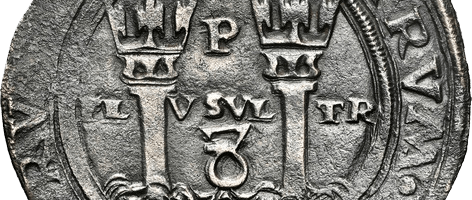
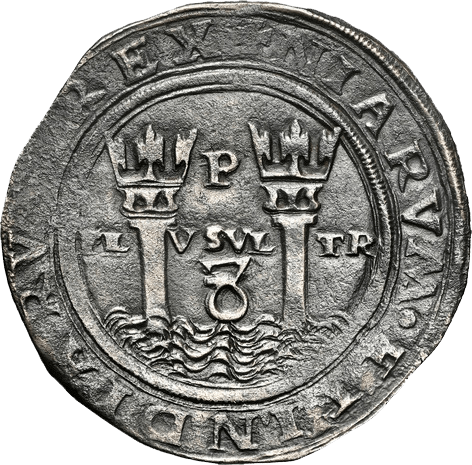
The full royal legend surrounding the cross immediately distinguishes this broad Lima Royal from the partial impressions so often encountered on ordinary cobs. Attractive toning strengthens the design, while the pillars and waves retain extensive detail despite doubling and imperfect centering. Its survival without a hole is a significant advantage for the type. Sedwick also notes an apparent die difference from the corresponding specimen illustrated by Lázaro, giving specialists a specific comparison to pursue. Set beside the Mexican gold Royal, this silver issue demonstrates a related ambition in a different mint and metal: enough prepared surface to display royal authority through a complete, carefully arranged design. The XF 45 grade leaves that larger achievement readily visible.
A sale to study across collections, mints and generations
The strongest impression left by Auction 40 is the number of connections that can be made within a single sale. The 1714 Mexican gold Royal and the 1689 Lima silver Royal invite comparison across mints and metals. The Worm, Keyhole and Cardinal shift attention to the preparation of irregular blanks. The Mexican gold of 1732 then presents another stage in production, with a royal portrait and the regularity associated with a new minting technology. These groups make the mechanics of manufacture visible rather than leaving them as background information.
Chile offers a similarly rich sequence through changes in authority. The inherited portraits on the 1758 two escudos and 1817 four escudos, the independence imagery of the volcano peso, and the validation mark on the La Serena four reales show how coins could retain, replace or acquire political meaning. The Valdivia note, Banco de la Alianza twenty pesos and fiscal ten pesos extend that examination to the institutions that issued paper money. The pedigrees attached to many of these pieces add a further history of study and collecting.
Colombia’s strength is the opportunity to place celebrated rarities within a much wider body of material. The 1769 JV onza and the 1870 Popayán ten pesos stand beside experimental small denominations, difficult republican silver and private banknotes. A collector can follow a particular mint, a denomination, an assayer or a change in national identity. That depth is especially valuable in series where a few famous coins can otherwise obscure the less expensive material needed to understand the whole.
Estimates naturally draw attention to the most costly objects, but they do not measure every form of importance. A rare date, a readable countermark, a published pedigree or a revealing production feature can justify attention at very different price levels. The 33 pieces selected here offer all of those qualities. Their photographs and linked descriptions provide a starting point for examining the complete catalog, where the strongest discoveries will often come from following the relationships between the objects as carefully as the objects themselves.
Auction schedule and catalog access
The auction takes place on November 5, 6 and 7, 2026. All times below are Eastern Standard Time. The November 5 and 6 sessions offer floor and live online bidding; the November 7 Express Session is online only. Each session name links to its catalog.
| Session | Date and time | Contents | Catalog lots |
|---|---|---|---|
| Session I | November 5 9:00 a.m. |
Gold cobs, shipwreck ingots and shipwreck coins | 1 to 458 |
| Session II | November 5 4:00 p.m. |
Artifacts and coin jewelry | 459 to 575 |
| Session III | November 5 6:00 p.m. |
Silver cobs of Mexico City, Lima and Potosí | 576 to 776 |
| Session IV | November 6 9:00 a.m. |
Ancient, medieval and world coins | 777 to 1400 |
| Session V | November 6 5:00 p.m. |
Medals, decorations and paper money | 1401 to 1508 |
| Session VI | November 7 9:00 a.m. |
Express session, online only | 1509 to 1945 |
Browse the complete auction catalog and consult Sedwick’s auction information for registration, current lot status, viewing arrangements and terms.