Tag Archives: numismatics

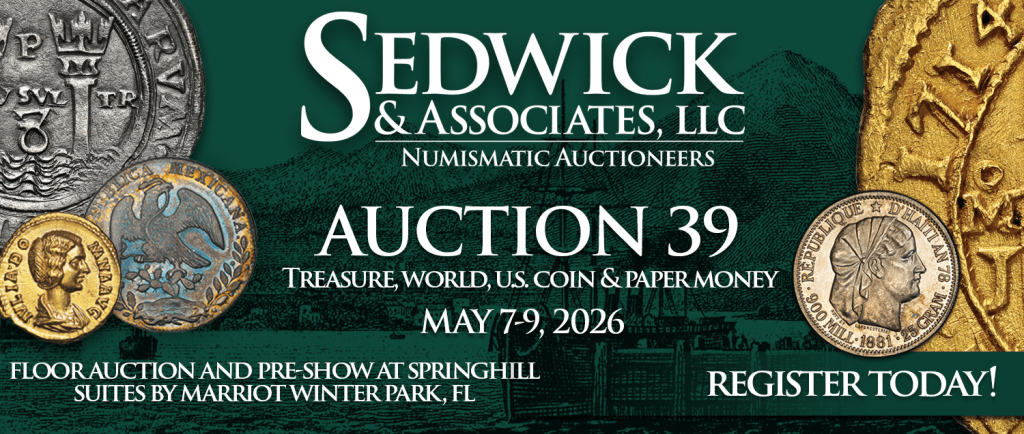
Sedwick’s Treasure, World, U.S. Coin and Paper Money Auction 39 & Winter Park Coin Show

20 Apr
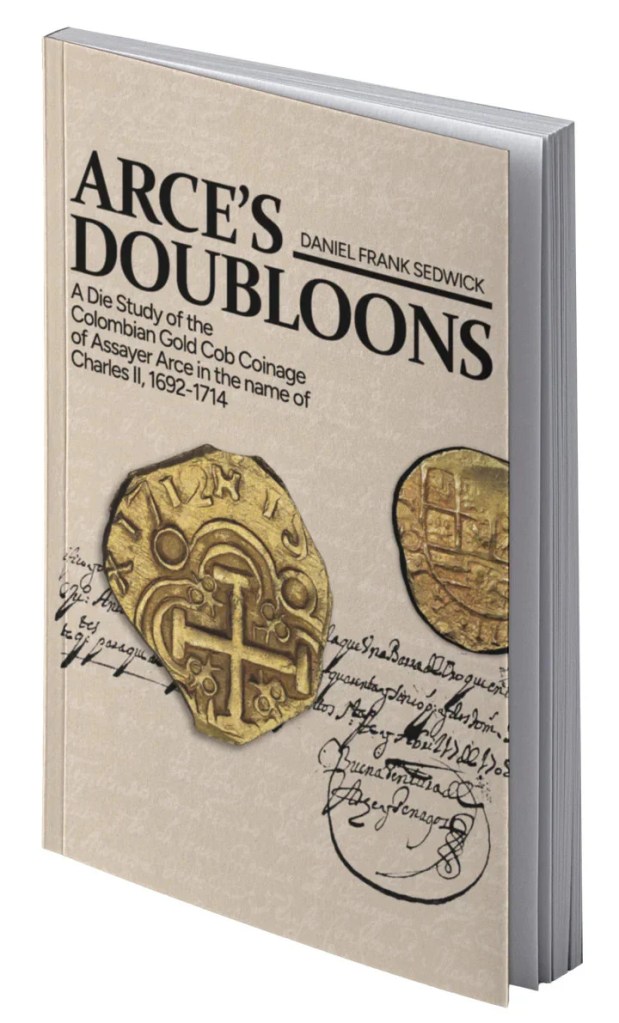
Welcome to our Auction 39! As usual, we have secured high-quality, carefully selected material for our bidders in a wide range of areas, with some neat surprises here and there. Starting with gold cobs, we follow the release of Daniel Sedwick’s landmark book, Arce’s Doubloons, with a very important selection of DATED 2 escudos gold cobs from Colombia. Be sure to check out Daniel’s latest article: click here

More than ever, collectors are beginning to appreciate and recognize the rarity and beauty of these coins following the book’s publication. We hope this marks the beginning of a broader appreciation and deeper study of this challenging series.

Our sections on Shipwreck Ingots and Shipwreck Coins are jam-packed with the usual treasure treats, with sizable offerings from the Atocha (1622), Concepción (1641), Maravillas (1656), the Spanish 1715 Fleet, and S.S. Republic (1865), the last one featuring a date-run of half dollars and a couple very rare clumps. Our shipwreck section is always the most bid-upon part of our auctions, with almost all lots getting dozens of bids. Interest and confidence are very high because we make sure all our treasure items are properly certified and/or pedigreed, something that is critically important to collectors today.

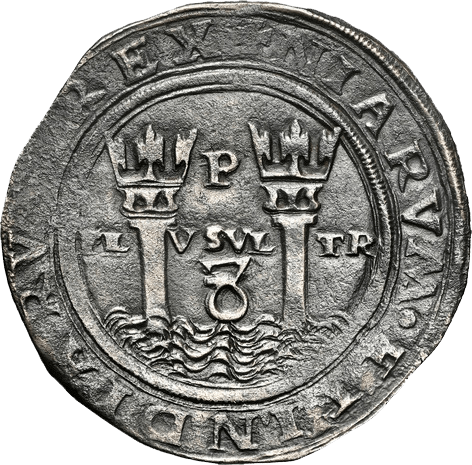
In non-shipwreck cobs we feature several collections and trophies that should not be missed. After a choice run of Mexican Charles-Joanna “Early Series” coinage, we present the next batch from The Jorge Ugaz Collection of Lima silver cobs, following our sale of his 2 reales in our prior auction. The current offering focuses on 8 and 1 reales, carefully assembled over many years with an emphasis on quality, rarity, and important pedigrees from notable prior collections. It begins with some exceptional highlights, including an example of the earliest dollar-sized silver coin struck in South America, the famous Rincón 8 reales. The collection continues with a strong selection from the early Lima mint, featuring multiple varieties, especially from the period of assayer Diego de la Torre. Next are a few special “Star of Lima” issues, followed by a comprehensive run of pillars and waves coinage, with nearly all dates represented and including several very rare round presentation “Royals” (galanos). Comprising over 200 lots, this is one of the largest offerings of Lima cobs we have presented (if not the largest). We follow Lima with a singled-out collection of Potosí dated shield-type 8 reales; watch for several more very rare “Royals” in the regular Potosí cob offering.

Throughout World Coins we feature an outstanding group of Spanish bust gold minors, covering not just Spain itself but also all major colonial mints in Bolivia, Colombia, Guatemala, Mexico, and Peru. Nearly all are certified, many at the highest levels, including numerous “top pop” examples. This is a rare opportunity to acquire multiple dates and types in a single sale that would normally take years to assemble.
 
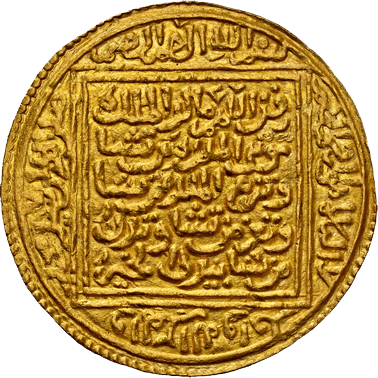
Speaking of Spain, in this auction we proudly present The Andalusí Collection (click here to read introduction and lot listings), an important expansion into an historical area. These coins reflect a period when Spain was under a different cultural influence, offering a fascinating connection with the evolution of coinage. The selection includes some of the finest pieces offered in recent years, all certified by NGC, many at the top of their population reports. Carefully cataloged by Ana Serrano, a recognized expert in the field, this collection provides collectors with a clear and accessible introduction to this specialized area.

Pan-American highlights continue with the latest selection of top Chilean coins from The Val y Mexía Collection, including an excellent run of rare Charles III bust 8 reales. Also look for choice coin-sized proclamation medals from several Spanish colonies, particularly Colombia. Finally, be sure to check out our expanded selections of Ancient Coins and U.S. Coins Paper Money, including bigger trophies than we have had the privilege to offer before.
 
As usual, we finish the Floor Auction with a well-curated group of Shipwreck and Non-Wreck Artifacts, which includes several gold chains and a fabulous portion of an ornate royal gold belt from the Maravillas (1656). On the last day we will run an expanded Internet-Only Express Session, in which you will find many “sleepers.” Overall, this is a diverse and carefully assembled auction with something for every collector.

This event will take place at the SpringHill Suites by Marriott in Winter Park, Florida. Our regulars will remember this venue from our auctions prior to last year. This time, however, instead of educational talks, we will fill the room on the day before the auction (during lot viewing) with our inaugural Winter Park Coin Show. Selected dealers from all over the Americas will have tables to browse while you wait to view lots. The date is May 6, from 10 am to 6 pm. Come see your friends or make new friends while you get ready for the auction!
 
As always, we are at your service with any questions or concerns. We wish everyone the best of luck and happy hunting!

NOTE: Floor auction lots will be available for viewing at the Central States show (Express lots by request only). All lots will also be available for viewing at our offices by appointment and on the day of the Winter Park Coin Show.
 
With thanks to all from the Sedwick & Associates, LLC team:

Daniel Sedwick, Augi García-Barneche, Cori Sedwick Downing, Michelle Heidt, Connor Falk, and Sarah Sproles

We look forward to welcoming you to Winter Park!

Sincerely,
Sedwick & Associates
www.sedwickcoins.com



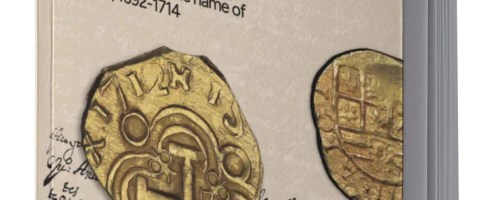
Arce’s Doubloons: A Definitive Die Study of Bogotá 2 Escudos, 1692–1714

9 Apr ARCE’S DOUBLOONS: Gold Cob Coinage of Assayer Arce 1692-1714 by Sedwick (2026)

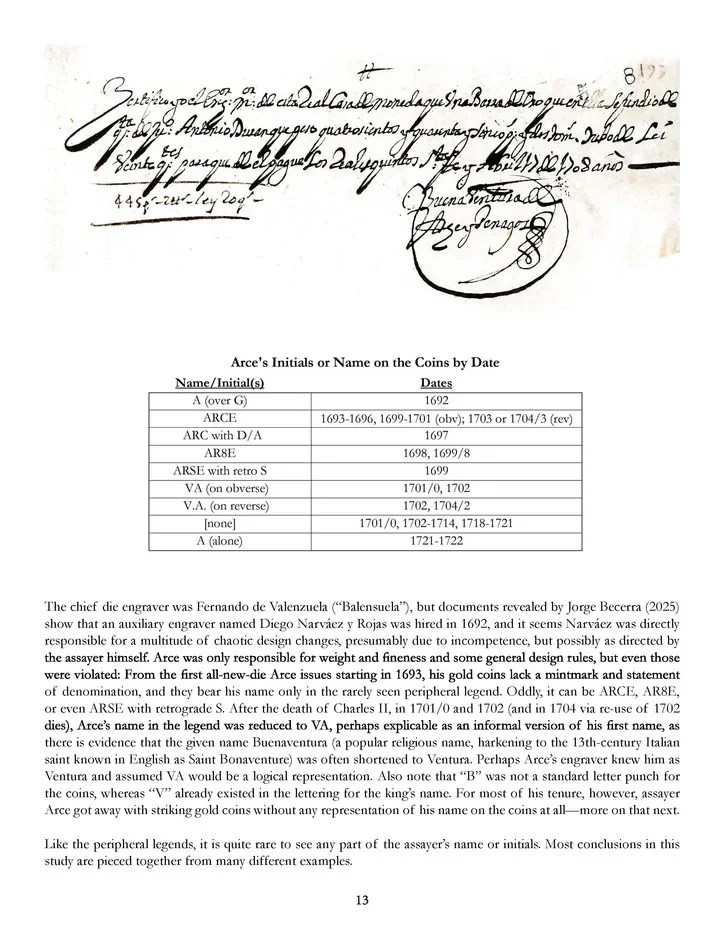
A major new reference has arrived for collectors and specialists of Spanish colonial gold. Arce’s Doubloons by Daniel Frank Sedwick is the first comprehensive die study devoted to Bogotá-minted 2 escudos produced under assayer Buenaventura de Arce Penagos between 1692 and 1714, all struck in the name of Charles II.

Built on the examination of hundreds of specimens, this work goes far beyond a traditional catalog. By reconstructing the chronological sequence of dies, it provides a clear framework for understanding how these coins were actually produced during one of the most dynamic periods in Spanish colonial history. The study spans the final years of Charles II, whose death in 1700 triggered the War of the Spanish Succession, a conflict that coincided with increased piracy across the Caribbean and ultimately the loss of fleets such as the famous 1715 Fleet.

A significant portion of the coins analyzed comes from modern recoveries of that very fleet off the east coast of Florida. Many of these pieces now reside in the State of Florida Collection, which the author studied extensively, giving this book an unusually strong foundation in both numismatic and archaeological evidence.

The book is organized into three principal phases of production:

  • Lifetime issues, 1692 to 1699
  • Transitional issues, 1700 to 1704
  • Post-Transitional issues, 1703 to 1714, with the overlap defined as Half-Transitionals

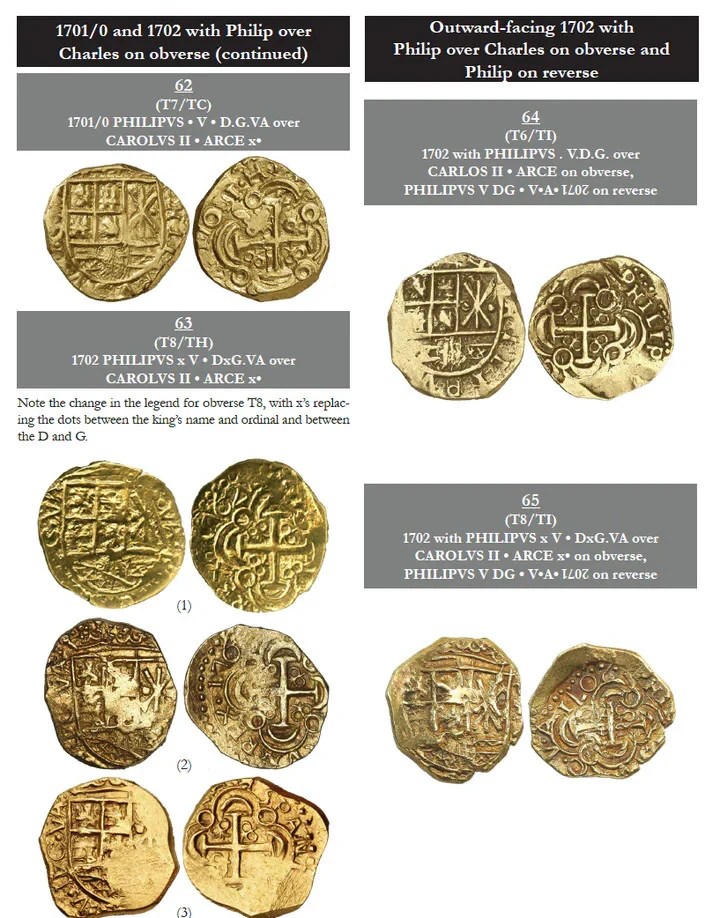
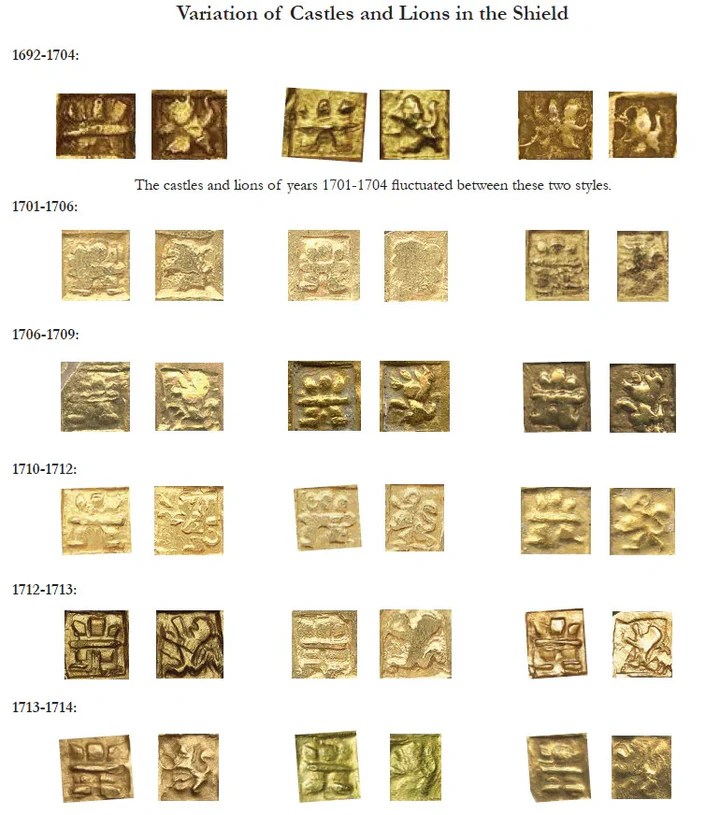
Each section presents detailed diagrams of obverse shield types and key reverse cross characteristics, accompanied by photographic plates and a complete listing of known die combinations. This structured approach allows collectors to attribute coins with a level of precision not previously possible.

Among the most important discoveries documented in this study are:

  • Clear evidence of muling between 2 escudo and 1 escudo dies
  • Systematic use of transposed and retrograde punches
  • Identification of a previously unrecognized debasement

Two appendices expand the scope further, covering Arce 2 escudos under Philip V from 1718 to 1722 and the full range of Arce 1 escudos from 1692 to 1722, making this an essential reference not only for doubloons but for Bogotá gold coinage of the era as a whole.

For collectors of shipwreck coins, especially those tied to the 1715 Fleet, this book provides critical insight into origin, classification, and rarity. For specialists, it establishes a new standard for die analysis in the Spanish colonial series.

Publication details
Author: Daniel Frank Sedwick
Format: Softcover and hardcover versions
Pages: 132, fully illustrated
ISBN: 979-8-9937390-0-7
Publication year: 2026

Link to buy the Book softcover version

Link to buy the Book hardcover version

Sedwick Auctions Announces Record-Breaking Close of Auction 38

27 Nov
Sedwick Auctions is thrilled to announce the successful conclusion of Treasure Auction 38, held November 13–15 at our new headquarters, with total results hitting $5 million.

Bidding shattered previous records across every major category: shipwreck coins and artifacts, gold and silver cobs, colonial coins, world coins, and rare Latin American issues.

Now we invite collectors and consignors to join our next flagship event. Consignments will be open from the beginning of December 2025 through the first week of March 2026. Mark your calendars: Our next live floor auction will take place May 6–9, 2026 at the SpringHill Suites by Marriott Winter Park, Florida.

Check our travel schedule to consign in person or contact us to arrange a private visit at your location.
We look forward to showcasing your collection in our next auction!

Prices Realized

Sedwick & Associates, LLC
http://www.sedwickcoins.com


Top 10 Auction Highlight Sales

Lot 13 – MEXICO, Mexico City, gold cob 8 escudos “quasi-Royal,” 1714 J, “GRAT” variety with date on reverse, very rare, NGC MS 61, ex-McGregor, Flemming Plate. $ 51,000*


Lot 16 – MEXICO, Mexico City, gold cob 8 escudos, 1714 J, struck with Royal dies, very rare, NGC MS 63, finest in NGC census, ex-McGregor, Flemming Plate. $ 96,000*Lot 38 – PERU, Lima, gold cob 8 escudos, 1712 M, flipover double-strike, NGC MS 64 (1715 Fleet Shipwreck Label), ex-McGregor.$ 39,000*

Lot 44 – PERU, Lima, gold cob 4 escudos, 1712 M, rare, NGC MS 63 (1715 Fleet Shipwreck Label), “top pop,” ex-McGregor. $ 42,000*


Lot 79 – Atocha large silver ingot 296 from Potosí, Class Factor 1.0, 86 lb 5.44 oz troy, marked with mint/date Po1621, (1622). $ 90,000*


Lot 319 – Ex-Whydah Wreck –  Mexico City, cob 4 reales, Philip V,  (J), style of 1712-14, very rare provenance.$ 27,600*

Lot 518 – MEXICO, Mexico City, 4 reales, Charles-Joanna, “Early Series,” assayer Latin R over Gothic R (Rincón), NGC AU 50, ex-Sedwick-Downing $ 45,000*


Lot 932 – COLOMBIA, Bogotá, pillar 8 reales, Ferdinand VI, 1759 JV, very rare, NGC AU 53, ex-Patterson (cover).  $ 42,000*Lot 954 – CUBA, struck at the Gorham Mint, proof 1 peso, 1898, NGC PF 63, “top pop.”$ 36,000*

Lot 966 – DOMINICAN REPUBLIC, pattern 10 reales in solid silver, 1855, extremely rare, NGC MS 62, ex-Whittier (cover), ex-Byrne, KM Plate.  $ 78,000*


Lot 1125 – MEXICO, Mexico City, pillar 8 reales, Philip V, 1732 F, three mouldings atop right pillar, very rare, NGC AU 58, ex-Ortiz $ 156,000*


Lot 1161 – PANAMA, cob ½ real, Philip II, assayer P-M,, extremely rare, NGC mint error AU 50 / flipover double struck. $ 31,200*

Lot 1166 – PANAMA, struck at the Philadelphia mint, proof 50 centésimos, 1904, very rare, NGC PF 63. $ 96,000*


Lot 1167 – PANAMA,  copper-nickel 2½ centésimos, 1918, very rare, NGC MS 63 ex-Stuart, finest known.$ 36,000*


Lot 1516 – Gold and red-coral rosary, ex-1715 Fleet. $ 60,000*

Shop | Schedule | Blog | Learn | Consign
Collecting Mexican Charles-Joanna Coinage: My Journey

14 Oct

by Cori Sedwick Downing

Collector: someone who collects objects because they are beautiful, valuable, or interesting.

Direct link to the Collection

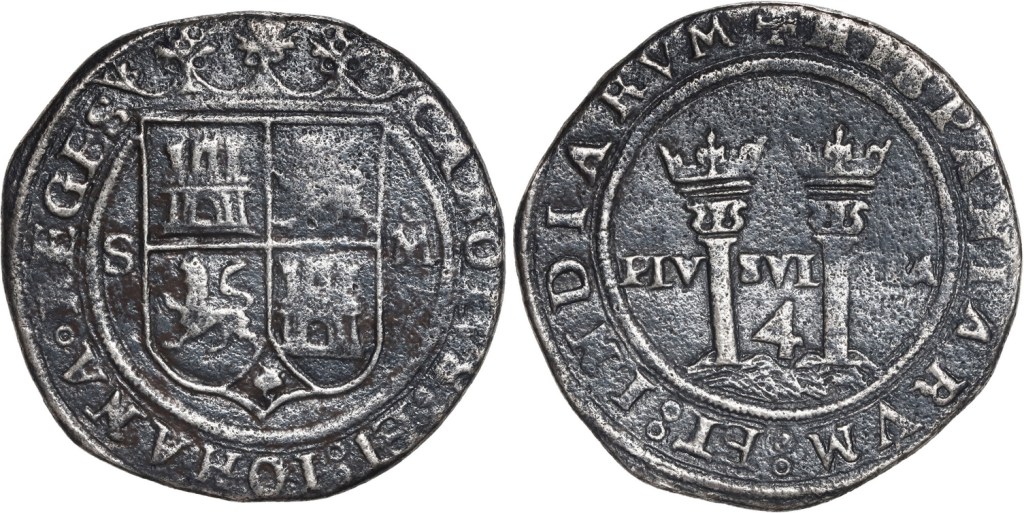
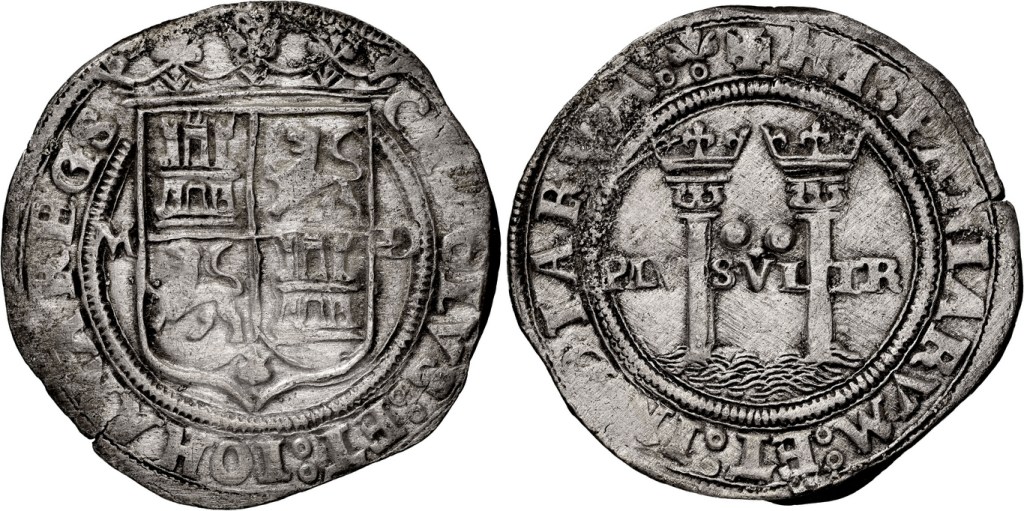
For me, beauty and interest outweigh value, although it’s satisfying when the first two intersect with the third. Years ago, I started researching a robust field of coins, the Charles and Joanna coinage of Mexico City, and my interest was quickly piqued.  Not only was the story of the first mint in the New World compelling, but the coins minted there were extremely well struck and beautiful, unlike many of the coins that came after that period. I was also taken with the simple “castles and lions” shield on one side and “pillars and waves” motif on the other.

Like any hobbyist who aspires to fill in his or her collection in a purposeful way, I learned as much as I could about the coins that had caught my attention. I bought a copy of Robert A. Nesmith’s 1955 book, The Coinage of the First Mint of the Americas at Mexico City, 1536-1572, and read it cover to cover. It’s still a great reference 70 years after publication! I read the transcript of the Tello de Sandoval investigation into possible mint improprieties during the tenure of assayer G, Juan Gutiérrez, which gave me a lot of information about the inner workings of the mint and who was there. I read about Hernán Cortés’ conquest of the Aztecs, which set the stage for a mint to be established in Mexico in 1536. I read about the Spanish monarchy to know why the coins bear the names of two rulers: Charles and Joanna. The former was the son of the latter, who by all accounts was crazy and certainly wasn’t capable of ruling over an empire. It was like a soap opera!

I began to keep census of all the varieties of all the denominations of coins from what Nesmith termed the “Early Series” and the “Late Series” assayers. The pinnacle of my work came when we were privileged to handle the sale of the Clyde Hubbard collection of Mexican Charles and Joanna coins, several of which were plate coins in Nesmith’s book.

My collection is not exhaustive because I decided early on to concentrate on rare and sometimes unique varieties and smaller denominations, which are harder to find. I never chased grades because I find it more important to have a coin in whatever condition it was found if there are only one or two known. There are so many varieties that you could spend a lifetime trying to acquire each one! Like the coins, I hope the results of my years-long study—which should be available soon and will feature most of the coins in my collection—helps further interest by avid collectors and people like me who just happen to find these coins beautiful.

Selected Featured Lots:

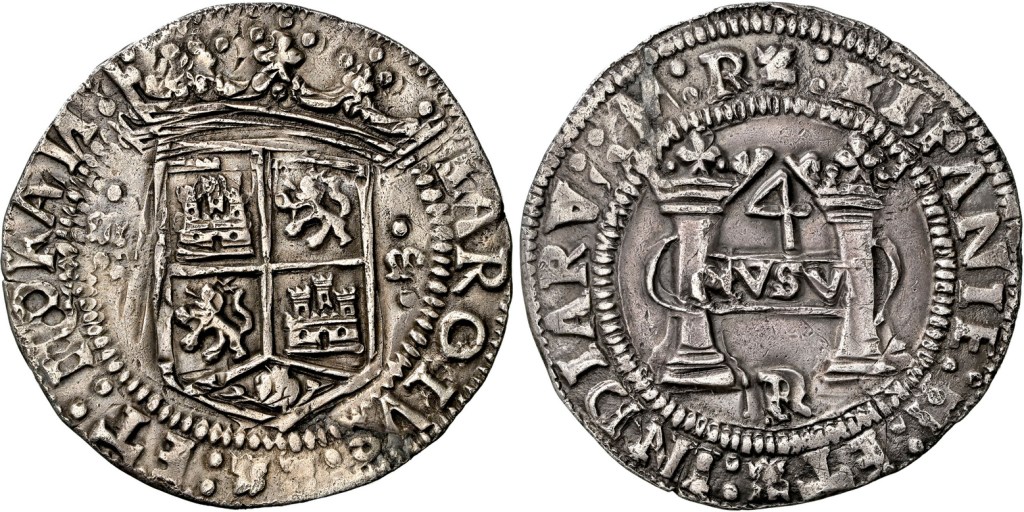
Lot 518 – 4 Reales, Early Series, Assayer R/R (Francisco del Rincón)

This exceptionally broad-flan four reales coin represents one of the earliest issues under Francisco del Rincón, the first assayer of the Mexico City Mint. Bearing a doubled R/R mark at the base of the pillars, it displays a bold strike with clear legends and a rich toning. The coin’s design—castles and lions on one side, pillars and waves on the other—captures the aesthetic ideals of the Early Series. Its die pairing reveals the reuse of shield dies by subsequent assayers, underscoring continuity in early minting practice. Pedigreed to the Sedwick–Downing Collection and graded NGC AU 50, it remains one of the finest known examples of the Rincón type.

Lot 527 – 4 Reales, Early Series, Assayer F, ex-Huntington, Nesmith Plate Coin

Among the rarest of the entire Charles and Joanna series, this 4 reales piece struck by the elusive Assayer F is both a Nesmith Plate Coin and a former holding of the Huntington Collection at the Hispanic Society of America. The issue, known by very few specimens, is distinguished by full legends, golden toning, and only minor surface corrosion. As one of the rarest assayers represented, it has been used in modern die-linkage studies to clarify the chronological sequence of early mint operations. The specimen is a cornerstone piece for understanding the earliest evolution of mint production following Rincón’s tenure.

Lot 533 – 2 Reales, Early Series, Unique Rhomboid Motto Panel

This unique 2 reales coin exhibits an unprecedented rhomboid motto panel enclosing the inscription PLVS. The specimen, attributed to Assayer Rincón, is the only known example of its kind, pairing a rhomboid design with Gothic lettering and a later die used by Assayer P. Its discovery bridges stylistic transitions within the Early Series, providing crucial evidence of experimentation at the Mexico City Mint during the late 1530s. The coin’s rarity and stylistic innovation make it one of the collection’s most academically valuable pieces.

Lot 543 – 1 Real, Early Series, Assayer G, Over-Assayer Type

This 1 real coin represents a transitional issue showing evidence of an over-assayer strike, in which an earlier die from Assayer F was repurposed under Gutiérrez. The piece features full interiors, deep toning, and minimal wear. Its die linkage to both preceding and subsequent issues makes it a key specimen for understanding the mint’s workflow and reusability of dies. Such examples are indispensable for reconstructing chronological mint sequences of the Early Series.

Lot 556 – 4 Reales, Late Series, Assayer S, Padre Island Shipwreck

A rare survivor of the 1554 Spanish Fleet wrecked off Padre Island, Texas, this 4 reales piece from the rare Assayer S illustrates the culmination of the Charles and Joanna coinage before the reforms of Philip II. Its well-preserved surfaces and dark patina testify to its maritime provenance. Few coins of this assayer are known, and its presence in this collection adds both archaeological and numismatic significance. Graded NGC VF details, it is one of the most compelling shipwreck-related specimens of the Late Series.

Lot 564 – 2 Reales, Late Series, Inverted G Die Error, ex-Dr. Peter Jones

This intriguing 2 reales coin from the Late Series displays the assayer’s initial G punched upside down—a remarkable minting blunder known in only eight examples. The coin is cited in Dr. Peter Jones’s *The First Coins of the Americas* (2020) and is considered among the best preserved of its type. Its existence underscores the human variability inherent in early minting, as well as the challenges faced by the Mexico City engravers in maintaining die consistency under growing production demands.

Latest news on RIO2025, the 5th International Convention of Historians and Numismatists, set for Sept. 2-6, 2025 in Rio de Janeiro, Brazil

11 Aug

Aug. 8, 2025

For Immediate Release

Latest news on RIO2025, the 5th International Convention of Historians and Numismatists, set for Sept. 2-6, 2025 in Rio de Janeiro, Brazil

The 5th International Convention of Historians and Numismatists, RIO2025, is just weeks away. The event will take place in the magnificent city of Rio de Janeiro, Brazil, a city recognized as a World Heritage Cultural Site by UNESCO for its rich history and cultural heritage.

Open to the public, the convention boasts a diverse and stimulating agenda, with lectures by some of the world’s leading researchers and authors, exhibitions, book launches, visits to museums and historical sites, as well as formal and informal social events. In addition, RIO2025 will feature thematic round tables, institutional presentations, specialized workshops, and spaces for academic exchange between researchers, collectors and professionals in the field.

Following a rigorous jurying process, twenty-five previously unpublished academic papers have been selected for presentation at RIO2025, researched, authored and presented by:

Jesse Kraft, PhD, representing the USA; Liesel Gentelli, Australia; Korhaan Mainil, Belgium; Juan Claudio Lechin, Bolívia; Daniel Oropeza Alba, Bolívia; Ana Bustamante Ayala, Brazil; Giovanni Miceli Puperi, Brazil; Pedro M. Zaninetti, Brazil; Alexandre Costa, Brazil; Rogério Bertapeli, Brazil; João Pedro Vieira e Mariana Brum Fonseca, Brazil; Hilton Aparecido Magri Lucio, Brazil; Andrés Felipe Cortazar, Colombia; Maricí Martins Magalhães, Brazil/Italy; Indyra Mendoza, Honduras; Ricardo de León Tallavas, Mexico; Jorge A. Proctor, Panama; Paolo Mario Quenta Loza, Peru; Dr. Glenn Stephen Murray Fantom, Spain; Ana Vico Belmonte, José Mª de Francisco Olmos, and Katharina Nothnagel Vivas, Spain; Ana Vico Belmonte, José Mª de Francisco Olmos, and Patricia Labrador Ballestero, Spain; Mario Alonso Barraco, Uruguay; Javier Avilleira, Uruguay; Daniel Luis Padula Graña, Uruguay; and Hussein Larreal Soto, Venezuela.

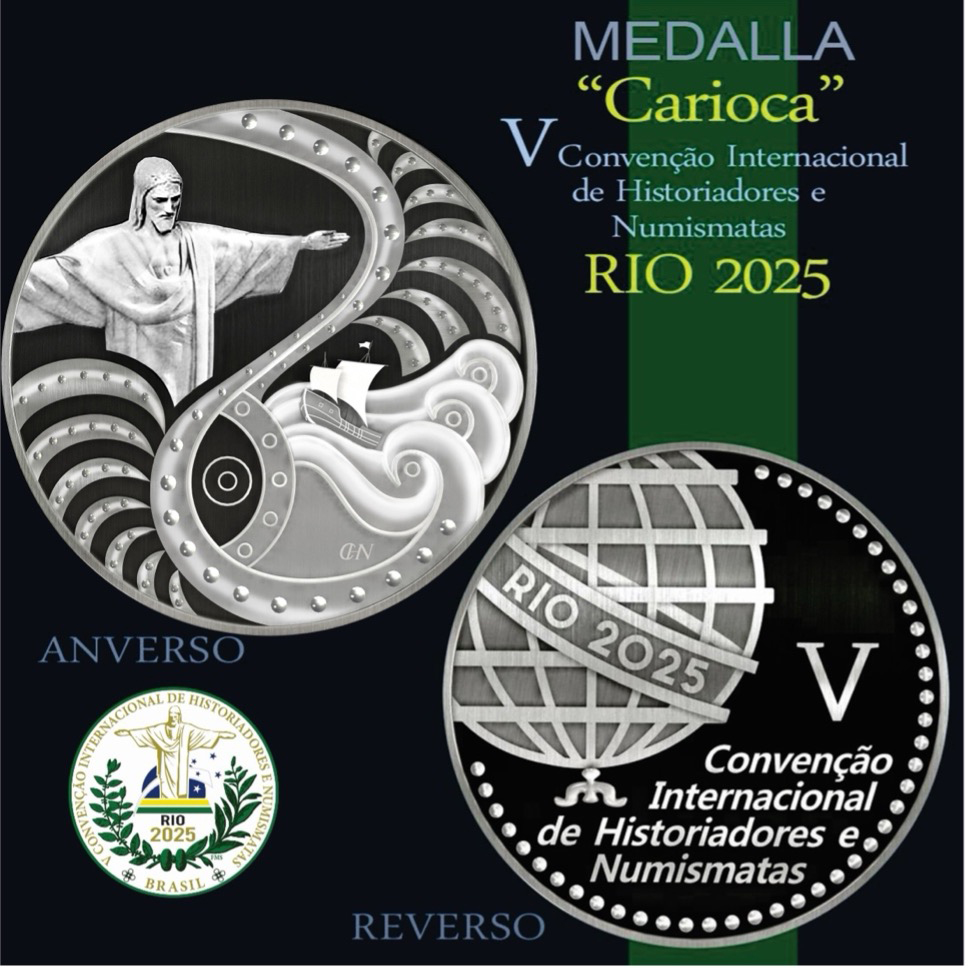
Registered RIO2025 attendees will receive a copy of the official RIO2025 Commemorative Medal in their participation kits. The medal’s design was the result of an international competition won by Carlos Alexis Huatuco Nanzer of Peru. Nanzer has established a name for himself in commemorative medal design, as he also produced the winning art for the 2nd and 3rd International Conventions.

For the first time in the Convention’s history, university students have been invited to participate in an academic poster competition. Ten visual format works will be presented at RIO 2025, offering the students the opportunity to share their research and engage in dialog with leading researchers and attendees at the event.

The International Conventions of Historians and Numismatists were launched in 2016 in Potosi, Bolivia, and take place every two years. Potosi 2016 was followed by Arequipa 2018, Cartagena MMXXI, and Santo Domingo MMXXIII.

RIO2025 is being hosted by the Brazilian Numismatic Society (SNB), and organized by a committee helmed by SNB President, Bruno Pellizzari and ICHN co-founder Daniel Oropeza Alba. Founded in 1924, the SNB is a century-old non-profit institution dedicated to the promotion and development of numismatics. It has a long history of collaboration with cultural and academic institutions, organizing events of both national and international significance.

This year’s congress brings together leading historians, numismatists, academics, minting companies, and auction companies from more than 30 countries. Among a “Who’s Who” of eminent international sponsors, Heritage Auctions, Sedwick & Associates, and Stacks Bowers represent U.S.-based contributors to the event.

To register and stay up to date on event schedules, hotel information, and a full list of sponsors, visit the RIO2025 website at https://www.rio2025.com.br/. Information and updates are also available on the RIO2025 Facebook page. For people traveling from North America, questions can be emailed to Augi Garcia, RIO2025 Vice President for the United States, at augi@sedwickcoins.com.

All other inquiries: rio2025@snb.org.br.

###

Sidebar Information:

United States citizens planning to attend RIO2025 will need a current passport and a VISA, which can be applied for online at https://online.vfsevisa.com/.

For the VISA application process:

  • Book flights first, as flight information is required;
  • Have a photo of your passport ready to upload;
  • Upload a photo of your face against a white background;
  • Upload a letter about the event (recommended);
  • VISA cost is $80; AMEX not accepted;
  • Complete the process on a desktop or laptop, not a mobile device.

The process takes approximately 20-30 minutes, and applications are typically processed within five business days.

###

ICHN attendees have the opportunity to attend presentations given by some of the most prominent numismatic experts in the world. Registration for the 5th International Convention of Historians and Numismatists –RIO2025 – is now open. (Photo: Carol Tedesco)
Rio 2025 – the 5th International Convention of Historians and Numismatists – will take place September 2-6, 2025, in the spectacular Brazilian coastal city of Rio de Janeiro. (Photo: Rafael Rabello De Barros/Wikipedia)
Carlos Huatuco Nanzer of Peru has earned recognition as a master commemorative medal designer with his winning entries for Arequipa 2019, Cartagena MMXXI and RIO2025.
Rio 2025 organizing committee President and Brazilian Numismatic Society President Bruno Pellizzari is pictured giving a presentation at Cartagena 2021, the 3rd International Convention of Historians and Numismatists. (Photo: Carol Tedesco)

Augi Garcia, presenting at the Casa de Moneda in Santo Domingo, serves as RIO2025 Vice President for the United States. (Contributed photo)

Rio2025 organizing committee President Bruno Pellizzari, left, and ICHN President Daniel Oropeza Alba, right, are pictured with the famous silver mountain of Potosi, Bolivia, in the background. The first ICHN was launched in Potosi in 2016. (Contributed photo)