Collecting Mexican Charles-Joanna Coinage: My Journey

14 Oct

by Cori Sedwick Downing

Collector: someone who collects objects because they are beautiful, valuable, or interesting.

Direct link to the Collection

For me, beauty and interest outweigh value, although it’s satisfying when the first two intersect with the third. Years ago, I started researching a robust field of coins, the Charles and Joanna coinage of Mexico City, and my interest was quickly piqued.  Not only was the story of the first mint in the New World compelling, but the coins minted there were extremely well struck and beautiful, unlike many of the coins that came after that period. I was also taken with the simple “castles and lions” shield on one side and “pillars and waves” motif on the other.

Like any hobbyist who aspires to fill in his or her collection in a purposeful way, I learned as much as I could about the coins that had caught my attention. I bought a copy of Robert A. Nesmith’s 1955 book, The Coinage of the First Mint of the Americas at Mexico City, 1536-1572, and read it cover to cover. It’s still a great reference 70 years after publication! I read the transcript of the Tello de Sandoval investigation into possible mint improprieties during the tenure of assayer G, Juan Gutiérrez, which gave me a lot of information about the inner workings of the mint and who was there. I read about Hernán Cortés’ conquest of the Aztecs, which set the stage for a mint to be established in Mexico in 1536. I read about the Spanish monarchy to know why the coins bear the names of two rulers: Charles and Joanna. The former was the son of the latter, who by all accounts was crazy and certainly wasn’t capable of ruling over an empire. It was like a soap opera!

I began to keep census of all the varieties of all the denominations of coins from what Nesmith termed the “Early Series” and the “Late Series” assayers. The pinnacle of my work came when we were privileged to handle the sale of the Clyde Hubbard collection of Mexican Charles and Joanna coins, several of which were plate coins in Nesmith’s book.

My collection is not exhaustive because I decided early on to concentrate on rare and sometimes unique varieties and smaller denominations, which are harder to find. I never chased grades because I find it more important to have a coin in whatever condition it was found if there are only one or two known. There are so many varieties that you could spend a lifetime trying to acquire each one! Like the coins, I hope the results of my years-long study—which should be available soon and will feature most of the coins in my collection—helps further interest by avid collectors and people like me who just happen to find these coins beautiful.

Selected Featured Lots:
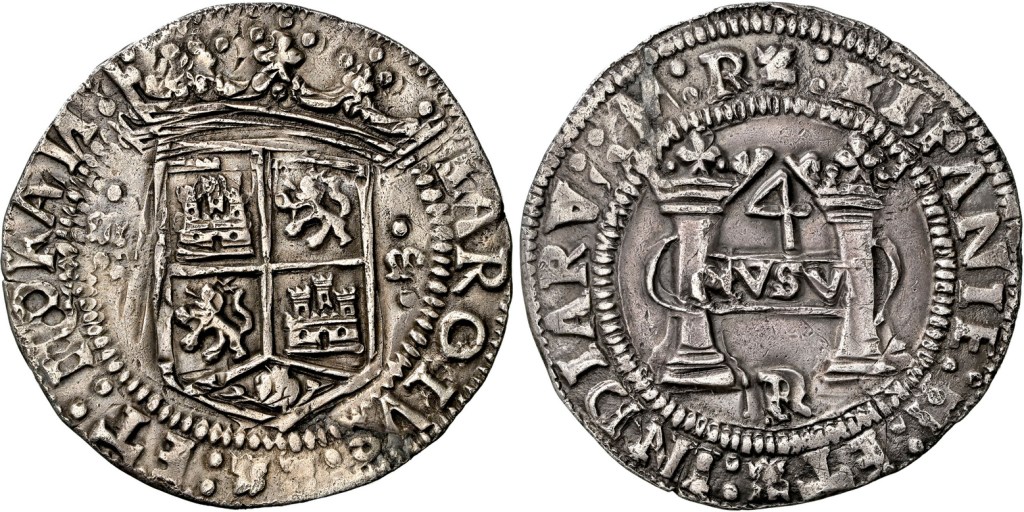
Lot 518 – 4 Reales, Early Series, Assayer R/R (Francisco del Rincón)

This exceptionally broad-flan four reales coin represents one of the earliest issues under Francisco del Rincón, the first assayer of the Mexico City Mint. Bearing a doubled R/R mark at the base of the pillars, it displays a bold strike with clear legends and a rich toning. The coin’s design—castles and lions on one side, pillars and waves on the other—captures the aesthetic ideals of the Early Series. Its die pairing reveals the reuse of shield dies by subsequent assayers, underscoring continuity in early minting practice. Pedigreed to the Sedwick–Downing Collection and graded NGC AU 50, it remains one of the finest known examples of the Rincón type.

Lot 527 – 4 Reales, Early Series, Assayer F, ex-Huntington, Nesmith Plate Coin

Among the rarest of the entire Charles and Joanna series, this 4 reales piece struck by the elusive Assayer F is both a Nesmith Plate Coin and a former holding of the Huntington Collection at the Hispanic Society of America. The issue, known by very few specimens, is distinguished by full legends, golden toning, and only minor surface corrosion. As one of the rarest assayers represented, it has been used in modern die-linkage studies to clarify the chronological sequence of early mint operations. The specimen is a cornerstone piece for understanding the earliest evolution of mint production following Rincón’s tenure.

Lot 533 – 2 Reales, Early Series, Unique Rhomboid Motto Panel

This unique 2 reales coin exhibits an unprecedented rhomboid motto panel enclosing the inscription PLVS. The specimen, attributed to Assayer Rincón, is the only known example of its kind, pairing a rhomboid design with Gothic lettering and a later die used by Assayer P. Its discovery bridges stylistic transitions within the Early Series, providing crucial evidence of experimentation at the Mexico City Mint during the late 1530s. The coin’s rarity and stylistic innovation make it one of the collection’s most academically valuable pieces.

Lot 543 – 1 Real, Early Series, Assayer G, Over-Assayer Type

This 1 real coin represents a transitional issue showing evidence of an over-assayer strike, in which an earlier die from Assayer F was repurposed under Gutiérrez. The piece features full interiors, deep toning, and minimal wear. Its die linkage to both preceding and subsequent issues makes it a key specimen for understanding the mint’s workflow and reusability of dies. Such examples are indispensable for reconstructing chronological mint sequences of the Early Series.
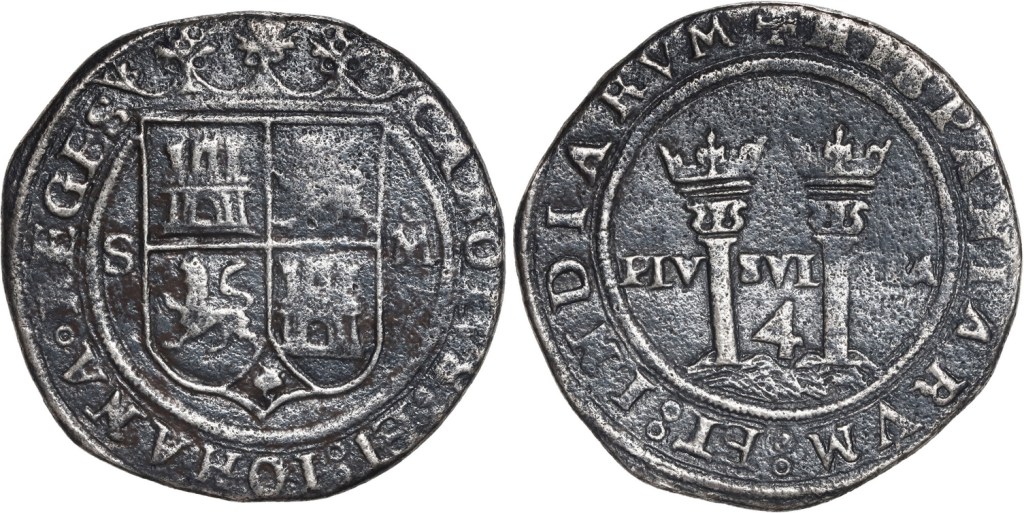
Lot 556 – 4 Reales, Late Series, Assayer S, Padre Island Shipwreck

A rare survivor of the 1554 Spanish Fleet wrecked off Padre Island, Texas, this 4 reales piece from the rare Assayer S illustrates the culmination of the Charles and Joanna coinage before the reforms of Philip II. Its well-preserved surfaces and dark patina testify to its maritime provenance. Few coins of this assayer are known, and its presence in this collection adds both archaeological and numismatic significance. Graded NGC VF details, it is one of the most compelling shipwreck-related specimens of the Late Series.
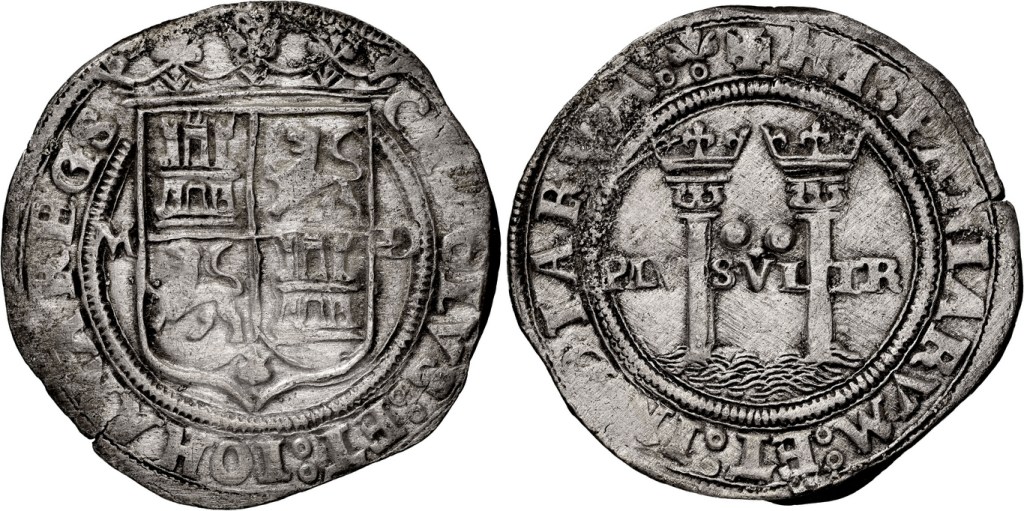
Lot 564 – 2 Reales, Late Series, Inverted G Die Error, ex-Dr. Peter Jones

This intriguing 2 reales coin from the Late Series displays the assayer’s initial G punched upside down—a remarkable minting blunder known in only eight examples. The coin is cited in Dr. Peter Jones’s *The First Coins of the Americas* (2020) and is considered among the best preserved of its type. Its existence underscores the human variability inherent in early minting, as well as the challenges faced by the Mexico City engravers in maintaining die consistency under growing production demands.

Now Online! Treasure, World, U.S. Coin and Paper Money Auction 38

13 Oct

This auction brings together one of the most complete and exciting selections we have ever offered, combining important named collections with individual rarities from all across the world of numismatics. The result is a sale that captures the full story of coinage in the Americas and beyond. As usual, it is consignors and bidders who make this possible, so we thank you all!

Our business was built on cobs and shipwreck treasure, for which we remain the world’s foremost experts, so it is no surprise that this auction is loaded with shipwreck ingots, coins, and artifacts. We run a very clean operation—everything is checked carefully for proper provenance and certification, and in most cases the material we offer comes straight from the source. In fact, our auctions are better than buying from the source directly, as everything we sell is guaranteed and certifiable at any time. In today’s fly-by-night world, this is a critical difference.

First, it is our privilege to presen the Sedwick-Downing Collection of Charles-Joanna Coinage of Mexico City, the result of more than a decade of study and collecting. What began as curiosity grew into a deep passion for the beauty, history, and meaning behind the first coins of the New World. This catalog marks an important milestone in that journey, with the full publication of Cori’s research to follow soon.

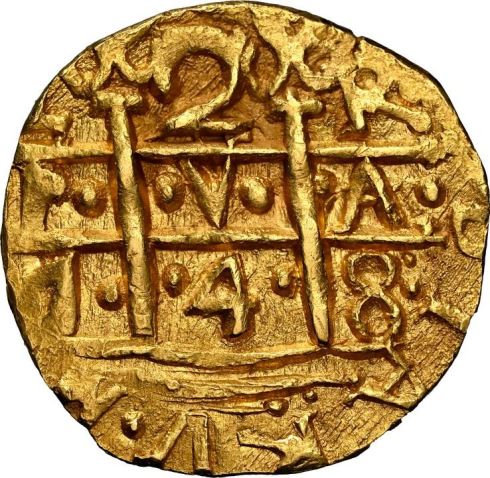
For this auction, we hit the ground running with the McGregor Collection of Gold Cobs from the 1715 Fleet, a vivid reminder of the beauty and adventure tied to Spanish colonial treasure. While this collection showcases a full range of denominations of gold cobs from Mexico City (including a fabulous Royal-dies 1714 8 escudos) and Lima, it also contributes to significant offerings from Cuzco and Cartagena, the latter including a coin that will be featured in Daniel Sedwick’s upcoming book, Arce’s Doubloons. Of course, our treasure coverage is certainly not limited to Spanish colonial cobs. In fact, in this sale we feature all of the famous United States shipwrecks, namely S.B. Pulaski (1838), S.S. New York (1846), S.S. Central America (1857), S.S. Brother Jonathan (1865), and S.S. Republic(1865).

Highlighting our usual silver-cob offerings are several key collections, in addition to the aforementioned Sedwick–Downing Collection. In Lima cobs you will find the Jorge Ugaz Collection of Lima Cob 2 Reales, and in Guatemala cobs is the Darby Collection of Guatemala Cobs, both the result of decades of study and selectivity by devoted specialists. As always, “Royals” (galanos) steal the attention in all three cob sections (Mexico, Lima, Potosí), including a unique Mexican 4 reales Royal dated 1612/1, expanding the cob market into a rarified level of special pieces for truly dedicated collectors.

Outside of cobs, this auction presents an enviable selection of Latin American trophy coins, including two concentrated collections in Chile (the Val y Mexía Collection of Chilean Bust 4 Reales) and Peru (the Almenara Collection of Peruvian Republic Gold Coins), plus key rarities in Spanish colonial pillar dollars (Mexico 1732 and Nuevo Reino 1759), Cuba (unique Guanabacoa medal dated 1747 plus many rare or unique modern proofs), Dominican Republic (10 reales silver pattern 1855), and Panama (1904 proof set), and a veritable panoply of types from around the world, not just the Americas (including some key U.S. coins) but also Europe, Asia, and even Africa. The mix extends from ancients and early hammered types to classic milled crowns and gold issues, all the way to modern proofs, and every section offers key pieces selected for rarity and quality in a range that rarely appears at auction.


The other side of numismatics is paper money, and in Latin America we continue a strong auction presence, here with a selection of incredibly rare and high-grade Dominican Republic notes issued between 1857 and 1865, all new to the market.

Finally, our auctions are unique for offering treasures in coin jewelry and shipwreck artifacts in a wide range of time periods (over two centuries), particularly from the Atocha (1622), Concepción (1641), Bannister’s pirate ship Golden Fleece (1686), 1715 Fleet, and S.S. Central America(1857).

As yet another exciting auction from the Sedwick company, this one is sure to get everyone’s collecting juices flowing, demonstrating that numismatics and treasure transform history and artistry into excitement and positive human collaboration, something our world can surely use more of today.


The Sedwick & Associates, LLC team:

Daniel Sedwick, Augi García-Barneche, Cori Sedwick Downing, Connor Falk,

Michelle Heidt, and Sarah Sproles

Live on the Internet, Thursday-Saturday, November 13, 14, & 15, 2025

CLICK HERE TO REGISTER NOW!

Latest news on RIO2025, the 5th International Convention of Historians and Numismatists, set for Sept. 2-6, 2025 in Rio de Janeiro, Brazil

11 Aug

Aug. 8, 2025

For Immediate Release

Latest news on RIO2025, the 5th International Convention of Historians and Numismatists, set for Sept. 2-6, 2025 in Rio de Janeiro, Brazil

The 5th International Convention of Historians and Numismatists, RIO2025, is just weeks away. The event will take place in the magnificent city of Rio de Janeiro, Brazil, a city recognized as a World Heritage Cultural Site by UNESCO for its rich history and cultural heritage.

Open to the public, the convention boasts a diverse and stimulating agenda, with lectures by some of the world’s leading researchers and authors, exhibitions, book launches, visits to museums and historical sites, as well as formal and informal social events. In addition, RIO2025 will feature thematic round tables, institutional presentations, specialized workshops, and spaces for academic exchange between researchers, collectors and professionals in the field.

Following a rigorous jurying process, twenty-five previously unpublished academic papers have been selected for presentation at RIO2025, researched, authored and presented by:

Jesse Kraft, PhD, representing the USA; Liesel Gentelli, Australia; Korhaan Mainil, Belgium; Juan Claudio Lechin, Bolívia; Daniel Oropeza Alba, Bolívia; Ana Bustamante Ayala, Brazil; Giovanni Miceli Puperi, Brazil; Pedro M. Zaninetti, Brazil; Alexandre Costa, Brazil; Rogério Bertapeli, Brazil; João Pedro Vieira e Mariana Brum Fonseca, Brazil; Hilton Aparecido Magri Lucio, Brazil; Andrés Felipe Cortazar, Colombia; Maricí Martins Magalhães, Brazil/Italy; Indyra Mendoza, Honduras; Ricardo de León Tallavas, Mexico; Jorge A. Proctor, Panama; Paolo Mario Quenta Loza, Peru; Dr. Glenn Stephen Murray Fantom, Spain; Ana Vico Belmonte, José Mª de Francisco Olmos, and Katharina Nothnagel Vivas, Spain; Ana Vico Belmonte, José Mª de Francisco Olmos, and Patricia Labrador Ballestero, Spain; Mario Alonso Barraco, Uruguay; Javier Avilleira, Uruguay; Daniel Luis Padula Graña, Uruguay; and Hussein Larreal Soto, Venezuela.

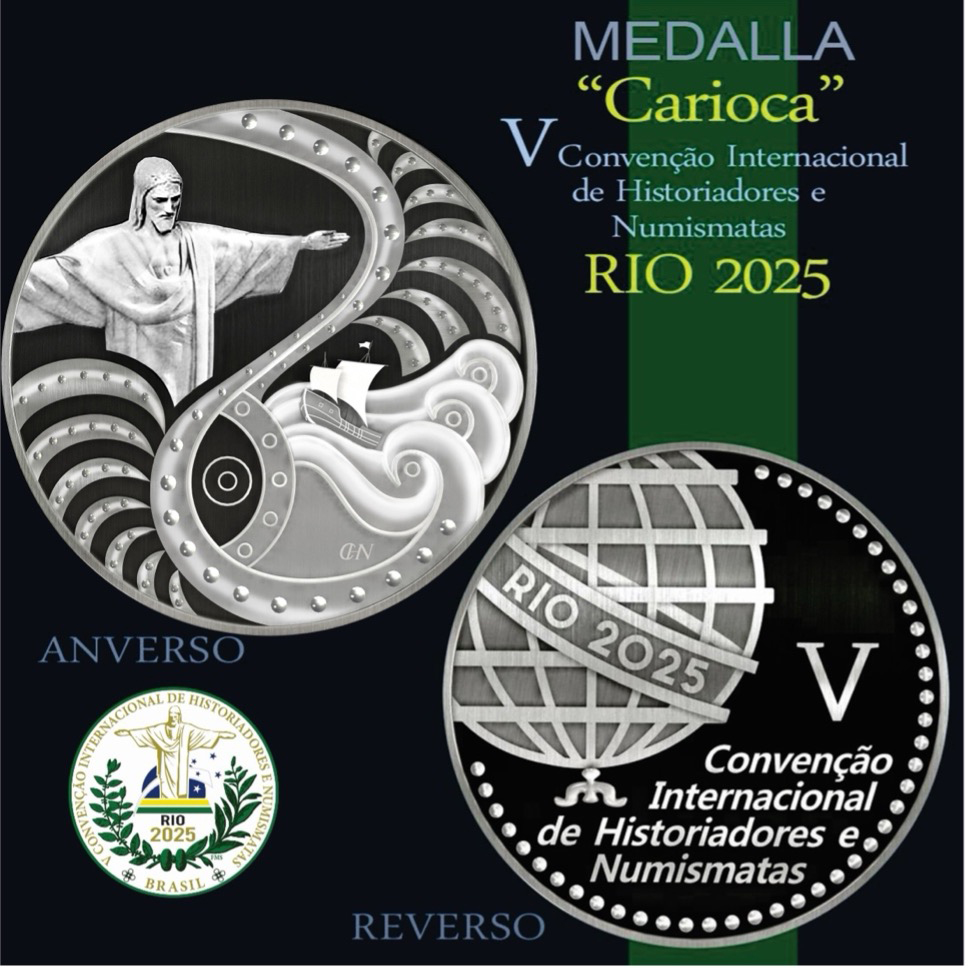
Registered RIO2025 attendees will receive a copy of the official RIO2025 Commemorative Medal in their participation kits. The medal’s design was the result of an international competition won by Carlos Alexis Huatuco Nanzer of Peru. Nanzer has established a name for himself in commemorative medal design, as he also produced the winning art for the 2nd and 3rd International Conventions.

For the first time in the Convention’s history, university students have been invited to participate in an academic poster competition. Ten visual format works will be presented at RIO 2025, offering the students the opportunity to share their research and engage in dialog with leading researchers and attendees at the event.

The International Conventions of Historians and Numismatists were launched in 2016 in Potosi, Bolivia, and take place every two years. Potosi 2016 was followed by Arequipa 2018, Cartagena MMXXI, and Santo Domingo MMXXIII.

RIO2025 is being hosted by the Brazilian Numismatic Society (SNB), and organized by a committee helmed by SNB President, Bruno Pellizzari and ICHN co-founder Daniel Oropeza Alba. Founded in 1924, the SNB is a century-old non-profit institution dedicated to the promotion and development of numismatics. It has a long history of collaboration with cultural and academic institutions, organizing events of both national and international significance.

This year’s congress brings together leading historians, numismatists, academics, minting companies, and auction companies from more than 30 countries. Among a “Who’s Who” of eminent international sponsors, Heritage Auctions, Sedwick & Associates, and Stacks Bowers represent U.S.-based contributors to the event.

To register and stay up to date on event schedules, hotel information, and a full list of sponsors, visit the RIO2025 website at https://www.rio2025.com.br/. Information and updates are also available on the RIO2025 Facebook page. For people traveling from North America, questions can be emailed to Augi Garcia, RIO2025 Vice President for the United States, at augi@sedwickcoins.com.

All other inquiries: rio2025@snb.org.br.

###

Sidebar Information:

United States citizens planning to attend RIO2025 will need a current passport and a VISA, which can be applied for online at https://online.vfsevisa.com/.

For the VISA application process:

  • Book flights first, as flight information is required;
  • Have a photo of your passport ready to upload;
  • Upload a photo of your face against a white background;
  • Upload a letter about the event (recommended);
  • VISA cost is $80; AMEX not accepted;
  • Complete the process on a desktop or laptop, not a mobile device.

The process takes approximately 20-30 minutes, and applications are typically processed within five business days.

###

ICHN attendees have the opportunity to attend presentations given by some of the most prominent numismatic experts in the world. Registration for the 5th International Convention of Historians and Numismatists –RIO2025 – is now open. (Photo: Carol Tedesco)
Rio 2025 – the 5th International Convention of Historians and Numismatists – will take place September 2-6, 2025, in the spectacular Brazilian coastal city of Rio de Janeiro. (Photo: Rafael Rabello De Barros/Wikipedia)
Carlos Huatuco Nanzer of Peru has earned recognition as a master commemorative medal designer with his winning entries for Arequipa 2019, Cartagena MMXXI and RIO2025.
Rio 2025 organizing committee President and Brazilian Numismatic Society President Bruno Pellizzari is pictured giving a presentation at Cartagena 2021, the 3rd International Convention of Historians and Numismatists. (Photo: Carol Tedesco)

Augi Garcia, presenting at the Casa de Moneda in Santo Domingo, serves as RIO2025 Vice President for the United States. (Contributed photo)

Rio2025 organizing committee President Bruno Pellizzari, left, and ICHN President Daniel Oropeza Alba, right, are pictured with the famous silver mountain of Potosi, Bolivia, in the background. The first ICHN was launched in Potosi in 2016. (Contributed photo)

Sedwick Auction 37: Record Prices in a Market for the Advanced Collector

10 May

Sedwick Auction 37 delivered exceptional results, marked by record-breaking prices for standout rarities and a stellar performance by the Almenara Collection of gold coins from Potosí and Lima. With finest known examples, multiple provenances, and strong historical significance, these colonial treasures drew intense bidding, reaffirming the market’s focus on rarity, condition, and pedigree.

The results confirmed a trend we’ve observed across recent sales: this is a market driven by knowledgeable and discerning collectors—those who seek out the most important pieces and are willing to compete for them. From rare milled coinage to hand-struck cobs, buyers responded strongly to top-tier material. Shipwreck coins continued their momentum, with rising prices across the board and sustained interest from collectors who value both history and preservation.

At the same time, Auction 37 offered meaningful opportunities for new and mid-level collectors. Strong bidding across a range of price points demonstrated that there is still room for growth and participation at all levels, making this auction a success not only for established specialists but also for newcomers with a passion for numismatics.

This auction also marked a special milestone—it was the first time we hosted a live sale in our new offices. The in-house event brought together collectors, consignors, and guests for an exclusive and memorable experience.

Over the course of six sessions held from May 7 to 9 at our offices in Maitland, Florida, the following highlights unfolded:

Given the exclusive nature of our auctions, now is the perfect time to start thinking about consigning your collection or select coins for future sales. We thank our consignors and bidders for continuing to choose Sedwick Auctions. More great things are coming soon!

Contact information:

email: office@sedwickcoins.com

phone or whatsapp: +407.975.3325

Schedule and upcoming events – click here

Sedwick & Associates, LLC

Sedwick & Associates: Upcoming Treasure, World, & U.S. Coin & Paper Money Auction 37 – May 7-9 

16 Apr

While we always stress that numismatics is a hobby, there is no denying it can be financially profitable as well. Why? Obviously, soaring precious metal prices help, but there is more to the story. The answer is that rare old coins, paper money, ingots, and artifacts are limited commodities. They were made in a certain quantity and survived at a certain rate, but that’s it: No more will be made. So then it becomes a matter of demand, and when demand is high, there is no limit as to what something rare can be worth.

Our auctions are packed with unique or near-unique items whose current value depends on you, the bidders. Our consignors depend on us to present these coins and artifacts in their best light, but only the bidders can decide the prices. At a time when the world is very concerned about financial matters, this is the time for collectors to put idle money into rare assets.

Shipwreck items are particularly good performers these days. In many cases, certain items are only available from shipwrecks, hence their already limited population is further restricted by whether they were legally commercially recovered, hardly a sure bet these days. That is why original certificates (or those from qualified professionals) are such a big deal.

The other big concern for coins and paper money is quality, which is where third-party certification companies like NGC and PCGS come in. It is not an exact science, to be sure, but just having an unbiased professional opinion about relative quality posted in a public census adds significant value. Anything presented in our auctions with notations like “top pop” or “finest known in the XYZ census” has even more potential value beyond its baseline rarity and demand.

The moral of the story is that we at Sedwick & Associates run a tight ship with academic and ethical integrity, and we bring you the best the market has to offer with the cleanest pedigree and certification possible. Bid with confidence.

Several important collections stand out in this auction, literally from A to Z. Probably the most significant is the Almenara Collection of Colonial Peruvian Gold Coins, including Lima cobs and Potosí bust gold (as the latter mint fell under Peru in colonial times). The run of Lima cob 1 escudos seen here is the most complete ever offered, and the bust series from both Lima and Potosí contain many “finest knowns” and important pedigrees. And at the end of the alphabet you will find the Zbar Collection of Maravillas coins.

You will also find several great offerings of colonial Peruvian silver coins (O’Brien Collection), as well as Colombian colonial and Republic gold and silver (JEAS and Becerra Collections), pillar dollars of most of the colonial mints (Brameld Collection), Mexican cobs (Hubbard Collection), Potosí cob 8 reales plated in the Calbetó reference, Potosí cob 4 reales (Ponte Collection), and even paper money (Busto Collection) from Cuba, the Dominican Republic, and Disney (yes, Walt Disney World is like its own country).

In addition, there are several important one-off coin trophies scattered throughout that should not be missed, even if you are not a buyer but want to witness numismatic history being made:

-Lot 495, a Mexico 3 reales of Charles-Joanna in XF 40

-Lot 1026, a Costa Rica gold 20 pesos dated 1873 in UNC details

-Lot 1037, a Santo Domingo 4 reales of Charles-Joanna in AU 55

-Lot 1399, a Spanish East Indies proclamation 2 reales dated 1747 in VF20

As always, we also have many important shipwreck gold cobs, including the following standouts:

-Lot 22, a 1715-Fleet Mexico 8 escudos 1714 struck with a Royal obverse die in MS 63

-Lot 60, a 1715-Fleet Cuzco 2 escudos dated 1698 in MS 63

-Lot 124, an Atocha Seville 2 escudos dated 1619 in AU55

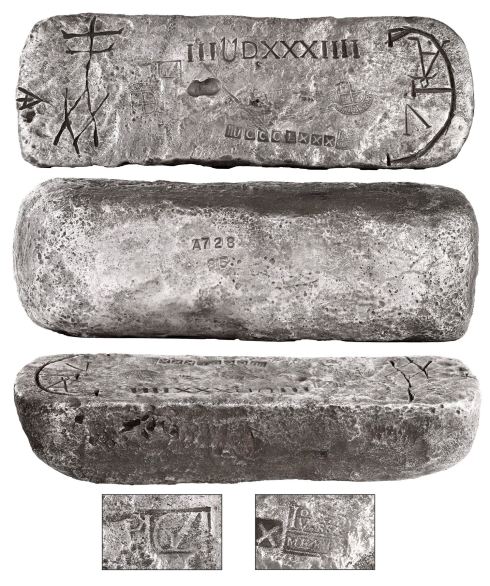
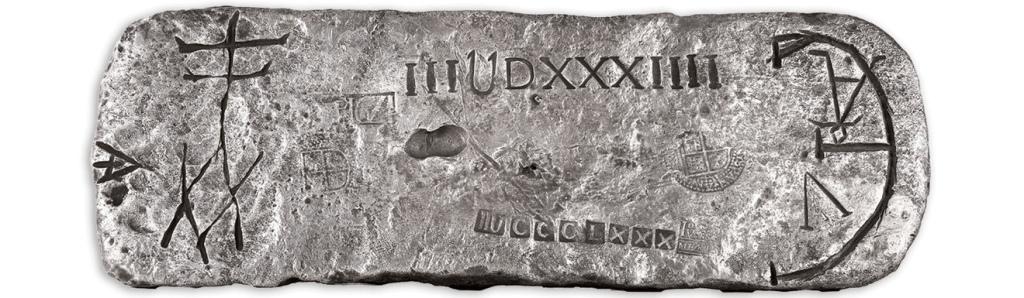
ngots include two massive (each almost 1000 troy oz) Atocha silver bars Class -Factor 1.0 (lots 92 and 93) as well as a 21.5-troy oz gold “finger” bar from the “Golden Fleece Wreck” (lot 85).

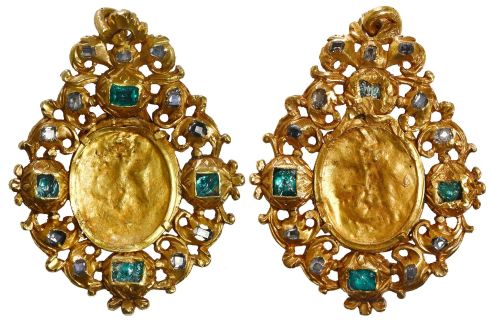
But best of all, a showpiece for the ages, is lot 1665, an ornate pendant (reliquary or noble neck-badge) made of gold, diamonds, and emeralds from the Tolosa (1724), a fabulous jewel that appeared in multiple publications in the late 1970s and early 1980s.

Many thanks to all our consignors, and best of luck to all our bidders. We hope you find your treasure!

Sedwick & Associates, LLC