Tag Archives: Atocha

400-year-old gold bar from famous shipwreck to be sold in May auction

26 Apr

When the Spanish treasure galleon Nuestra Señora de Atocha sank in 1622 off what is now Key West, Florida, she took down untold treasures in gold and silver. And now a particularly famous piece of treasure from the wreck is crossing the auction block.

One of the largest gold bars ever recovered from a Spanish colonial shipwreck is up for sale on May 7th in an auction conducted by Daniel Frank Sedwick, LLC in Winter Park, Florida.

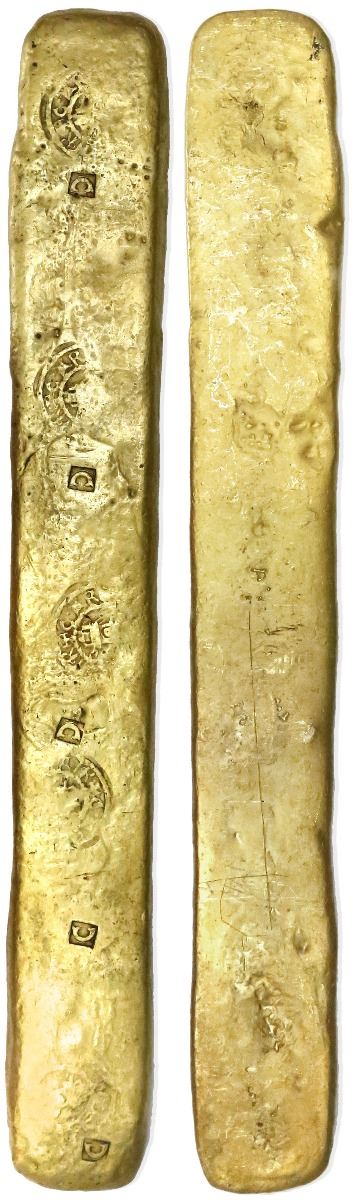
The gold bar, listed in the sale as lot 96, weighs over 5 pounds (2,274 grams), measures 8-3/4” x 1-1/2” x ¾”, and consists of 17-karat gold mined in the New World. The unique bar features eight circular royal tax stamps bearing the King of Spain’s name as PHILIPPVS III along with five XVII (17-karat) gold fineness markings. The bar also possesses a single foundry and assayer mark reading SEBATN / ESPANOL at the center, a mark that is both unattributed and only found on two gold bars recovered from the Atocha.

This 5-pound gold bar recovered from the famous Atocha shipwreck sunk in 1622 is up for auction on May 7th in Daniel Frank Sedwick, LLC’s Treasure Auction 35

The gold bar’s pre-auction estimate is $200,000 and up.

“This Atocha gold bar is a crowning treasure piece from the most popular salvaged shipwreck treasure ever,” said Daniel Frank Sedwick, owner and founder of the auction firm. “With its high intrinsic value in Spanish colonial gold plus its incredible historical value, it will be a trophy piece for its next owner.”

The gold bar was created in the early 1600s at a Spanish colonial foundry processing gold and silver mined throughout South America. After being transported overland to Panama City, this gold bar, among others, was loaded in mid-1622 aboard the Spanish treasure galleon Nuestra Señora de Atocha. The Atocha, a three-masted galleon constructed just two years prior, was to carrya vast treasure of gold and silver ingots, Colombian emeralds, and silver coins all bound for mainland Spain.

When the Atocha departed her final port at Havana, Cuba on September 4th, 1622, she was the almiranta, the lead ship, of the 28-ship 1622 Fleet. The Fleet was a vital link in Spain’s finances as the gold and silver from the New World funded the royal treasuries. In addition to the treasures on board, the Atocha carried her crew along with soldiers and passengers, around 265 people in all, intending to cross the Atlantic Ocean and return to Europe.

Just two days out from Havana, the Fleet was engulfed by a hurricane while approaching the Florida Straits. Amid the storm, the Atocha was wrecked and torn apart upon a reef off the Florida Keys. Only five people survived the sinking, having clung to the highest remaining mast of the ship as it sank. The wreck of the Atocha was further scattered just a month later during another storm, preventing the Spanish colonial authorities from salvaging any of her precious cargo spilled across the ocean floor.

“Atocha Meets Her Fate,” by Ralph Curnow (2009)

The treasure of the Atocha did not see light again until 1971, when the first coins were found by the now-famous salvager Mel Fisher and his divers. Throughout legal battles and personal tragedies, the salvage group eventually recovered the bulk of the treasure in 1985 and thereby unleashed the largest supply of silver cobs and ingots the market has ever seen.

This gold bar will be auctioned along with its photo-certificate issued by the Fisher salvage company in 1985. The bar also boasts a pedigree to the Christie’s Atocha auction of June 1988 as lot 90.

Other treasures from the Atocha in the upcoming Sedwick auction include:

– a large silver ingot from Oruro weighing over 88 troy pounds (Lot 105) estimated at $30,000 and up.

– a silver ingot from Potosí weighing over 82 troy pounds (Lot 106) estimated at $25,000 and up.
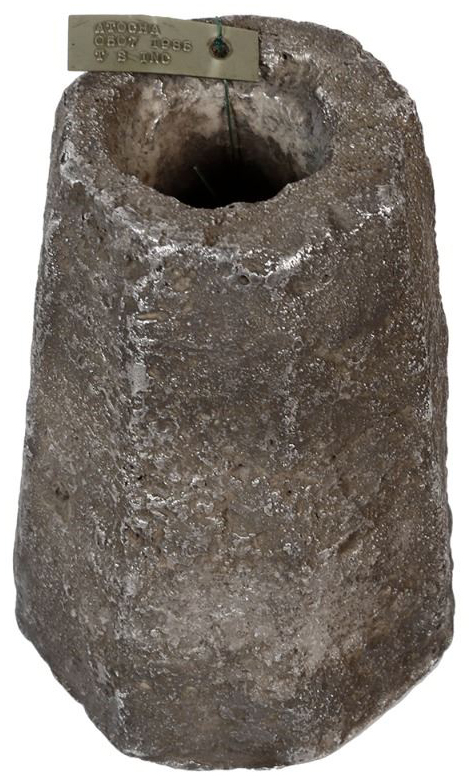
This large silver “piña” ingot weighing 5,335 grams, one of just three recovered from the Atocha shipwreck, is also featured in auction

– a very rare silver piña ingot, one of only three known from the Atocha, weighing 5,335 grams (Lot 107) estimated at $15,000 and up.

– over 180 silver coins from Potosí, Mexico City, and Lima including 19 high grade pieces from the Bill Barman Collection of Atocha Research Coins

“To have this amazing gold bar alongside all these other treasure pieces from Atocha in a single auction is a feat not seen on this market in decades,” said Sedwick. “And it won’t be seen again anytime soon.”

The three-day auction will be held live online at auction.sedwickcoins.com. The Atocha gold bar can be viewed on the auction site here: https://auction.sedwickcoins.com/Large-gold-ingot-77-2274-grams-marked-with-fineness-XVII-17K-foundry-assayer-cartouche-SEBATN_i52415344. For more information, contact Daniel Frank Sedwick, LLC by email at office@sedwickcoins.com.
Gallery

What You Can’t Live Without in Treasure Auction #20 (part four)

8 Nov

We’re into the home stretch with only 4 days to go until the auction! We hope you have been bidding and will join us for the live portion.

Below are some of the most important artifacts in the auction, and while most of these items will come up at the end of the auction, it’s definitely a case of “last but not least.” Coins–as well as all shipwreck treasure–are our business, and you can be confident that we know what we’re talking about in our descriptions.

lot-473-ta-20

Lot 473, Sedwick Treasure Auction #20

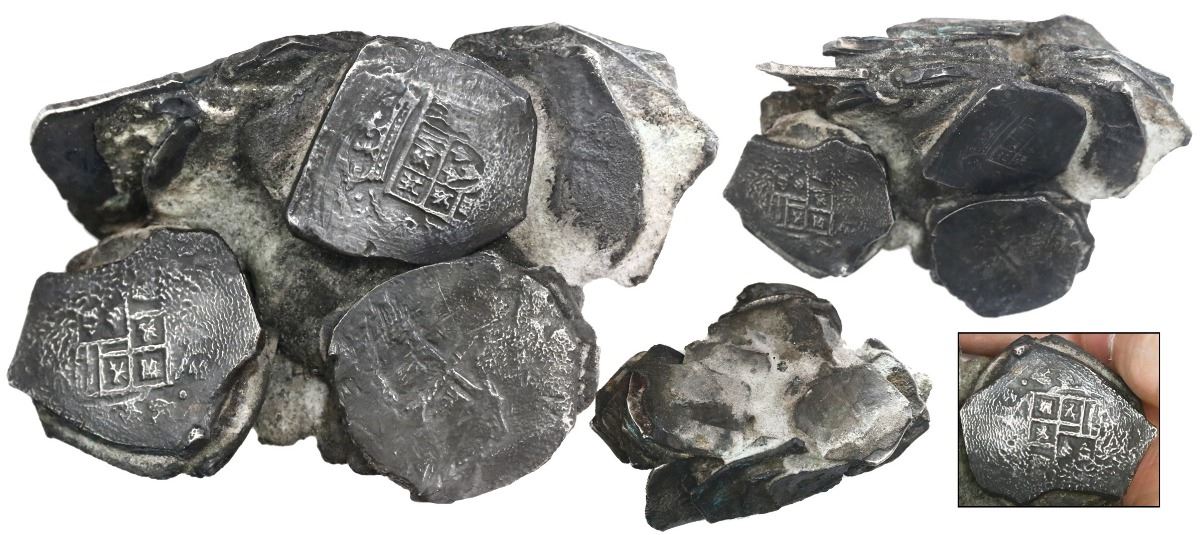
Why have one coin when you can have several? The above is a large clump of 20+ Mexican cob 8 reales, two in front dated 1714. It’s a very impressive display that stands up well, also a very rare item these days and was recovered from the Spanish 1715 Fleet off the east coast of Florida.


lot-1086-ta-20

Lot 1636, Sedwick Treasure Auction #20

You could eat off the above plate today because it’s in such good condition. It’s marked with a tax stamp and LDo.IVo. / RAMYREZ under rim. More important, the underside of the rim bears most of a castles-and-lions circular tax stamp and a stamping in tiny letters that exactly matches lots 41-43 of the Christie’s 1988 Atocha auction, in which that mark was described as an “owner’s stamp.” It is clearly part of a set with this bigger basin; those three lots were only 8-7/8″ in diameter and described as “dinner plates.” They fetched some of the highest prices realized among the silver plates in that sale, upwards of $6000 hammer, but not even close to the price realized for the only large basin (like what we are offering here but slightly bigger), lot 47, which hammered at $22,000!


lot-1646-ta-20

Lot 1642, Sedwick Treasure Auction #20

The above is a complete gold plain-loop chain, 34.55 grams, from the “Tricentennial Treasure” find of 2015. There are hundreds of tiny plain links in a tight chain (easily kinked) that is remarkable for being unbroken and complete, eminently wearable and attractive despite its simplicity, also one of the first artifacts from the famous “Tricentennial Treasure” to be offered for sale. From the 1715 Fleet (Douglass Beach site).


lot-1654-ta-20

Lot 1654, Sedwick Treasure Auction #20

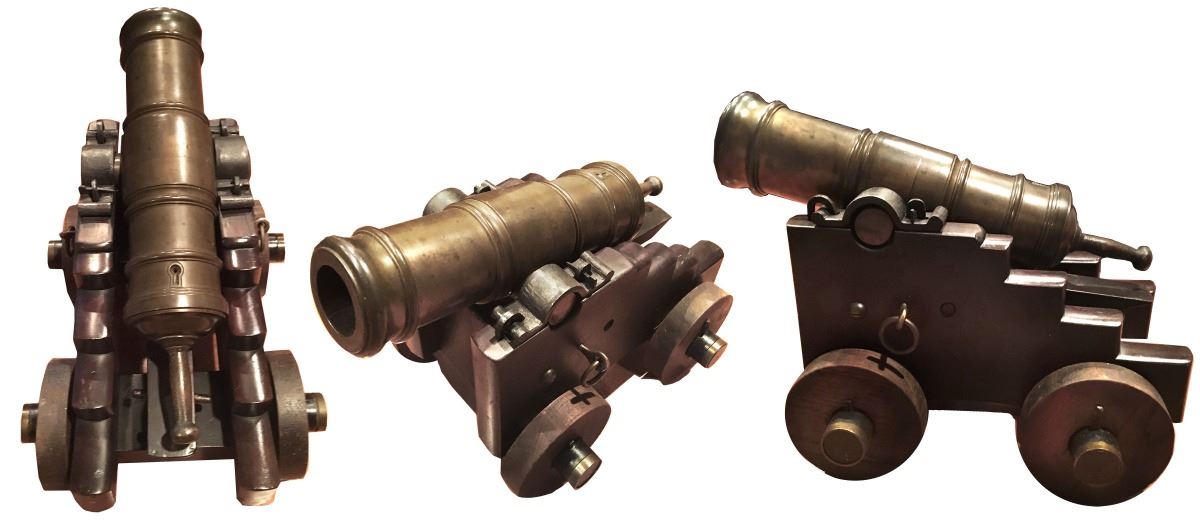
What’s an auction with out a cannon? The above Danish naval “4-pounder” bronze howitzer from the late 1700s  is  believed to have been from military and naval stores captured by the British during the Battle of Copenhagen in 1807. Sent to England, these items were used by English forces during the Napoleonic Wars and in America and Canada during the War of 1812. Some ended up in American service due to capture or purchase. The bronze barrel has a chambered bore (which most howitzers have), a designated area for the powder charge, turned decorations and cast with bronze pointing tiller cascabel ending on a rounded ball end. This cannon was made for use as a swivel gun but is now mounted on a mahogany naval deck carriage (complete and serviceable with working elevation screw and wheels) with correct brass and iron mounts and four wheels from the early 19th century (possibly exact replacements made later). The barrel is in excellent condition with minor surface wear and excellent light-brown patina.

Once again, we hope you all your bids are winning bids!

Gallery

What You Can’t Live Without Buying in Treasure Auction #20 (part two)

25 Oct

In this blog, we will cover some of the big-ticket items (i.e. gold and gold and silver bars) you can find in our upcoming auction. These coins and bars are important for either their rarity, their quality, their provenance or all of the above. They are for the discerning advanced collector who can afford the best. These lots also represent historical treasures which anyone can appreciate whether they can buy them or not.


lot-30-ta-20

Lot 30, Sedwick Treasure Auction #20

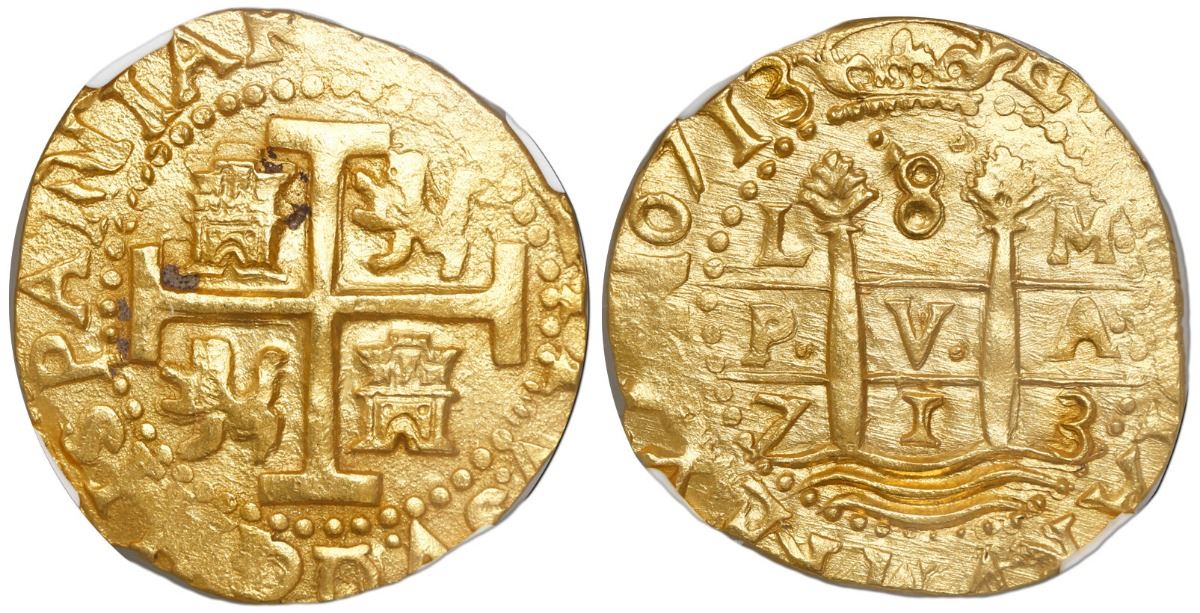
The above Lima 8 escudos cob is the finest known of its type in the NGC census with a grade of MS 63. Dan has described it as “a superb specimen all around, befitting the top honors.” Over and above that, it’s from the 1715 Fleet!


lot-35-ta-20

Lot 35, Sedwick Treasure Auction #20

Another Lima 8 escudos cob, this coin is tied for finest known in the NGC census with a grade of MS 62. Dan’s description: “Clearly top grade but probably also the best in terms of strike, and apparently one of very few of this date and denomination recovered” from the Luz. ‘Nuff said!


lot-48-ta-20

Lot 48, Sedwick Treasure Auction #20

A Bogota 8 escudos cob, this coin is the finest and only specimen in the NGC census with a grade of XF 45. Per Dan’s description it’s a “royal-like specimen on a broad flan with 100% full and bold date and king’s name in legend….one of just a handful of full-date specimens from this mint that seem to have been intended as presentation pieces, so great is the contrast between them and the regular issues with only partially or non-visible dates.” Furthermore, he notes that “this Philip V issue is much tougher than the Ferdinand VI type that followed.”


lot-89-ta-20

Lot 89, Sedwick Treasure Auction #20

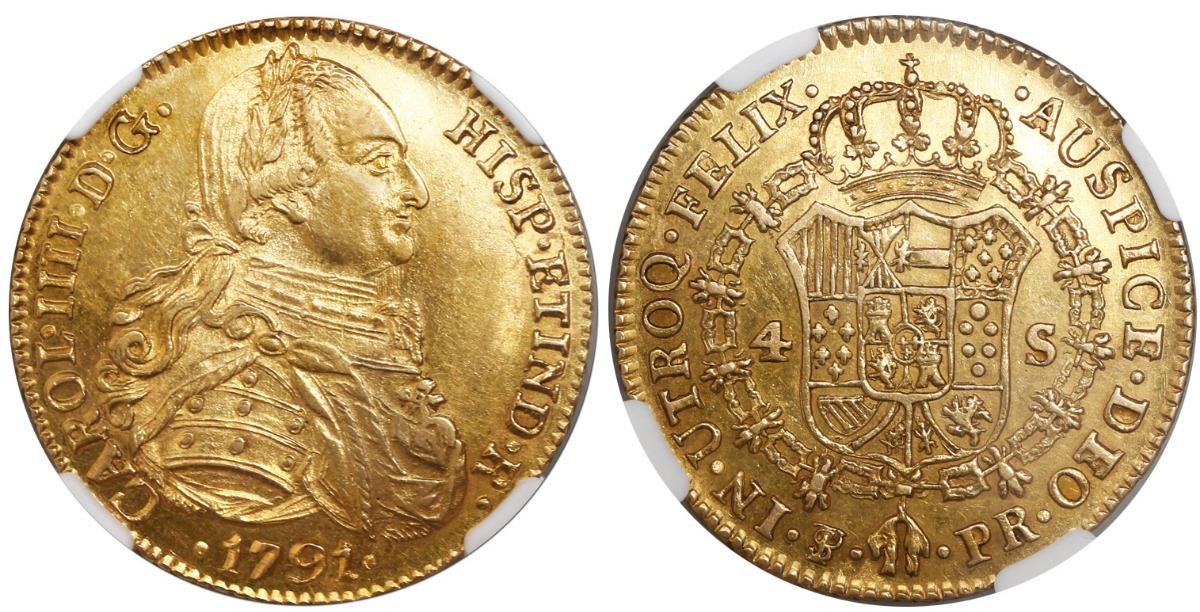
This Potosi bust 4 escudos is the finest and only known in the NGC census with a grade of AU 58. As Dan has noted, only 170 pieces (both laureate and non-laureate types) were minted and this date is the rarest bust-type issue in any denomination from this mint. It’s “a trophy gem and has no equal in any sales records known to us,” with “trophy” seeming like an understatement!


lot-161-ta-20

Lot 161, Sedwick Treasure Auction #20

The above is a Lima, Peru, bust 8 escudos from the time of Ferdinand VI and dated 1751. This lot is “one of only two of this ‘large wigged bust’ type” from the Luz shipwreck. Pretty rare stuff!


lot-202-ta-20

Lot 202, Sedwick Treasure Auction #20

On to bars! Above is a complete gold “strap” ingot for making oro corriente pieces, marked five times with circular tax stamp of Charles V, Holy Roman Emperor (Charles I of Spain) from an unidentified early 1500s wreck in the Caribbean. As Dan states, “its near-uniform flatness and its markings all indicate that this piece is the first example ever recorded of a complete ‘strap’ (in Spanish: riel) for cutting into the known (but very rare) money pieces (small) known as ‘oro corriente,’ which were used in place of actual gold coins (which were in short supply) in the colonies and thus represent the ‘first fish out of the lake’ from the colonies in terms of local gold coinage.” It dates to the 1520s and hence is “unique in importance, especially as the earliest form of Spanish colonial gold treasure we have ever offered.”


lot-203-ta-20

Lot 203, Sedwick Treasure Auction #20

Another important bar, the above gold “finger” bar is encrusted with coral as from the “Golden Fleece wreck” and was made “in a period when gold coins were not yet made in the New World and ‘oro corriente’ was being phased out” says Dan. Shipwreck bars are always in demand in our auctions.


lot-210-ta-20

Lot 210, Sedwick Treasure Auction #20

A very unusual silver “tumbaga” bar (#M-61) whose “most intriguing aspect is a large area of exposed pure copper, revealing how most ‘tumbaga’ silver was created by hammering silver and copper together and therefore showing the true nature of ‘metal of Michoacan’,” according to Dan. You should read The Tumbaga Saga by Agustin Garcia Barneche to learn more about these important and fascinating early silver bars.


lot-211-ta-20

Lot 211, Sedwick Treasure Auction #20

What’s an auction without a large silver Atocha bar (#451)? As Dan notes of special importance, accompanying this bar is a “complete manifest report, which was an optional (and mostly declined) item when the bars were first distributed.” Rarity and provenance!

That’s all for now, and we hope this note will whet your appetite for our auction.