Two Esteemed Guests (and Friends) Visit Our Office

18 Jun
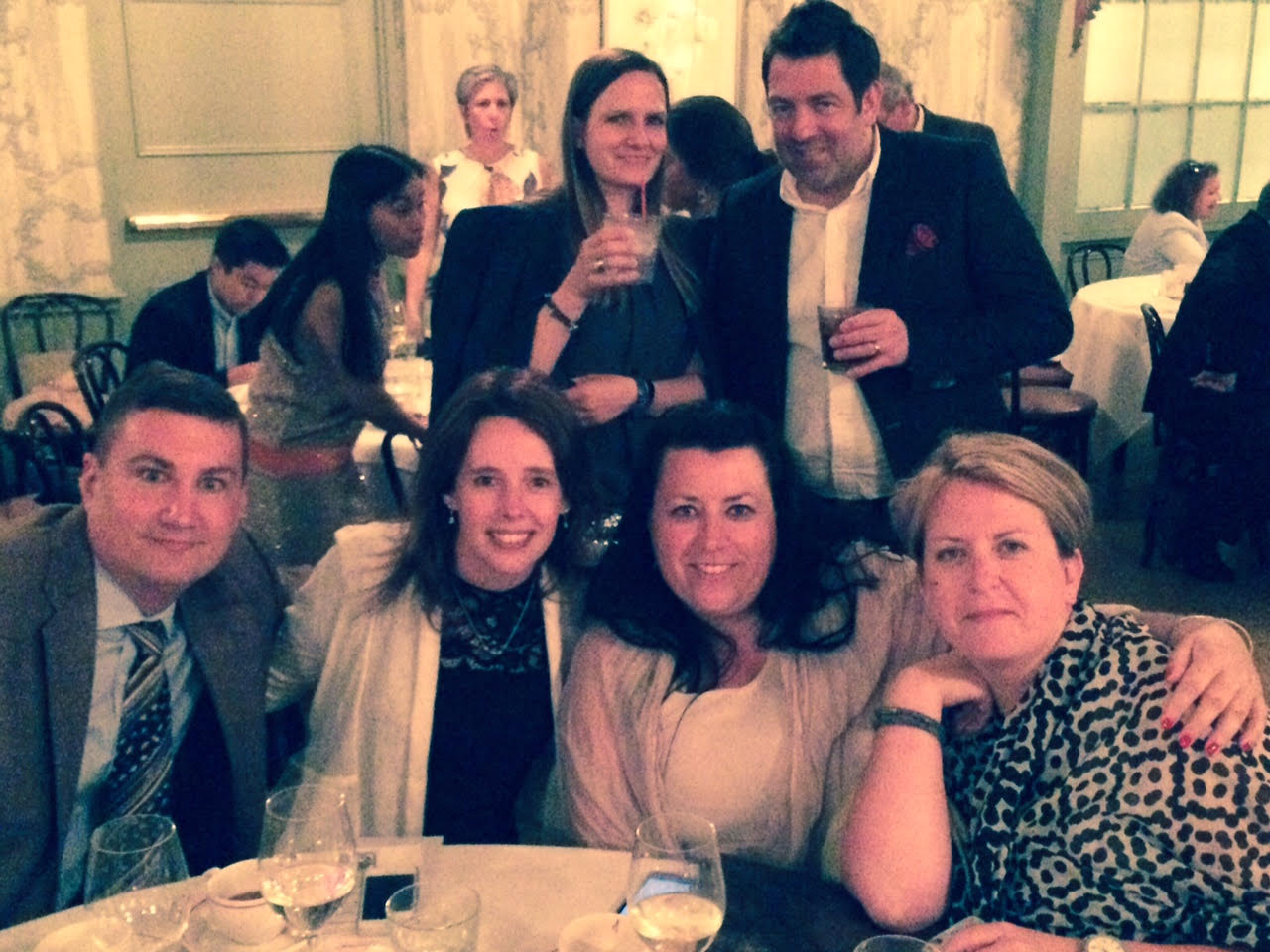
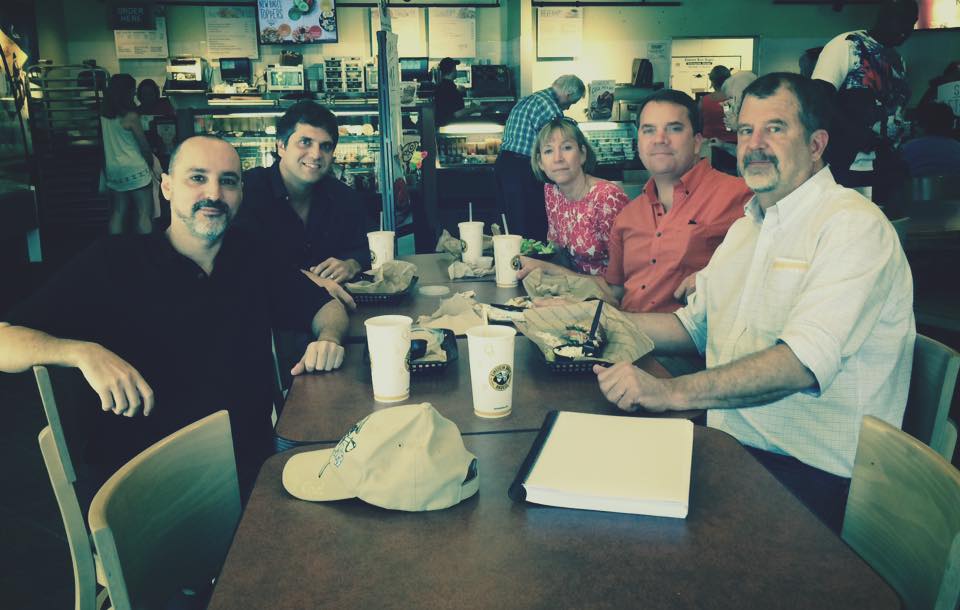
Jorge Proctor, Agustin Garcia-Barneche, Cori Sedwick Downing (Me), Dan Sedwick, and Glenn Stephen Murray Fantom,

Jorge Proctor, Agustin Garcia-Barneche, Cori Sedwick Downing (Me), Dan Sedwick, and Glenn Stephen Murray Fantom.

Yesterday we had the pleasure of spending some time with Glenn Stephen Murray Fantom and Jorge Proctor at our office. Both are avid researchers and writers in the field of Spanish colonial coinage and mints. Glenn is the president of the Friends of the Segovia Mint Association (Amigos de la casa de moneda de Segovia) and has worked tirelessly to rehabilitate the Segovia mint building in Spain. He’s written extensively about mints in Spain, particularly the Segovia mint or Real Ingenio which operated from 1583 to 1869. In 2009 Glenn was awarded the Grand Premio Union Europea de Patrimonio Cultural/Europa Nostra for his dedication to restoring the Segovia mint after which he published Las acuñaciones de moneda en Segovia, desde 30 a. C. hasta 1869, en conmemoración de la obra de rehabilitación del Real Ingenio de la Moneda de Segovia.  We have copies of this terrific resource book for sale!
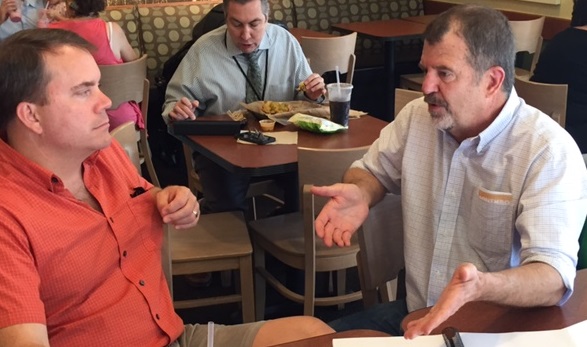
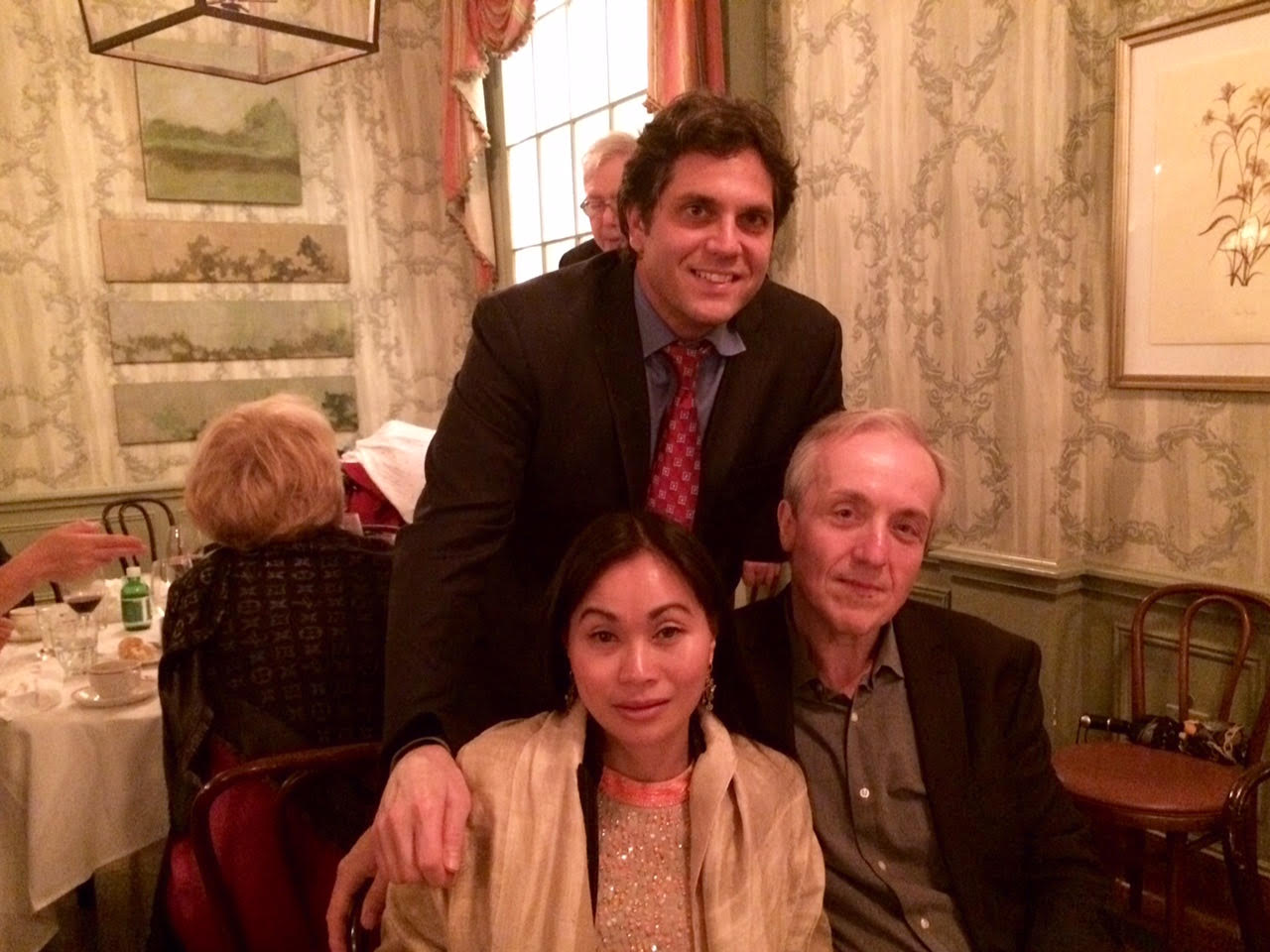
Dan Sedwick and Glenn Stephen Murray Fantom

Dan Sedwick and Glenn Stephen Murray Fantom

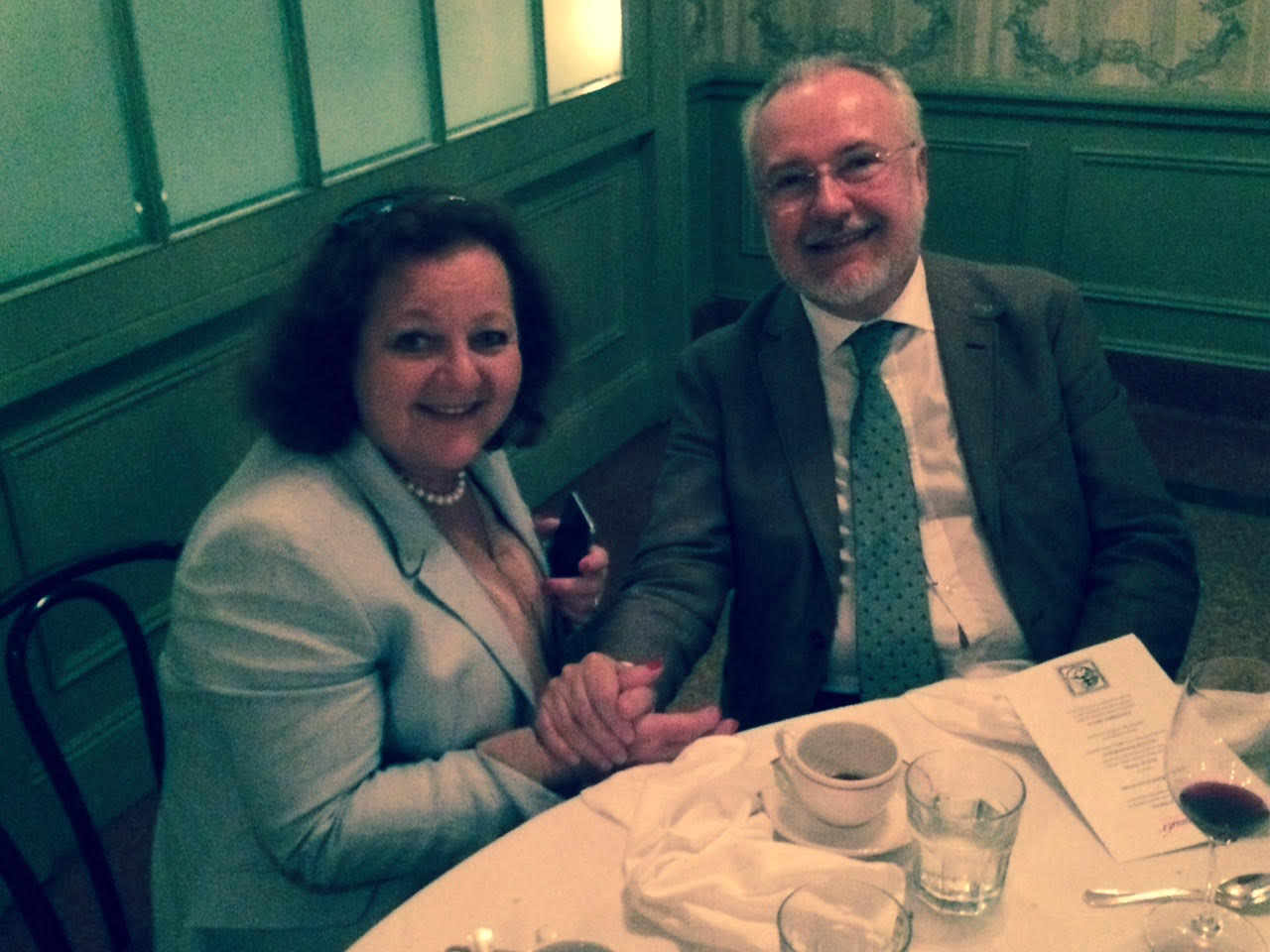
Jorge Proctor with Glenn Stephen Murray Fantom and book (2)

Jorge Proctor with Glenn Stephen Murray Fantom

As many know, Jorge Proctor’s focus has been on reading and transcribing original records from such venerated repositories as the Archives of the Indies housed in Seville, Spain. He’s a detective and numismatist rolled into one! Jorge has written the definitive book on the Panama mint called The Forgotten Mint of Colonial Panama: A Look Into the Production of Coins in America During the 16th Century and Panama’s Spanish Royal House for Minting Coins. A copy of this book is rare and scarce. Lately Jorge has turned his considerable attention to the assayers at the Mexico City mint and others with a recent article entitled “The Assayers of the Mint of Mexico During the 16th Century Pillars Coinage, 1536-1571 (?)” which was published in the January/February 2015 Numismatics International Bulletin and “Who Were Mexico City Mint Assayers L and J (1677-1723)?” which was published in the June 2015 U.S. Mexico Numismatic Association journal. And Jorge is one of the fastest talkers I know, both in Spanish and English!

It was a fortuitous series of events that led to Glenn and Jorge being able to spend an afternoon with us in Winter Park and we hope they’ll come back again soon with more news from Spain and beyond.

Glenn Stephen Murray Fantom and Jorge Proctor with gold bar

Glenn Stephen Murray Fantom and Jorge Proctor with gold bar

An interesting side note this week: If you’ve opened up your June 2015 copy of The Numismatist, the monthly publication of the American Numismatic Association, you may have seen an article about us on p. 23! It’s called “Golden Cobs” and highlights our Treasure Auction #16 last November. Thanks to Andy Smith for writing the artThe Numismatist, June 2015icle.

We’re Baaaaaack!

5 Jun

It’s been a crazy couple of months! Since the end of April, we’ve held our most successful auction to date (Treasure, World & US Auction #17) with prices realized (including buyer’s fees) totaling over $2.4 million, went to a wedding, and attended an IAPN Congress in New Orleans. We’ll be back to full strength next week, and then some, as Dan’s older daughter, Emily, becomes our intern for the summer!

Last week, we jumped on a plane and winged our way to New Orleans for the annual IAPN Congress from May 28-31 (organized by Mike Dunigan Company). You may have noticed the IAPN symbol we include on all our media and catalogs.

IAPN logo

IAPN logo

It stands for International Association of Professional Numismatists and represents some of the most important numismatic dealers in the world. There are thirty-two US dealers with the rest from Europe, the UK, Australia, Venezuela, Egypt, Thailand, and even Japan. Forty-two of the more than 100 member dealers came to New Orleans to discuss important numismatic topics, network, and enjoy the unique ambiance of New Orleans.

The IAPN was founded in 1951 in Geneva. Today more than 114 numismatic firms are in membership, situated in all five continents and twenty-three countries. These professional numismatists will be pleased to help you with any questions you have concerning your collection of coins, medals, tokens, paper-money or decorations.

Agustin Garcia, Cori Sedwick Downing, Lynn and Dan Sedwick at cocktail reception for IAPN

Agustin Garcia, Cori Sedwick Downing, Lynn and Dan Sedwick at cocktail reception for IAPN.

IAPN meeting

IAPN meeting

unnamed (11)

It’s quite an honor to be nominated and voted into IAPN, so we are understandably proud to be a part of such a prestigious organization! The annual Congress is held in different parts of the world and this year’s selection of New Orleans gave those outside the US (and some within) an unusual experience. Where else can you take an airboat ride and afterward eat Cajun crawfish at an open-air down-home rustic restaurant?

And how many times do you get the opportunity to take a tour of an antebellum plantation?

Cori Sedwick Downing, Agustin Garcia, Lynn and Dan Sedwick at Destrehan Plantation

Cori Sedwick Downing, Agustin Garcia, Lynn and Dan Sedwick at Destrehan Plantation

11312830_1598943600322505_5308573779523035223_o

unnamed (10)

Julio Chico and Jesus Vico

unnamed (8)

Joe Lang, Andrew Absil, Augi Garcia, Kyle Ponterio and Mike Barry

It was quite an experience, especially since this August marks the 10th anniversary of Hurricane Katrina which devastated the area with flooding in 2005. But, as they say in New Orleans, “laissez les bons temps rouler”!

Going back to the business sessions: Ulrich Kuenker gave a presentation about importing and exporting numismatic items into the European Union under potential and current laws. As for the prize for the best book published in 2014 numismatics, the work chosen was Le Monete Di Milano, by Silvana and Carlo Crippa. We presented the book The 1652 Transitional 8 Reales by Robert Mastalir Divisek, which we had the pleasure to publish. Next year ‘s meeting will be held in the city of Amsterdam under the organization of the Schulman auction house (a presentation was given by Andrew Absil), while in 2017 the game will move to Lucerne, Switzerland and will be organized by Hess-Divo (a presentation was given by Ulf Maria Kuenker). Augi Garcia (for Daniel Frank Sedwick) officially presented the candidacy of Buenos Aires as the venue for 2019 or 2020. The closing dinner gala was at Arnaud’s, one of the highest ranked restaurants of the French Quarter.

Masks of New Orleans

Masks of New Orleans

So now we’re back and open for business! Come and see us on the web or in person next month at the summer FUN show in Orlando from July 9-11.

Note: Florida United Numismatists, Inc., is hosting the 9th Annual Summer FUN Convention in Orlando Florida, July 9 – 11 2015. The convention will be held at the Orange County Convention Center, 9800 International Drive in Hall WA3. This location is across I-Drive from the new facility. The convention opens to the public at 10:00 A.M., July 9th and will run through 5:30 P.M. July 11th. Numismatic dealers from around the country will converge at the Orange County Convention Center to buy, sell and appraise coins, paper currency, tokens, medals and other items. Make sure to mark your calendar for this great numismatic event!

Gala Dinner , representing USA, Germany and Switzerland.

Gala Dinner, representing USA, France, Germany and Switzerland

Luis Doming and wife Nena. With Augi Garcia (Gala Dinner)

Luis Domingo and wife Nena, with Augi Garcia (Gala Dinner)

unnamed (9)

Francisca Bernhemer and Antonio Alessandrini

Award given by Arne Kirsch for Mr. Alberto de Falco

Award by IAPN President Arne Kirsch to Alberto de Falco


Having a (Blue) Devil of a Good Time

8 Apr

Many people know that my brother, Dan, and I attended Duke University and some may remember that our father, Frank Sedwick, graduated from Duke way back in 1944. But the legacy doesn’t end with us. Our sister went to Duke Medical School, our older brother graduated from Duke, and we have a nephew who graduated a couple of years ago. Do we bleed Duke blue? Yes, we do!! Duke University

Naturally Monday’s NCAA men’s basketball final game between Duke and Wisconsin was a big hit in our households. Perfect timing for us: the hot-off-the-presses Treasure Auction #17 catalogs were in the mail to bidders and customers. We could take a breath and enjoy the victory.

This week, it’s back to business as Dan and Augi leave for the Chicago International Coin Fair. You can view auction lots there, so make plans to attend!

As for the auction, here are some of my favorite items that you might want to check out:

  1. Did you read the 2007 interview between Dan and Lou Ullian (now deceased) that appears on page 8? It’s a great read.
  2. The section on Shipwreck and Hoard Histories on p. 12 is always enlightening.
  3. Gold, gold, and more gold starting with coins on p. 23 and bars on p. 63.
  4. Do your tastes run to silver instead of gold? How about silver bars starting on p. 69?
  5. The shipwreck coins section begins on p. 73.
  6. Check out the VERY SPECIAL “First dollar coin of South America,” the 8R Rincon Lima (Lot 711) and other denominations of the Rincon series on pp. 152-155.
  7. Then check out the Roman-Egyptian clump, lot 267 on p. 73. When will you ever see something like that again??
  8. I love Royals (what’s not to like?) and there are plenty in this auction: Lot 706 (1/2R Mexico), Lot 707 (1/2R Mexico), Lot 753 (2R Lima), Lot 897 (8R Potosi), Lot 909 (8R Potosi), Lot 910 (8R Potosi), Lot 914 (8R Potosi), Lot 928 (8R Potosi), and Lot 945 (8R Potosi).
  9. For those who like their coins non-sea salvage, check out coins starting on p. 145.
  10. DO NOT MISS Dan’s article that includes a table of Potosi 8R of Philip II on p. 164!
  11. Ancients begin on p. 215.
  12. World coins begin on p. 219.
  13. Medals and tokens can be found starting on p. 268.
  14. Documents are on p. 275. Maps are always fun and a wonderful wall adornment (I have an antique map of Peru on my office wall to remind me of a trip I took there with my husband).
  15. The ever-popular shipwreck artifacts section begins on p. 278 and some of my favorites in this section include a stunning gold-and-red-coral rosary (Lot 1400), a sweet olive blossom chain (Lot 1466), a very large olive jar (Lot 1486), and an impressive Spanish brass cannon (Lot 1504).

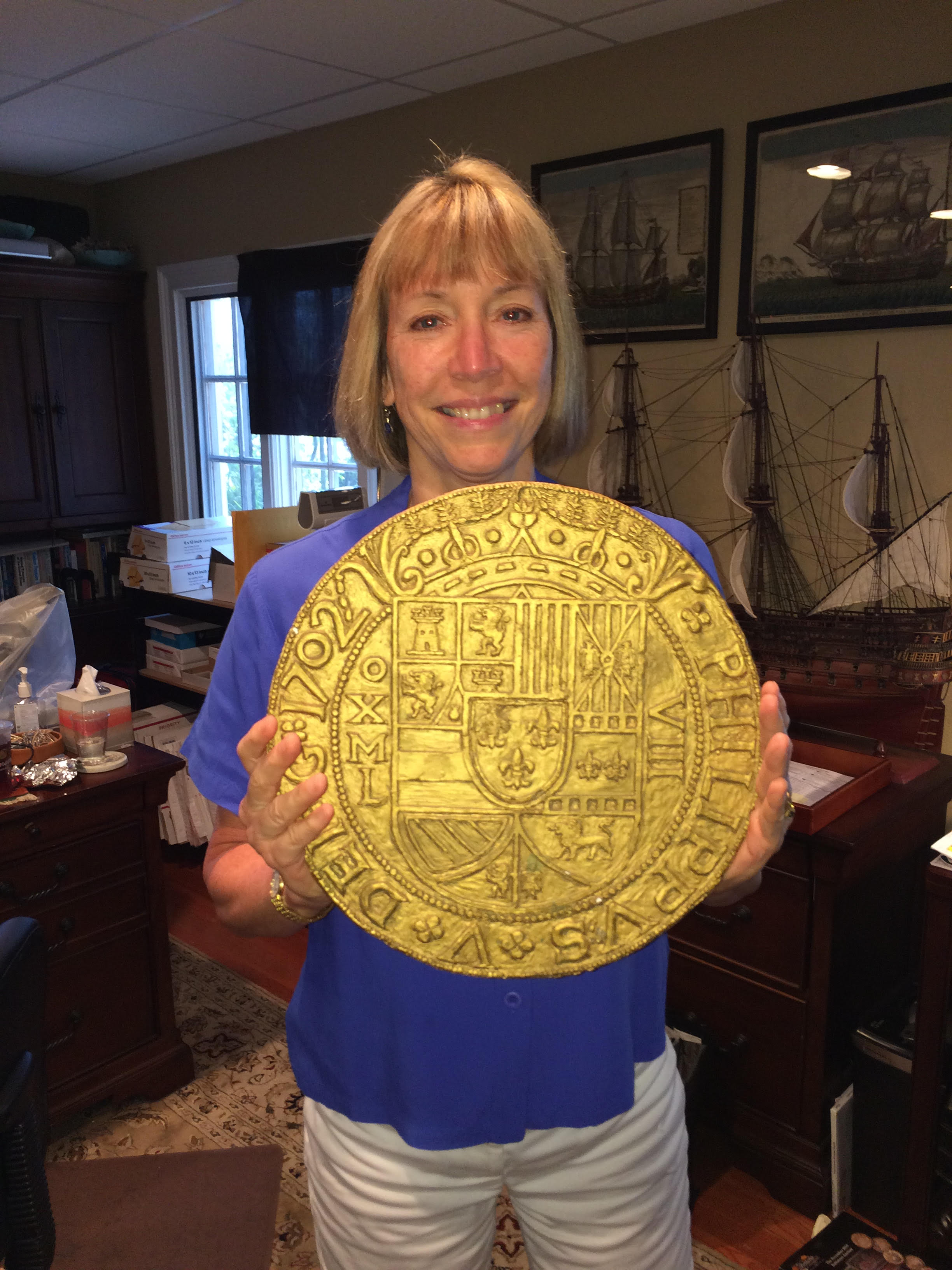
And don’t miss the last lot, Lot 1560, with a picture of yours truly holding a GIGANTIC plaster reproduction of an 8 escudos Mexico royal!

Happy Bidding to all.

So You Think You Can Dance (or Produce an Auction Catalog)

25 Mar

We’re in the home stretch with our Sedwick Treasure and World Coin Lot cards for TA #17Auction #17 catalog! Let me tell you why it’s a Herculean effort by a few people…and a job best left to the pros.
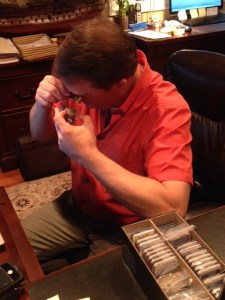
Auction and catalog production begins many months prior to the auction date as we reach out to consignors to send or bring their consignments to us for evaluation and approval. This is the really fun part of the auction process because we never know what’s going to come through the door, and picking up packages at the post office seems a bit like Christmas. While most consignments consist of coins, there are also great consignments of artifacts and good old-fashioned pirate stuff:  swords, cannons, cannonballs, blunderbusses. Each coin and artifact is weighed and measured.Dan working on TA #17 (2)

Once we’ve decided that enough is enough and the deadline for consignments has drawn to an end, the real work begins. The order of lots is established (see the table of contents of any one of our catalogs for how we concatenate), and lot cards are designed and printed. Now we can shuffle lots from their temporary order to the lot-card order, and Dan can begin to study each auction lot to write up a description for the catalog. At the same time, Augi fires up his photography studio to begin the time-consuming process of photographing each lot. He will finish the process on the computer to arrive at the beautiful images you see in our catalogs.

In between we must find time to go to shows to promote auction items and give buyers a chance to see coins first hand. This is the best opportunity for anyone who has an interest to really be sure that a coin is what we say it is, so if you want to view auction lots for our upcoming auction on April 29-30, 2015, come see us at either the Whitman Baltimore Spring Expo on March 26-29, 2015, at the Baltimore Convention Center or at Chicago International Coin Fair on April 9-12, 2015, at the Crown Plaza Chicago O’Hare.

After our auction catalog is professionally printed, we quickly send catalogs out to many, many potential bidders. Are you one of them? The link to the auction will be available soon on our website, so stay tuned!Last lot TA #17

Chop Chop: Quick Guide to Chopmarks, Countermarks and Counterstamps

2 Mar

Last week, a reader asked about chopmarks on cobs and how they impact their value. That’s a field unto itself, isn’t it? But I thought it would provide a good platform to discuss the types of markings you might see on cobs and coins, namely counterstamps and countermarks (as well as chopmarks).

What’s a chopmark?

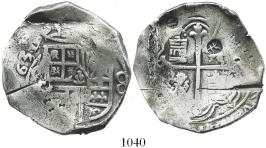
Chopmark coin, Lot 1040, TA 9

Chopmark coin, Lot 1040, Auction #9

This is a small mark or marks, sometimes recognizable as a Chinese character, that can appear on either or both sides of a coin. Typically these were made by Chinese bankers when Spanish-American coins circulated in the Orient to ensure that the composition of the coin was genuine. The coin may even have passed from one banker to another who verified its authenticity with a different mark and hence some coins bear several unrelated markings. And, chopmarks may have been added in other areas of southeast Asia such as Vietnam, so while we might say that a coin bears a Chinese chopmark, that chopmark might not necessarily have been put on the coin in China. As you might expect, there are collector groups (the Chopmark Collectors Club, for example) and books (Chopmarked Coins, A History, by Colin Gullberg) that are devoted to the topic. While chopmarks are interesting, they generally do not add value to the coin.

What’s a countermark?

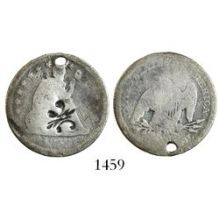
Puerto Rico countermark

Puero Rico countermark, Lot 1459 Treasure Auction #15

Unlike chopmarks which were added to coins by a banker or merchant verifying the genuineness of a coin, countermarks were put on coins by a government or by official permission to a merchant to allow a coin to be circulated in the country where the mark originated. It was a way to use another country’s currency. Sometimes countermarks are more valuable than the host coin: for example, the Puerto Rican fleur-de-lis mark on a coin increases its value because there are very few Puerto Rican coins for collectors to collect. The countermark is the next best thing! Also, with countermarks, you’re adding another layer to the value of the coin since without the mark, you have one country’s coin to examine and with the countermark you have another country or merchant to add to the mix. Hence, countermarks can add numismatic value. If you want to learn something about merchant countermarks, Merchant Countermarks on World Coins by Gregory G. Brunk is a good place to start.

What’s a counterstamp?

Counterstamp coin, Lot 842, Treasure Auction #16

Counterstamp coin, Lot 842, Treasure Auction #16

These odd creatures are double-sided countermarks, sort of like using an incomplete hole puncher to punch both sides of a coin. Like countermarks, a counterstamp can add numismatic value since there are now two countries or an important merchant that are represented on one coin. Unlike countermarks, the stamp on each side of the coin is different.

We will feature a few coins from each category (chopmarked, countermarked, counterstamped) in our upcoming auction, Sedwick Treasure Auction #17, in April.