Archive by Author
Gallery

What You Can’t Live Without in Treasure Auction #20 (part four)

8 Nov

We’re into the home stretch with only 4 days to go until the auction! We hope you have been bidding and will join us for the live portion.

Below are some of the most important artifacts in the auction, and while most of these items will come up at the end of the auction, it’s definitely a case of “last but not least.” Coins–as well as all shipwreck treasure–are our business, and you can be confident that we know what we’re talking about in our descriptions.

lot-473-ta-20

Lot 473, Sedwick Treasure Auction #20

Why have one coin when you can have several? The above is a large clump of 20+ Mexican cob 8 reales, two in front dated 1714. It’s a very impressive display that stands up well, also a very rare item these days and was recovered from the Spanish 1715 Fleet off the east coast of Florida.


lot-1086-ta-20

Lot 1636, Sedwick Treasure Auction #20

You could eat off the above plate today because it’s in such good condition. It’s marked with a tax stamp and LDo.IVo. / RAMYREZ under rim. More important, the underside of the rim bears most of a castles-and-lions circular tax stamp and a stamping in tiny letters that exactly matches lots 41-43 of the Christie’s 1988 Atocha auction, in which that mark was described as an “owner’s stamp.” It is clearly part of a set with this bigger basin; those three lots were only 8-7/8″ in diameter and described as “dinner plates.” They fetched some of the highest prices realized among the silver plates in that sale, upwards of $6000 hammer, but not even close to the price realized for the only large basin (like what we are offering here but slightly bigger), lot 47, which hammered at $22,000!


lot-1646-ta-20

Lot 1642, Sedwick Treasure Auction #20

The above is a complete gold plain-loop chain, 34.55 grams, from the “Tricentennial Treasure” find of 2015. There are hundreds of tiny plain links in a tight chain (easily kinked) that is remarkable for being unbroken and complete, eminently wearable and attractive despite its simplicity, also one of the first artifacts from the famous “Tricentennial Treasure” to be offered for sale. From the 1715 Fleet (Douglass Beach site).


lot-1654-ta-20

Lot 1654, Sedwick Treasure Auction #20

What’s an auction with out a cannon? The above Danish naval “4-pounder” bronze howitzer from the late 1700s  is  believed to have been from military and naval stores captured by the British during the Battle of Copenhagen in 1807. Sent to England, these items were used by English forces during the Napoleonic Wars and in America and Canada during the War of 1812. Some ended up in American service due to capture or purchase. The bronze barrel has a chambered bore (which most howitzers have), a designated area for the powder charge, turned decorations and cast with bronze pointing tiller cascabel ending on a rounded ball end. This cannon was made for use as a swivel gun but is now mounted on a mahogany naval deck carriage (complete and serviceable with working elevation screw and wheels) with correct brass and iron mounts and four wheels from the early 19th century (possibly exact replacements made later). The barrel is in excellent condition with minor surface wear and excellent light-brown patina.

Once again, we hope you all your bids are winning bids!

Gallery

What You Can’t Live Without in Treasure Auction #20 (part three)

2 Nov

Today we want to make you aware of some very important silver coins you can bid on in our upcoming Sedwick Treasure, World, U.S. Coin & Paper Money Auction #20. When you see descriptions containing words or phrases like “unique,” “very rare,” “finest known,” and “unlimited value,” you can be sure these items will bring top dollar…and be worth every penny. It bears repeating that we often say you should buy the “best” coins  you can afford, whether that means coins in the best condition or of the highest rarity. The good things in life don’t come cheaply but you’ll rarely regret your decision to buy them and enjoy them for years. Good luck in our auction!

lot-561-ta-20

Lot 561, Sedwick Treasure Auction #20

The above is a Mexico City, Mexico, 4 reales, Charles-Joanna, “Early Series,” coin and those who collect them know that varieties with the assayer mark (P) to the left and mintmark (M) to the right are generally much rarer than others. Also, this is an early variety in Assayer P’s tenure with the use of HISPANIE instead of the later use of HISPANIARVM in the legend on the pillars side.


lot-664-ta-20

Lot 664, Sedwick Treasure Auction #20

The above is an extremely rare Mexico City, Mexico, cob 1 real Royal, 1643/2P. It is probably unique, but certainly unique in quality and of almost unlimited in value to the specialist collector.

lot-777-ta-20

Lot 777, Sedwick Treasure Auction #20

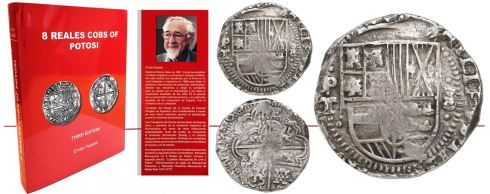
The above is a rare Potosi, Bolivia, cob 8 reales, 1634T and the first coin collected by Emilio Paoletti, (and ex-Burzio, ex-Martini, ex-Janson) with copy #1 of Paoletti’s book 8 Reales Cobs of Potosi (3rd ed., 2016) and signed by him on the first page where the number 001 appears. What a remarkable pedigree!

lot-857-ta-20

Lot 857, Sedwick Treasure Auction #20

The above is a rare Potosi, Bolivia, cob 8 reales, 1652E transitional Type III from the Capitana (1654). What is interesting about this die variety is that the O-E above 52 to right of shield is punched over N-8.

lot-961-ta-20

Lot 961, Sedwick Treasure Auction #20

The above is a rare Potosi, Bolivia, cob 8 reales Royal, 1714Y with an interesting four-digit date below cross (the standard for 1712-15).

lot-967-ta-20

Lot 967, Sedwick Treasure Auction #20

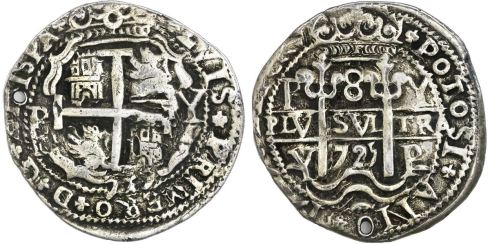
The above is a very rare Potosi, Bolivia, cob 8 reales Royal, 1725Y, Louis I, ordinal PRIMERO. Royals of Louis I are among the most desirable and difficult to obtain, particularly since the general coins of this period are so crude. The present example is very bold, with full inner details and nearly full legends, including full LVIS PRIMERO (not just PR) and POTOSI (the pillars side slightly off-center).

lot-1027-ta-20

Lot 1027, Sedwick Treasure Auction #20

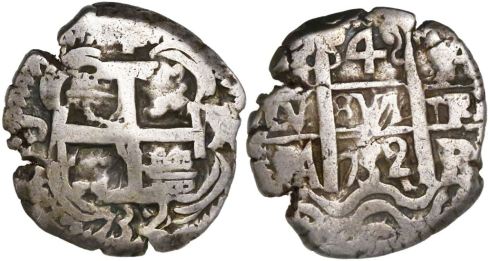
The above is an extremely rare and currently unique Potosi, Bolivia, cob 4 reales, 1732YA. This is a very important 4R, as it is the ONLY date and assayer (not counting overdates) that we have NEVER seen in our 25-year study of Potosi pillars-and-waves cobs.

lot-1079-ta-20

Lot 1079, Sedwick Treasure Auction #20

The above is an extremely rare Potosi, Bolivia, cob 1 real Heart, 1718Y. It’s an attractive example of the classic Heart shape and like most Heart minors, this specimen is probably unique.

lot-1086-ta-20

Lot 1086, Sedwick Treasure Auction #20

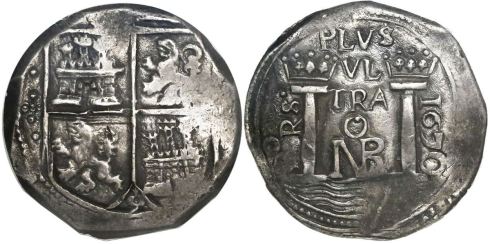
The above is a Bogota, Colombia, cob 8 reales, 1670, assayer PoRS. It’s the finest and only known specimen in NGC census (NGC certification #4348135001) and is certainly among the choicest Bogota pillars-and-waves cobs in existence, in fact the highest of all Bogota cob 8R at NGC by two grades.

lot-1338-ta-20

Lot 1338, Sedwick Treasure Auction #20

The above is a very rare Nicaragua (Leon), provisional “imitation cob” 2 reales, 1823 P.M.P.Y. It is probably the finest known of this Leon type with “pine tree” tops of pillars, a type rarely seen without a hole or significant damage. See Carlos Jara’s book Central American Provisional and Provincial Mints (2007) for more information about the attribution of this type to Leon.

We hope you find exactly what you’re looking for in our upcoming auction and please feel free to contact us with any questions you might have. You can see coin lots in person this weekend (and see Dan, Augi, and Connor) at the Whitman Expo at the Baltimore Convention Center November 3-6.

Gallery

What You Can’t Live Without Buying in Treasure Auction #20 (part two)

25 Oct

In this blog, we will cover some of the big-ticket items (i.e. gold and gold and silver bars) you can find in our upcoming auction. These coins and bars are important for either their rarity, their quality, their provenance or all of the above. They are for the discerning advanced collector who can afford the best. These lots also represent historical treasures which anyone can appreciate whether they can buy them or not.


lot-30-ta-20

Lot 30, Sedwick Treasure Auction #20

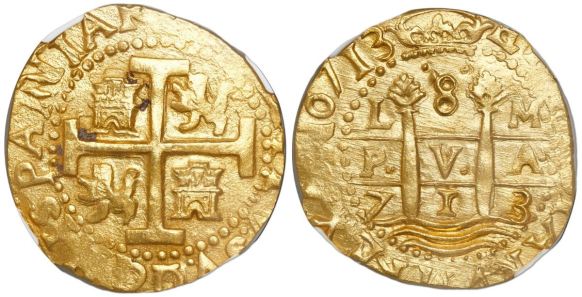
The above Lima 8 escudos cob is the finest known of its type in the NGC census with a grade of MS 63. Dan has described it as “a superb specimen all around, befitting the top honors.” Over and above that, it’s from the 1715 Fleet!


lot-35-ta-20

Lot 35, Sedwick Treasure Auction #20

Another Lima 8 escudos cob, this coin is tied for finest known in the NGC census with a grade of MS 62. Dan’s description: “Clearly top grade but probably also the best in terms of strike, and apparently one of very few of this date and denomination recovered” from the Luz. ‘Nuff said!


lot-48-ta-20

Lot 48, Sedwick Treasure Auction #20

A Bogota 8 escudos cob, this coin is the finest and only specimen in the NGC census with a grade of XF 45. Per Dan’s description it’s a “royal-like specimen on a broad flan with 100% full and bold date and king’s name in legend….one of just a handful of full-date specimens from this mint that seem to have been intended as presentation pieces, so great is the contrast between them and the regular issues with only partially or non-visible dates.” Furthermore, he notes that “this Philip V issue is much tougher than the Ferdinand VI type that followed.”


lot-89-ta-20

Lot 89, Sedwick Treasure Auction #20

This Potosi bust 4 escudos is the finest and only known in the NGC census with a grade of AU 58. As Dan has noted, only 170 pieces (both laureate and non-laureate types) were minted and this date is the rarest bust-type issue in any denomination from this mint. It’s “a trophy gem and has no equal in any sales records known to us,” with “trophy” seeming like an understatement!


lot-161-ta-20

Lot 161, Sedwick Treasure Auction #20

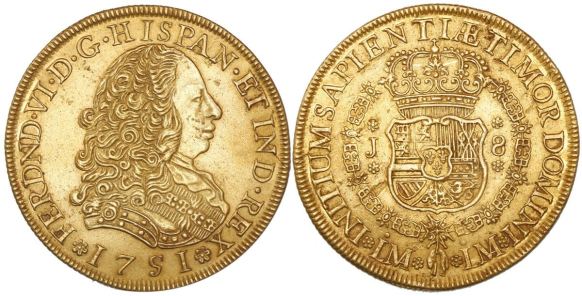
The above is a Lima, Peru, bust 8 escudos from the time of Ferdinand VI and dated 1751. This lot is “one of only two of this ‘large wigged bust’ type” from the Luz shipwreck. Pretty rare stuff!


lot-202-ta-20

Lot 202, Sedwick Treasure Auction #20

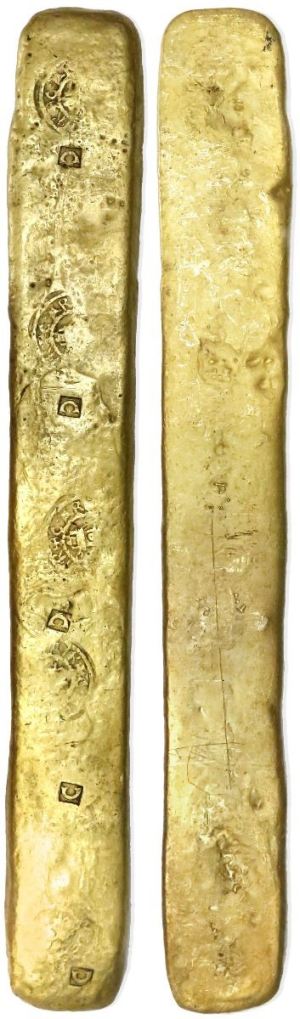
On to bars! Above is a complete gold “strap” ingot for making oro corriente pieces, marked five times with circular tax stamp of Charles V, Holy Roman Emperor (Charles I of Spain) from an unidentified early 1500s wreck in the Caribbean. As Dan states, “its near-uniform flatness and its markings all indicate that this piece is the first example ever recorded of a complete ‘strap’ (in Spanish: riel) for cutting into the known (but very rare) money pieces (small) known as ‘oro corriente,’ which were used in place of actual gold coins (which were in short supply) in the colonies and thus represent the ‘first fish out of the lake’ from the colonies in terms of local gold coinage.” It dates to the 1520s and hence is “unique in importance, especially as the earliest form of Spanish colonial gold treasure we have ever offered.”


lot-203-ta-20

Lot 203, Sedwick Treasure Auction #20

Another important bar, the above gold “finger” bar is encrusted with coral as from the “Golden Fleece wreck” and was made “in a period when gold coins were not yet made in the New World and ‘oro corriente’ was being phased out” says Dan. Shipwreck bars are always in demand in our auctions.


lot-210-ta-20

Lot 210, Sedwick Treasure Auction #20

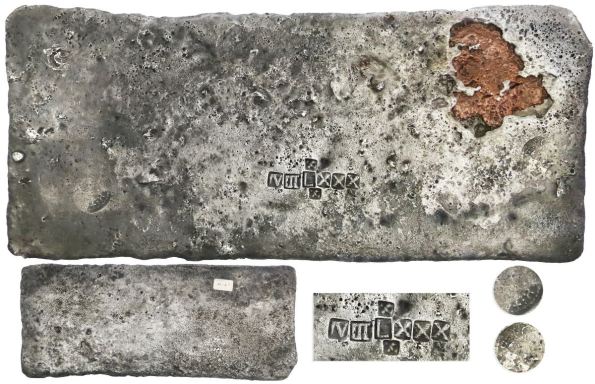
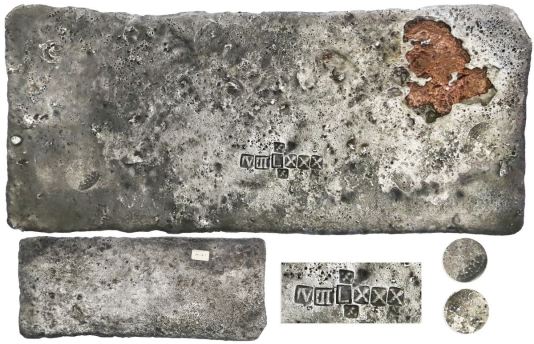
A very unusual silver “tumbaga” bar (#M-61) whose “most intriguing aspect is a large area of exposed pure copper, revealing how most ‘tumbaga’ silver was created by hammering silver and copper together and therefore showing the true nature of ‘metal of Michoacan’,” according to Dan. You should read The Tumbaga Saga by Agustin Garcia Barneche to learn more about these important and fascinating early silver bars.


lot-211-ta-20

Lot 211, Sedwick Treasure Auction #20

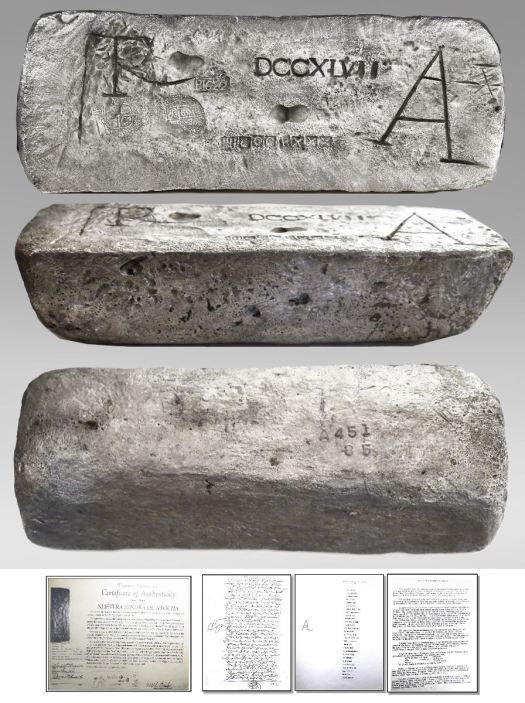
What’s an auction without a large silver Atocha bar (#451)? As Dan notes of special importance, accompanying this bar is a “complete manifest report, which was an optional (and mostly declined) item when the bars were first distributed.” Rarity and provenance!

That’s all for now, and we hope this note will whet your appetite for our auction.

Gallery

What You Can’t Live Without Buying in Treasure Auction #20 (part one)

21 Oct

Our upcoming Sedwick Treasure, World, U.S. and Paper Money Auction #20 has something for everyone, and I’ll outline some highlights in upcoming blogs. First off, let’s show off our paper money section, a collectible that we haven’t been able to offer in great amounts but should become a staple of future auctions thanks to the hard work and expertise of our new employee, Connor Falk.

Lot 1522, TA #20, November 2016

At first glance, this colorful 1996 Cayman Islands 10 dollar note is appealing for the beach scene on the reverse, an open treasure chest residing beneath a palm tree as a sailboat moves in the shallow waters. But there’s an interesting backstory on this note: it shouldn’t exist. The X/1 series of notes were test notes printed by De La Rue on experimental paper, analyzed and then destroyed. A small number escaped, making them among the rarest of Cayman Islands notes. Add the fact that PMG certified this note as Gem Uncirculated 65 EPQ and this lot is an impressive rarity sure to be the cornerstone of a Caribbean paper money collection.

Lot 1535, TA #20, November 2016

This 1889 100 pesos Colombian Bond is very rare with only four or five known and is the plate note featured in Compendio Historico del Papel Moneda en Colombia by Danilo Parra Ariza. It features a light blue underprint and a well-executed design including a vignette of a man with a burro cart. Other examples are known to have cancellation marks including punch holes and rhombus-shaped cuts, making this lot all the more attractive for its lack of major marks or cuts.

Lot 1536, TA #20, November 2016

This the 1889 10 pesos, similar in design as the lot above yet featuring a popular vignette of a dog.

Lot 1560 (obverse), TA #20, November 2016

Lot 1560 (reverse), TA #20, November 2016

A very scarce and popular note with a central vignette of a Carib Indian, also featured on other Guadeloupe banknotes and coins. The Caribs called Guadeloupe “Karukera” which translates to “island with beautiful waters.” Connecting with Guadeloupe’s maritime past, the reverse features a large compass rose. There are some folds and soiling, but the numerous and heavy folds that plague large notes like this one are not here, hence why PCGS certified this note as Very Fine 30.

Lot 1578 (reverse), TA #20, November 2016

Lot 1579 (obverse), TA #20, November 2016

These two Mexican notes are extremely popular and in demand due to the beautiful tri-color reverses honoring the colors of the Mexican flag. Printed to commemorate the 100th anniversary of the Mexican War of Independence, they are also the first commemorative banknotes in the world. Examples are scarce with notes in VF and higher rare while collectors give special attention to those with bright colors.
Check out Session 4 lots 1500-1623 for all of our bank note offerings.
Gallery

Some of Our Favorite Things in Upcoming Treasure Auction #20

14 Oct

As you peruse our catalog online, you might enjoy some of the items that stand out to us. Not all are big ticket items. Some are just cool because of what they represent. What items in our auction catch your attention?

lot-17-ta-20-gold-cob-earrrings-1715-fleet

Lot 17, Sedwick Treasure Auction #20

lot-24-ta-20-gold-cob-pendant-1715-fleet

Lot 24, Sedwick Treasure Auction #20

If bling is your thing, then these gold-coin earrings (Lot 17) and pendant (Lot 24) are a must-have! We don’t usually have earrings in our auctions, much less a pair of one escudo cobs from the 1715 Fleet. And what would complement them? Why an 8 escudos cob pendant from the 1715 Fleet! It’s really not overkill if you like to strut your stuff.

lot-210-ta-20-tumbaga-bar

Lot 210 Sedwick Treasure Auction #20

This “tumbaga” silver bar (Lot 210) is one of the coolest bars we’ve ever handled. It’s a typical rectangular bar without the depth, i.e., it’s almost like a slice of “tumbaga” (even though it’s a full bar). More interesting is the large area of exposed copper. The photo says it all. If you’ve been wanting a “tumbaga” bar, then this should be on your want list. Be sure to buy a copy of Augi’s book, The “Tumbaga” Saga, Treasure of the Conquistadors, to go with.


lot-777-ta-20-paoletti-first-coin

Lot 777, Sedwick Treasure Auction #20

Provenance and pedigree are terms that are thrown around a lot when dealing with antiquities. We love to know where things come from, whether from a shipwreck or a particularly important collector. We have that in spades with this auction lot: It’s the first coin collected by Emilio Paoletti (Lot 777). If you don’t already know his name, then this isn’t the coin for you, but if you do, then bookmark this lot and bid!


lot-1569-ta-20-bank-note

Lot 1569, Sedwick Treasure Auction #20

Connor, our new employee and banknote guy, praises this note (Lot 1569) as a “fascinating combination of Mexican iconography (the eagle) and Texan images (the frontiersman).” It’s an unsigned remainder from a bank chartered to operate in Columbia, Texas by the Mexican government on April 30, 1835, just a few months before the start of the Texas Revolution. During the revolution, the bank was instrumental in arranging loans and fundraising for the revolutionaries.


lot-1625-ta-20-engraving

Lot 1625, Sedwick Treasure Auction #20

While I’m not a fan favorite of this engraving (Lot 1625), the rest of the office loves it. It’s a German copperplate engraving showing native Americans dismembering and eating Spaniards, including pouring molten gold into one poor Spaniard’s mouth. I know the Indians weren’t exactly saints, but in the larger picture, they were almost always on the losing end of run-ins with Spaniards, and this is one of the few times they came out ahead. Go Native Americans!

lot-1626-ta-20-philip-ii-engraving

Lot 1626, Sedwick Treasure Auction #20

Part of this engraving (Lot 1626) graces the front cover of our catalog. It’s a hand-colored British copperplate engraving of Philip II. He’s surrounded by crests of the many countries where he was king. Yertle the Turtle (a Dr. Seuss character for those of you who didn’t grow up reading his books) had nothing on him.


lot-1661-ta-20-sin-razon-sword

Lot 1661, Sedwick Treasure Auction #20

If I owned a sword, this is the one (Lot 1661) I would want to own because it expressly tells me when it’s OK to use it: “no me saque sin razon,” which translates to Don’t Use Me Unless You Really Need to. Maybe our modern guns should have the same inscription.

We hope you enjoy all our auction offerings and find something that truly speaks to you!