Tag Archives: Mexico

Sedwick’s Treasure, World & U.S. Coin Auction 35 is in Full Swing BID NOW!

16 Apr

Sedwick’s Treasure, World, U.S. Coin & Paper Money Auction 35 Live Online Auction May 7, 8, & 9, 2024

The variety of rare, historical, and even unique coins, currency, and artifacts within this auction offer a great opportunity to add valuable pieces to your collection! 

Gold Cobs: Includes a number of 1715 Fleet shipwreck coins such as a Mexico City, Mexico, (1714) J gold cob 8 escudos struck with Royal dies graded NGC MS 64, pedigreed to Kip Wagner’s 1965 National Geographic article “Drowned Galleons Yield Spanish Gold” (Lot 40), as well as two beautiful Mint State Mexico gold cob 8 escudos dated 1715 J (Lots 43 and 44). Peru gold from the 1715 Fleet is also notable with the finest known Lima, Peru, 1705 H gold cob 8 escudos graded NGC MS 64 (Lot 57) and the unique Lima, Peru, 1709 M 2 escudos struck with the pillars-side die meant for a Royal 2 reales graded NGC MS 65 (Lot 72).

Shipwreck Ingots: Features an impressive, uncut gold ingot weighing 2,274 grams recovered from the famous Atocha shipwreck (Lot 96) and a rare silver piña ingot, one of just three known from the wreck (Lot 107).
Shipwreck Coins: Packed with over 600 lots including treasures such as two Seville, Spain, gold cob 2 escudos from the Santa Margarita shipwreck (Lots 278 and 279), a “top pop” Bogota, Colombia, gold cob 2 escudos graded NGC MS 65 from the Maravillas shipwreck (Lot 425), and an NGC-slabbed set of Spanish colonial 1/2, 1, 2, and 8 reales from the “Coconut Wreck,” AKA “Blue Abyss Shipwreck” (Lot 695). Notable collections include the Bill Barman Collection of Atocha Research Coins (Lots 136 to 155) and selections from the Silver Banks Treasures Collection of silver cobs recovered from the Concepcion shipwreck (Lots 315 to 373). Ever-popular shipwreck coin clumps from wrecks such as the Concepcion, the 1733 Fleet, and the Hollandia (just to name a few) should not be missed.
Silver Cobs of Mexico: Includes many high-grade Charles-Joanna and Philip II pieces such as the extremely rare Charles-Joanna “Late Series” assayer S 4 reales (Lot 732) and a high-grade 1733 MF klippe 8 reales (Lot 766).
Silver Cobs of Lima: Hosts a key rarity, the Lima, Peru, assayer R (Rincon) cob 8 reales of Philip II the first “dollar” coin struck in South America (Lot 768).This piece is one of just sixteen known and represents a crowning achievement in the Luis R. Ponte Collection being offered in this sale. A knowledgeable numismatist and longtime friend, Luis built his collection with an eye for rarity and quality in Spanish colonial coinage, which readily shows in this catalog, from a stunning group of “Star of Lima” coinage (Lots 801 to 814) to an exceptional and extremely rare Lima, Peru, 1686 R cob 8 reales Royal (galano) graded NGC XF 40 (Lot 817).

Silver Cobs of Potosi: Features more rarities from the Luis R. Ponte Collection, including the finest-ever assemblage of countermarked shield type cob 8 reales (Lots 934 to 1033) and a very rare first-issue Potosi, Bolivia, assayer R (Rincon) cob 8 reales of Philip II (Lot 825), as well as the only known Potosi, Bolivia, 1732 M cob 8 reales Royal (Lot 1067).

World Coins: A beautiful selection of high-grade Vintage Chinese Coin Rarities such as the Hupeh Year 30 (1904) tael graded PCGS MS 62 (Lot 1190) and the gorgeously designed Hsu Shih-chang Year 10 (1921) Pavilion dollar graded PCGS SP 61 (Lot 1198). Also featured is a choice selection of Colombian Republic silver minors from Gregorio Toulemonde Collection Be sure to look for the rare one-year type La Rioja, Argentina, 1842 R Rosas gold 2 escudos graded NGC MS 63 (Lot 1095), the lustrous “top pop” Santiago, Chile, 1820 FD gold 8 escudos graded NGC MS 62 (Lot 1162), and the wonderfully toned Santiago, Chile, 1817 FJ “Volcano” peso graded NGC MS 61 from the Val y Mexia Collection (Lot 1157)—just to name a few of the many choice rarities to be found.

U.S. Coins, Medals, and Tokens: hosts a selection of gold and silver coins recovered from the Marblehead Hoard buried in Massachusetts in the early 1800s (Lots 1482 to 1488) plus a handsome example of the 1795 Draped Bust silver dollar (Lot 1475). Be sure to check out the gold lifesaving medal awarded by President McKinley in 1900 (Lot 1480).

U.S. Paper Money: Features a colorful Rainbow $2 series of 1869 Legal Tender note graded PMG VF 35 (Lot 1497) and colonial and continental currency marked by two Fugio notes of 1776 (Lots 1493 and 1494).

World Paper Money: Includes two great sets of banknote rarities: the finest known PMG-graded San Juan, Argentina, Banco de Cuyo pesos fuertes specimen set (Lot 1499) and an original Thomas de la Rue & Co. Ltd. specimen banknote album (Lot 1510). Also watch for the 1811-dated Venezuela 2- and 1-peso notes that represent Venezuela’s first paper money (Lots 1508 and 1509).

Ancient Coins and Coin Jewelry: Features several nice Ancient Gaul and Greek silver coins and several eye-catching gold cob 8 escudos mounted in gold bezels (Lots 1527 to 1529).

Shipwreck Artifacts: Stands out for two shipwreck-pedigreed gold chains, one from the 1715 Fleet and the other from the Leocadia (Lots 1562 and 1565), as well as a hefty bronze cannon breech block salvaged from the 1733 Fleet (Lot 1564). The Non-Shipwreck Artifacts section holds various historical artifacts like flintlock pistols and signal cannons.

Express Session: The third day of the auction hosts the Express session, where a variety of numismatic rarities is sure to attract many different bidders.

SPECIAL ARTICLES:

 A NEW Introduction to the “Star of Lima” Coinage of 1659-1660

The 1649-52 Countermarked Shield-Type Coinage of Potos , Bolivia

In MemoriamLuis Roberto Ponte Puigbo 1962 – 2023

Team Acknowledgment: We wish good luck to all our bidders, with much gratitude to our consignors from the whole Sedwick team:

– Daniel Frank Sedwick – Augi Garcia Barneche – Cori Sedwick Downing – Connor Falk – Michelle Heidt

Sedwick Treasure auction to feature the James Bevill Collection of Mexican Coins & Paper Money

1 May

bivell

The May 15-16, 2018 Treasure, World, U.S. Coin & Paper Money Auction #23 held by Daniel Frank Sedwick, LLC will feature 51 lots from the collection of author and researcher James P. Bevill. Many of these coins are the plate specimens from Bevill’s award winning book, The Paper Republic, the Struggle for Money, Credit and Independence in the Republic of Texas, 2009. Bevill’s pieces are all museum quality, having been exhibited in venues across Texas in Houston, Dallas, Austin, and most recently, the Rosenberg Library Museum in Galveston.

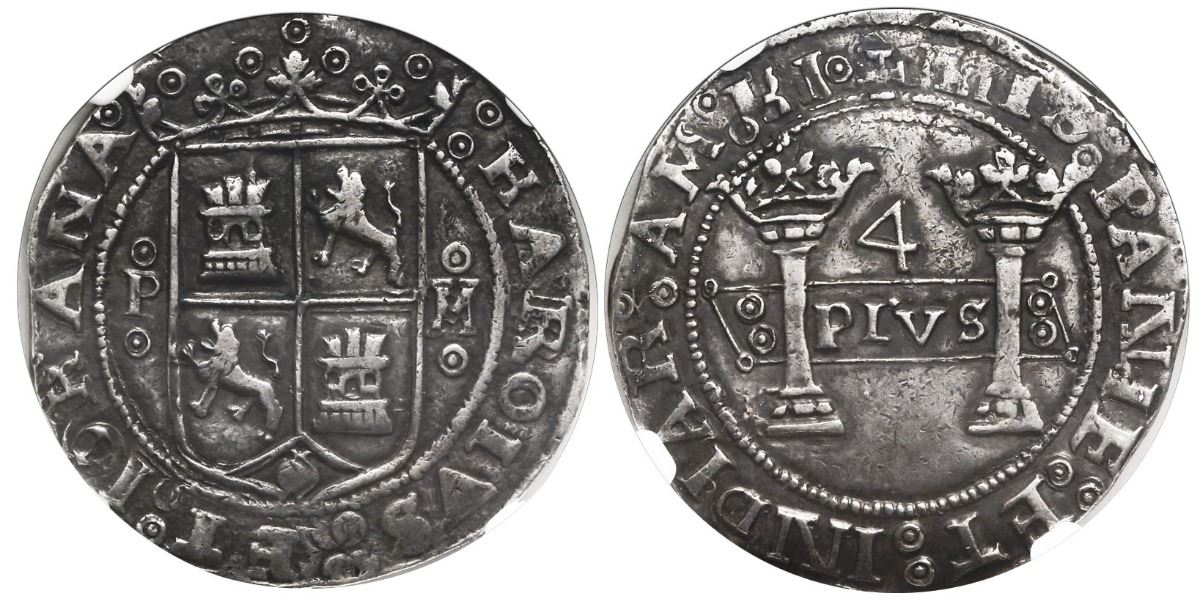
In the early coinage, one highlight is Lot# 689, a Mexico City 4 reales Charles-Joanna, Early Series, assayer P to right, mintmark M to left, described as “deep rainbow toning, full details (legend and interiors), AU or better but with areas of light surface pitting, as from the ‘Golden Fleece Wreck,’ ca. 1550, HISPANIE variety, with unusual stops between words in the legends on both sides, and a die match to the only other example known (Banco de Mexico collection).” There are a dozen Mexican 8 reales cobs represented from the Bevill collection in the sale, including ten with full four-digit dates, two of which are overdates: Lot #721, a 1652/49; and Lot #735, a 1659/8, described as “rare,” a “richly toned” VF with bold full date.

Mexican silver coins by type are well represented in the sale, including Lot #1379, a War of Independence, Monclova, 1811 countermark on cast Mexico City bust 8 reales 1809 HJ, graded VF30, c/s XF strong. It is one of just two graded in NGC census, both in VF. There are five Mexican pillar 8 reales, also known as Pillar Dollars, including Lot #1325, a rare Charles III, 1761MM, cross below ‘I” variety (rare). There are three silver 8 reales coins with the bust of Mexican Emperor Augustin Iturbide in the sale. Lot #1383 features an 1823 JM Iturbide, Mexico City, 8 reales, JM below eagle, NGC MS 62+. This coin is described as “Reverse with beautiful rainbow toning on lustrous surface, the obverse somewhat frosty and matte but also toning at rim, ties with two others for finest known in NGC census.”

The gold selections include a type set of doubloons by Spanish Kings, including: Lot #170, a 1744 MF Philip V, NGC MS61; Lot #131, a 1751 J Ferdinand VI from Santiago, Chile, NGC MS62; Lot #171, a 1760 MM Charles III (young bust), NGC AU53; Lot #172, a 1772 FM, Charles III, MGC AU53; and Lot #178, 1820 JJ Ferdinand VII, graded NGC AU55. Not to be outdone by the Spanish Kings, Lot #194 features an 1823 JM Iturbide 8 escudos, a desirable example of an important one-year type, with large bust and eagle inside shield, graded NGC AU58, featured on the cover of the catalogue and plated as Fig. 3.8 on page 61 of The Paper Republic.

Bevill remarked that this sale constitutes the “end of an area of collecting that I have enjoyed for almost two decades.” The collection was painstakingly acquired to illustrate the evolution of the Spanish monetary system in colonial Texas, both in his book and in a broader context: alongside other Texas treasures as part of several museum exhibitions which were viewed by over 287,000 visitors from 2011-2016. Through this auction, resourceful bidders have the opportunity to take home some of these pieces, forever enshrined in an important work in numismatic literature.

For a complete listing of Bevill’s Collection follow this LINK

Direct Link to The Auction

Making a Bank Note: A Study of El Banco del Estado de Chihuahua Bromide Proofs

20 Dec

by Connor Falk

1397_2

The history of El Banco del Estado de Chihuahua (the Bank of the State of Chihuahua) is brief and steeped in the turbulent times of the Mexican Revolution. It was founded on December 12, 1913, as decreed by General Francisco “Pancho” Villa, military governor of the state of Chihuahua and commander of the División del Norte, an armed revolutionary faction. The bank’s stated purpose, in addition to issuing currency, was to “facilitate loans on properties that fully guarantee capital, especially poor farmers who need pecuniary elements to tillage their lands.” The bank’s capital was 10 million pesos, to be distributed in bank notes backed by gold.

notes

Work began quickly to locate a designer and printer for the bank’s notes, and after several unsuccessful forays, El Banco del Estado de Chihuahua contracted with the American Bank Note Company (ABNCo). Design work began in September 1914 with bank representatives choosing the vignettes to be used.

The accompanying lot, #1397, represents an interesting look at the bank note design process. The lot is a unique set of fourteen photographic proofs (also known as bromide proofs) made in 1914 by the ABNCo when designing notes for El Banco del Estado de Chihuahua. These prototypes consist of both obverses and reverses of all seven denominations issued by the bank, including the rare 1 peso denomination.

A variety of obverse vignettes were used for the notes; the reverse vignettes, with minor variations, feature the seal of Mexico. The obverse of the 500 pesos features an allegorical design of two women, “Work” and “Knowledge,” with two young boys and El Banco del Estado de Chihuahua’s monogram in the center. The obverse of the 100 pesos depicts an armored Ceres seated with two men representing agriculture and industry in front.

The obverse vignettes on the lower denominations depict scenes rather than allegorical designs. The 50 pesos features a train pulling into a station, the 20 pesos illustrates a harvesting scene, the 10 pesos shows a rancher driving cattle, and the 5 pesos displays a miner using a pneumatic drill.

Of interest is the 1 peso obverse, which features a logging scene as the central vignette. The same scene is found on the Canadian Bank of Ottawa 5 dollars note from 1906 (Charlton 565-20-06). The later issues from 1913 (Charlton 565-22-02 and 565-26-02) feature a similar scene with the bottom row of logs removed, possibly to avoid cluttering a smaller vignette space than the 1906 issue. However, for the Chihuahua peso, ABNCo designers removed six loggers that were standing on the log pile. On the bromide, this was achieved by pasting the reworked scene directly over the original vignette. Why this change was made is unknown, though it’s possible the six loggers, who are white, looked out of place on what was to become a Mexican bank note.

1397_pesoclose

The central vignette of the 1 peso (note the whiter paper pasted over the original design)

Other examples of “vignette sharing” were commonplace for ABNCo notes. The following issues share vignettes with El Banco del Estado de Chihuahua notes:

  • Canada, Union Bank of Canada, 5 dollars, 1903-1912, SCWPM-S1493 and S1495, same obverse vignette (harvest scene) as the Chihuahua 20 pesos
  • Haiti, Republique d’Haiti, 1 gourde, 1914, SCWPM-131, same reverse vignette (harvest scene) as on the obverse of the Chihuahua 20 pesos (an example of an overprinted provisional issue, SCWPM-140a is in this auction as lot 2305)
  • Venezuela, Banco de Venezuela, 20 bolívares, SCWPM-S286, S291, S301, and S311, 1910-1936, same obverse vignette (rancher scene) as the Chihuahua 10 pesos

This is not an exhaustive list and I encourage others to provide more examples.

The other interesting aspect about the 1 peso note is its rarity. Although initial plans called for printing one million 1 peso notes, bank officials put the denomination on hold. Instead, an additional two thousand of the 500 pesos note were printed to cover the one million peso shortfall. Although ABNCo received word that plates should be prepared for the denomination, none were ever printed. Just three proofs as well as the bromide in this set are known. What should have been the most common note in the series became the rarest one instead.

1397_500pesoerror

The greyed out “L” on the 500 pesos

The other denominations are more common, and this bromide set provides insight into their design process. Edits were made on the notes throughout production. The 500 pesos obverse bromide displays this best. Above the central vignette, a banner with the decree date reads PAGARA AL PORTADOR EN EFECTIVO SEGÚN DECRETO DEL 12 DE DICIEMBRE DEL MIL NOVECIENTOS TRECE. The second “DEL” should be “DE”; the ABNCo designers realized this and greyed out the erroneous “L.” On the printed notes, the sentence reads correctly and the letters are slightly shifted to fill in the space.

Another design change on the 500 pesos is the change in signatories. Spaces are available for the interventor del gobierno (government controller), the cajero (cashier), and the presidente (president of the bank); however, presidente is crossed out and gerente (manager) is written below. All printed notes display gerente printed in place of presidente.1397_500pesogerente

1397_oro

Changes were made to both the signatories and the gold backing clause.

A major change between the working copies and the printed notes is the valuation. On September 14, 1914, the valuation of the 10 pesos read ORO MEXICANO. The 5 pesos bromide displays a similar valuation stating VALOR ORO MEXICANO, but by October 1, 1914, this was changed to VALOR ORO NACIONAL, as seen on the rest of the bromides as well as the finished printed notes.

Although the notes were printed and delivered in early 1915, El Banco del Estado de Chihuahua would not exist much longer. Prendergast notes that “because of the depreciation of Villa’s currency after his defeat at Celaya (April 6-15, 1915), within a year the bank found it could no longer operate.” By November 23, the bank had closed, having never issued the notes both the ABNCo and bank officials had worked hard on. Instead, the series found new life first as advertising and novelty items, and now as numismatic pieces to be bought, sold and researched.

Acknowledgements

A full history of El Banco del Estado de Chihuahua written by Simon Prendergast can be found online at http://www.papermoneyofchihuahua.com. His work has been invaluable to my interest and research on this bank note series.

Mexican Paper Money by Cory Frampton, Duane Douglas, Alberto Hidalgo, and Elmer Powell is an invaluable tool for both El Banco del Estado de Chihuahua specialists as well as Mexican bank notes in general.

Notes can be seen and purchased following these links:

Mexico, Banco del Estado de Chihuahua, Bromide “Photographic” Proofs Set, 1914  

Gallery

What You Can’t Live Without in Treasure Auction #20 (part three)

2 Nov

Today we want to make you aware of some very important silver coins you can bid on in our upcoming Sedwick Treasure, World, U.S. Coin & Paper Money Auction #20. When you see descriptions containing words or phrases like “unique,” “very rare,” “finest known,” and “unlimited value,” you can be sure these items will bring top dollar…and be worth every penny. It bears repeating that we often say you should buy the “best” coins  you can afford, whether that means coins in the best condition or of the highest rarity. The good things in life don’t come cheaply but you’ll rarely regret your decision to buy them and enjoy them for years. Good luck in our auction!

lot-561-ta-20

Lot 561, Sedwick Treasure Auction #20

The above is a Mexico City, Mexico, 4 reales, Charles-Joanna, “Early Series,” coin and those who collect them know that varieties with the assayer mark (P) to the left and mintmark (M) to the right are generally much rarer than others. Also, this is an early variety in Assayer P’s tenure with the use of HISPANIE instead of the later use of HISPANIARVM in the legend on the pillars side.


lot-664-ta-20

Lot 664, Sedwick Treasure Auction #20

The above is an extremely rare Mexico City, Mexico, cob 1 real Royal, 1643/2P. It is probably unique, but certainly unique in quality and of almost unlimited in value to the specialist collector.

lot-777-ta-20

Lot 777, Sedwick Treasure Auction #20

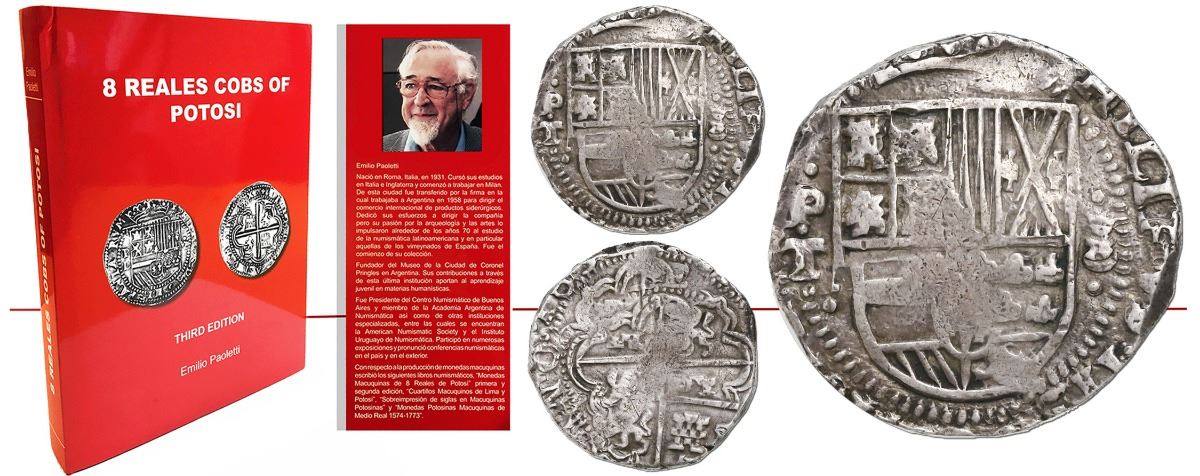
The above is a rare Potosi, Bolivia, cob 8 reales, 1634T and the first coin collected by Emilio Paoletti, (and ex-Burzio, ex-Martini, ex-Janson) with copy #1 of Paoletti’s book 8 Reales Cobs of Potosi (3rd ed., 2016) and signed by him on the first page where the number 001 appears. What a remarkable pedigree!

lot-857-ta-20

Lot 857, Sedwick Treasure Auction #20

The above is a rare Potosi, Bolivia, cob 8 reales, 1652E transitional Type III from the Capitana (1654). What is interesting about this die variety is that the O-E above 52 to right of shield is punched over N-8.

lot-961-ta-20

Lot 961, Sedwick Treasure Auction #20

The above is a rare Potosi, Bolivia, cob 8 reales Royal, 1714Y with an interesting four-digit date below cross (the standard for 1712-15).

lot-967-ta-20

Lot 967, Sedwick Treasure Auction #20

The above is a very rare Potosi, Bolivia, cob 8 reales Royal, 1725Y, Louis I, ordinal PRIMERO. Royals of Louis I are among the most desirable and difficult to obtain, particularly since the general coins of this period are so crude. The present example is very bold, with full inner details and nearly full legends, including full LVIS PRIMERO (not just PR) and POTOSI (the pillars side slightly off-center).

lot-1027-ta-20

Lot 1027, Sedwick Treasure Auction #20

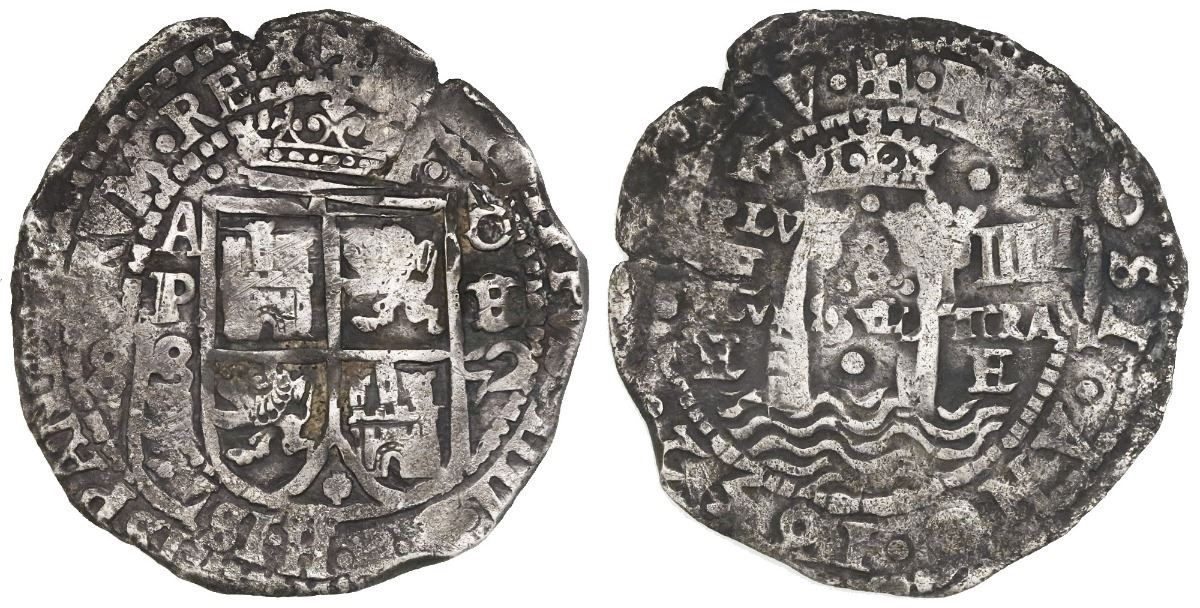
The above is an extremely rare and currently unique Potosi, Bolivia, cob 4 reales, 1732YA. This is a very important 4R, as it is the ONLY date and assayer (not counting overdates) that we have NEVER seen in our 25-year study of Potosi pillars-and-waves cobs.

lot-1079-ta-20

Lot 1079, Sedwick Treasure Auction #20

The above is an extremely rare Potosi, Bolivia, cob 1 real Heart, 1718Y. It’s an attractive example of the classic Heart shape and like most Heart minors, this specimen is probably unique.

lot-1086-ta-20

Lot 1086, Sedwick Treasure Auction #20

The above is a Bogota, Colombia, cob 8 reales, 1670, assayer PoRS. It’s the finest and only known specimen in NGC census (NGC certification #4348135001) and is certainly among the choicest Bogota pillars-and-waves cobs in existence, in fact the highest of all Bogota cob 8R at NGC by two grades.

lot-1338-ta-20

Lot 1338, Sedwick Treasure Auction #20

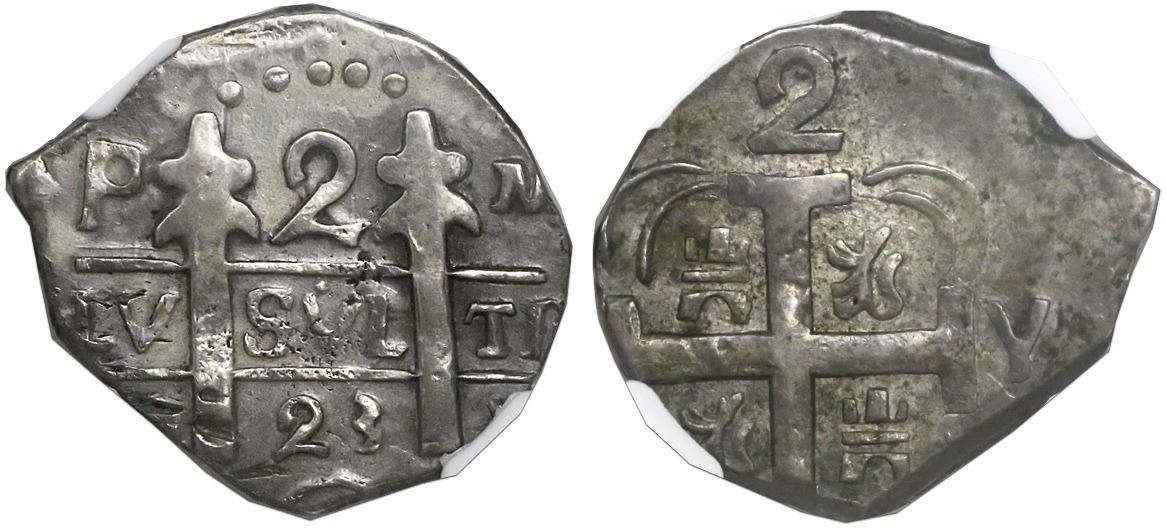
The above is a very rare Nicaragua (Leon), provisional “imitation cob” 2 reales, 1823 P.M.P.Y. It is probably the finest known of this Leon type with “pine tree” tops of pillars, a type rarely seen without a hole or significant damage. See Carlos Jara’s book Central American Provisional and Provincial Mints (2007) for more information about the attribution of this type to Leon.

We hope you find exactly what you’re looking for in our upcoming auction and please feel free to contact us with any questions you might have. You can see coin lots in person this weekend (and see Dan, Augi, and Connor) at the Whitman Expo at the Baltimore Convention Center November 3-6.

Gallery

What You Can’t Live Without Buying in Treasure Auction #20 (part one)

21 Oct

Our upcoming Sedwick Treasure, World, U.S. and Paper Money Auction #20 has something for everyone, and I’ll outline some highlights in upcoming blogs. First off, let’s show off our paper money section, a collectible that we haven’t been able to offer in great amounts but should become a staple of future auctions thanks to the hard work and expertise of our new employee, Connor Falk.

Lot 1522, TA #20, November 2016

At first glance, this colorful 1996 Cayman Islands 10 dollar note is appealing for the beach scene on the reverse, an open treasure chest residing beneath a palm tree as a sailboat moves in the shallow waters. But there’s an interesting backstory on this note: it shouldn’t exist. The X/1 series of notes were test notes printed by De La Rue on experimental paper, analyzed and then destroyed. A small number escaped, making them among the rarest of Cayman Islands notes. Add the fact that PMG certified this note as Gem Uncirculated 65 EPQ and this lot is an impressive rarity sure to be the cornerstone of a Caribbean paper money collection.

Lot 1535, TA #20, November 2016

This 1889 100 pesos Colombian Bond is very rare with only four or five known and is the plate note featured in Compendio Historico del Papel Moneda en Colombia by Danilo Parra Ariza. It features a light blue underprint and a well-executed design including a vignette of a man with a burro cart. Other examples are known to have cancellation marks including punch holes and rhombus-shaped cuts, making this lot all the more attractive for its lack of major marks or cuts.

Lot 1536, TA #20, November 2016

This the 1889 10 pesos, similar in design as the lot above yet featuring a popular vignette of a dog.

Lot 1560 (obverse), TA #20, November 2016

Lot 1560 (reverse), TA #20, November 2016

A very scarce and popular note with a central vignette of a Carib Indian, also featured on other Guadeloupe banknotes and coins. The Caribs called Guadeloupe “Karukera” which translates to “island with beautiful waters.” Connecting with Guadeloupe’s maritime past, the reverse features a large compass rose. There are some folds and soiling, but the numerous and heavy folds that plague large notes like this one are not here, hence why PCGS certified this note as Very Fine 30.

Lot 1578 (reverse), TA #20, November 2016

Lot 1579 (obverse), TA #20, November 2016

These two Mexican notes are extremely popular and in demand due to the beautiful tri-color reverses honoring the colors of the Mexican flag. Printed to commemorate the 100th anniversary of the Mexican War of Independence, they are also the first commemorative banknotes in the world. Examples are scarce with notes in VF and higher rare while collectors give special attention to those with bright colors.
Check out Session 4 lots 1500-1623 for all of our bank note offerings.