Tag Archives: auction
Gallery

What You Can’t Live Without Buying in Treasure Auction #20 (part one)

21 Oct

Our upcoming Sedwick Treasure, World, U.S. and Paper Money Auction #20 has something for everyone, and I’ll outline some highlights in upcoming blogs. First off, let’s show off our paper money section, a collectible that we haven’t been able to offer in great amounts but should become a staple of future auctions thanks to the hard work and expertise of our new employee, Connor Falk.

Lot 1522, TA #20, November 2016

At first glance, this colorful 1996 Cayman Islands 10 dollar note is appealing for the beach scene on the reverse, an open treasure chest residing beneath a palm tree as a sailboat moves in the shallow waters. But there’s an interesting backstory on this note: it shouldn’t exist. The X/1 series of notes were test notes printed by De La Rue on experimental paper, analyzed and then destroyed. A small number escaped, making them among the rarest of Cayman Islands notes. Add the fact that PMG certified this note as Gem Uncirculated 65 EPQ and this lot is an impressive rarity sure to be the cornerstone of a Caribbean paper money collection.

Lot 1535, TA #20, November 2016

This 1889 100 pesos Colombian Bond is very rare with only four or five known and is the plate note featured in Compendio Historico del Papel Moneda en Colombia by Danilo Parra Ariza. It features a light blue underprint and a well-executed design including a vignette of a man with a burro cart. Other examples are known to have cancellation marks including punch holes and rhombus-shaped cuts, making this lot all the more attractive for its lack of major marks or cuts.

Lot 1536, TA #20, November 2016

This the 1889 10 pesos, similar in design as the lot above yet featuring a popular vignette of a dog.

Lot 1560 (obverse), TA #20, November 2016

Lot 1560 (reverse), TA #20, November 2016

A very scarce and popular note with a central vignette of a Carib Indian, also featured on other Guadeloupe banknotes and coins. The Caribs called Guadeloupe “Karukera” which translates to “island with beautiful waters.” Connecting with Guadeloupe’s maritime past, the reverse features a large compass rose. There are some folds and soiling, but the numerous and heavy folds that plague large notes like this one are not here, hence why PCGS certified this note as Very Fine 30.

Lot 1578 (reverse), TA #20, November 2016

Lot 1579 (obverse), TA #20, November 2016

These two Mexican notes are extremely popular and in demand due to the beautiful tri-color reverses honoring the colors of the Mexican flag. Printed to commemorate the 100th anniversary of the Mexican War of Independence, they are also the first commemorative banknotes in the world. Examples are scarce with notes in VF and higher rare while collectors give special attention to those with bright colors.
Check out Session 4 lots 1500-1623 for all of our bank note offerings.
Gallery

Notes from the 2016 U.S. Mexican Numismatic Association Convention in Scottsdale, Arizona

12 Oct

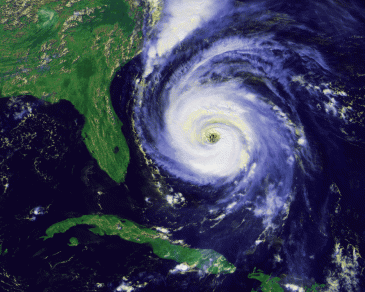
hurricane-imageLast week Dan, Connor Falk (our new employee) and I traveled to Arizona ahead of Hurricane Matthew to show auction lots for our upcoming Auction #20 (more to follow on that tomorrow!) and give some presentations. We were a little unsure about leaving with a potentially dangerous storm bearing down on us, but when the going gets tough, the tough leave town. As it turned out, Matthew took an eastward jog and spared most of the central Florida area.

The U.S. Mexican Numismatic Association convention in Scottsdale is always a great time to reconnect with friends and colleagues. Connor and I got to meet Don and Lois Bailey, Mexican numismatic legends. All three of us enjoyed spending time with Ute Wartenberg Kagan, the longtime executive director of the American Numismatic Society who brought

connor-falk-with-don-bailey-at-us-mex-2016

Connor Falk with Don Bailey

important Mexican coins from the vast collection at the Society. She will also attend our Auction #20, so if you’re attending it as well, you’ll want to meet and talk with her.

cori-downing-and-ute-wartenberg-kagan-us-mex-2016

Ute Wartenberg Kagan and Cori Downing

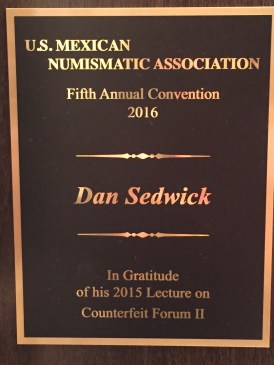
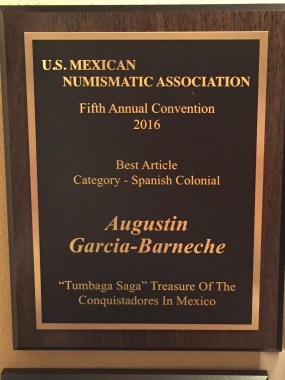
Augi, who stayed in Florida to make sure the hurricane didn’t blow away our office, won an award at the convention for his well-received book, The “Tumbaga” Saga, Treasure of the ConquistadorsWe’re fortunate to have a very cool “Tumbaga” bar (Lot 210) in the Auction. Dan took an award for his participation in the Counterfeit Forum last year and did so again this year. The presentation was extremely well received. I spoke on the Charles and Joanna coinage from the Mexico City mint, sharing some new research I’ve undertaken.

augi-garcia-us-mex-award-2016dan-sedwick-award-us-mex-2016

All in all, it was a quick respite from the desk and chair. If you’re a collector of Mexican coins, you should become a member of the U.S. Mexican Numismatic Association and attend next year’s convention.

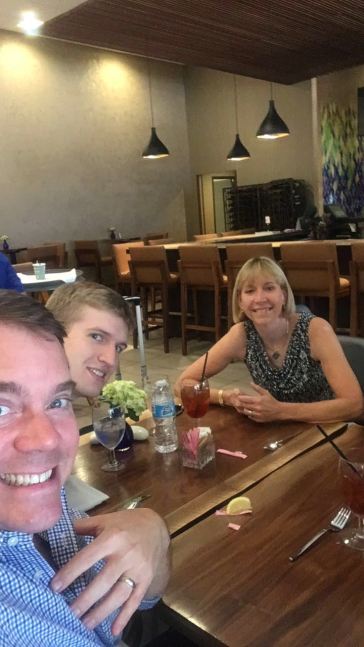
dan-sedwick-connor-falk-and-cori-downing-at-us-mex-2016


Gallery

Sedwick Treasure, World and US Coin Auction #20 Preview

7 Sep

christmas-packages

While all of us at Daniel Frank Sedwick, LLC, are diligently working on making our November Treasure World & US Coin Auction #20 the BEST ever, I thought I would pause to tell you about some of the cool stuff we will have for you to bid on and *hopefully* buy. First off, make sure your Christmas wish list is empty because there are lots and lots of goodies you’ll want! I’m already making my list.

In the upcoming auction, we have a Maravillas Research Collection of countermarked Potosi cobs. Here’s a refresher about the Maravillas from our website (abridged):

Maravillas, sunk in 1656 off Grand Bahama Island

shipwreck

As the almiranta (“admiral’s ship,” or rear guard) of the homebound Spanish fleet in January of 1656, the Nuestra Señora de las Maravillas was officially filled with over five million pesos of treasure (and probably much more in contraband, as was usually the case). That treasure included much of the silver salvaged from the South Seas Fleet’s Capitana of 1654 that wrecked on Chanduy Reef off Ecuador. The ill-fated treasure sank once again when the Maravillas unexpectedly ran into shallow water and was subsequently rammed by one of the other ships of its fleet, forcing the captain to try to ground the Maravillas on a nearby reef on Little Bahama Bank off Grand Bahama Island. In the ensuing chaos, exacerbated by strong winds, most of the 650 people on board the ship died in the night, and the wreckage scattered. Spanish salvagers soon recovered almost half a million pesos of treasure quickly, followed by more recoveries over the next several decades, yet with over half of the official cargo still unfound. The first re-discovery of the Maravillas in the 20th century was by Robert Marx and his company Seafinders in 1972. The second big salvage effort on the Maravillas was by Herbert Humphreys and his company Marex in the late 1980s and early 1990s. The wreck area is still being searched today, but officially the Bahamian government has not granted any leases on the site since the early 1990s.

roberto_mastalir

Roberto Mastalir Divisek


In addition to the above Potosi shipwreck cobs, we are honored to present a collection of “Transitional” 1652 Potosi 8 reales cobs put together and written about extensively by Robert Mastalir. All of his coins in the upcoming auction are featured (photographed) in his book The Great Transition at the Potosi Mint, 1649-1653, the 1652 Transitional 8 Reales, which is out of print already, but we plan to re-print it for the auction soon.


Unfortunately, sometimes collections come to us after the death of the collector, and that’s the case for the Charles Eidel collection of shipwreck coins and ancient Greek and Roman coins. Charlie was a genial retired NYC policeman whose appetite for coins was wide ranging. His meticulous record keeping and coin descriptions reflect his love for the hobby. It’s now time for him to posthumously pass along his gems for the next generation of collectors.

Near and dear to my heart is our major offering of Charles and Joanna coinage (both Early and Late Series) in this auction. We have a smattering of coins from several different sources which complement each other very well and will give you a lot of opportunities to enrich your collection…or start one! While we generally feature 4 reales from shipwrecks, this time we will have a large selection of the very hard-to-find smaller denominations. We will even have an early series Assayer R 1 real. And when’s the last time you saw Assayer S in any denomination? We’ve got a 2 reales for sale!

That’s it for now, but it should help you decide on what you’d like to see under the Christmas tree this year (or before)! Happy bidding.

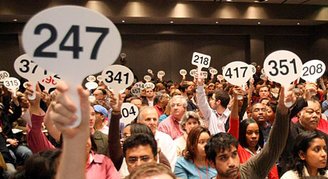
bidders-at-fudraising-auction

Gallery

When Size Matters

2 Feb

In the world of numismatics, size (in this context, weight) matters. Heads have rolled and the guilty have been jailed or bankrupted for minting gold and silver coins that are a bit south of expected weight. Just ask the assayer and former mayor of Potosi.

Drawing of Potosi Mountain


It’s a very serious business, and it’s easy to see why. Without the vast stores of gold and silver transported from the New World, Spain never woulchest of gold and silver cobsd have become a European colonial superpower. Each quantity of silver or gold mined in the colonial mines around Mexico City, Potosi, Lima, etc. and sent to the mint for smelting and/or coining would have a tax, a fifth (or quinto), charged by the crown and hence referred to as the “king’s fifth.” It all adds up after a while, and the king didn’t appreciate being cheated out of any of his money.
When minting cobs, which are hand struck on planchets without collars, the task of making sure the weight was correct must have been onerous. Note that many cobs have trim marks to cut away some of the material. The weight didn’t have to be exact, but it sure had to be credible.

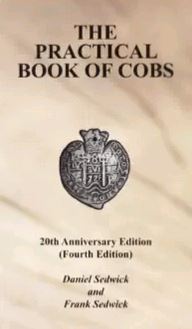
So, how much should a cob weigh? Of course, it depends on the denomination. The largest denomination was the 8 reales (silver) or 8 escudos (gold). Each was supposed to weigh about 27 grams, with a slight underweight tolerance of perhaps three-tenths of a gram. As for the other denominations, The Practical Book of Cobs tell us:

Practical Book of Cobs

Practical Book of Cobs, 4th edition

The denominations in gold are 1, 2, 4, and 8 escudos. There is no ½-escudo cob, although the ½ escudo did exist in the later milled coinage. The usual denominations in silver are ½, 1, 2, 4 and 8 reales. (A few ¼ reales were minted in the earliest periods but are generally rare and seldom seen.) Each lower denomination was supposed to weigh exactly one-half of the next larger denomination.

Given that formula, a 4 reales or escudos coin should weigh around 13.5 grams, a 2 reales or escudos coin around 6.75 grams, a 1 real or escudo coin around 3.375 grams, and a ½ real around 1.69 grams. There would be more leeway with silver than gold, which is more precious in any era.

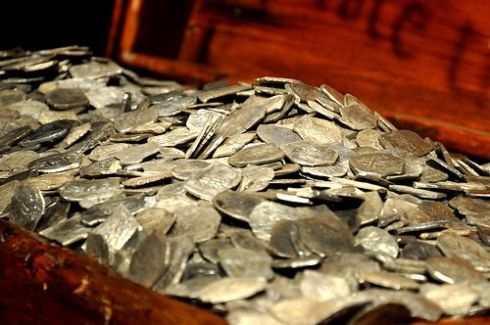
One of the best and cheapest purchases you can make if you’re serious about collecting cobs is a scale, so you can weigh your coins. If you’re concerned about whether a coscalein you just bought is genuine, weight it! If it’s significantly underweight, then there’s your red flag. The BIG exception is shipwreck silver coins. Silver corrodes in salt water so many shipwreck cobs are underweight, sometimes significantly. This is not true of gold which comes out of the ocean as intact as the day it went down with the ship.

Of course, you should always deal with a reputable numismatist when buying or selling coins!

Long Beach Expo This Week!

If you’re in southern California, don’t miss an opportunity to meet Dan and Augi at the Expo. See them Wednesday through Friday. They will have inventory for sale and/or can take your consignment for our upcoming Treasure, World and US Coin Auction #19.

schedule2016

Here’s the Hat Trick – Numismatic News

15 Jan

Just a quick note to remind everyone of our upcoming shows. Dan is heading to Vero Beach today for the annual Treasure Coast Coin Club show. He’s loaded with new purchases from the FUN and NYINC shows, so please go by and see him! He’s also taking consignments for our upcoming Sedwick Treasure, World and US Coin Auction #19. We’re always pleased to receive consignments of significant collections of cobs and choice Latin American coins. High-quality artifacts are always welcome as well.

tccc-show-2016

At the end of the month, Dan and Augi will be traveling to Long Beach, CA, for the Long Beach Expo from February 4-6. They will again be happy to take consignments AND buy or sell you something. It’s a busy time of year for us, but we’re getting excited about our next auction and hope you will join the fun. Auction dates are May 18 and 19, so mark your calendar now.

OK, now for a cool hat trick.

Goal #1: Purchase a 1704 8 reales Potosi cob (not hard to do).

Lot 1431, TA #14, 8R cob

Lot 1431, Daniel Frank Sedwick, LLC – Treasure Auction #14

Goal #2: Purchase a 1704 8 reales Potosi royal (a little harder to do but not out of the question).

Lot 707, TA #14, 8R royal

Lot 707, Daniel Frank Sedwick, LLC – Treasure Auction #14

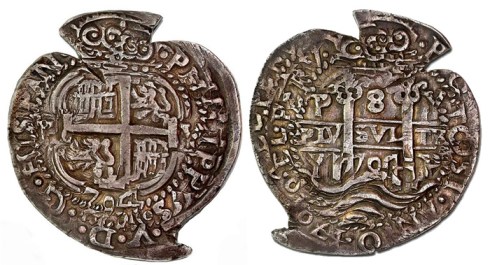
And Goal #3: Purchase a 1704 8 reales Potosi heart (you have a better chance with the lottery than getting this!).

Lot 720, TA #18, 8R Heart

Lot 720, Daniel Frank Sedwick, LLC- Treasure Auction #18

Pretty nifty hat trick, no? What I like about looking at all three of these coins is that we can study the details that are missing on our cob. This can go a long way in identifying coins.

One last note: the ANA (for American Numismatic Association) has just launched a digital archive of 127 years’ worth of The Numismatist magazine. Both Dan and my father, Frank Sedwick, have written articles for the magazine! Check out the story here: http://www.coinworld.com/news/us-coins/2015/12/ANA-launches-digital-archive-of-The-Numismatist-magazine.html


NOTE: The contents of this site including all images, graphics, photos, lists, compilations, articles and text are Copyright © DFS, LLC. Any form (commercial or non-commercial) reproduction, duplication, copy, redistribution, publication, or other use by any means in any form, is prohibited unless pursuant to a written permission by the Daniel Frank Sedwick, LLC.