Subasta de Monedas y Billetes de Daniel Frank Sedwick, llc #22

20 Oct

Sesiones 1-7. En SALA y por Internet Jueves-Viernes Noviembre, 2-3, 2017 / Sesion 8 – Solo por internet, Lunes Noviembre, 6, 2017.

Al igual que con todas nuestras subastas, muchas grandes colecciones han convergido en una increíble presentación una vez más. Esta será nuestra mayor venta hasta la fecha, particularmente con la segunda parte de selecciones de la colección de Richard Stuart. Algunas de las áreas en la cual poner atención:

  • En las macuquinas de oro ofrecemos la mejor selección de Lima que hemos tenido, en su mayoría de la flota de 1715, incluidos MUCHOS de los mejores ejemplares conocidos.

Nuestras secciones usuales de macuquinas de México, Lima y Potosí están llenas de trofeos numismáticos, envolviendo muchas monedas importantes de Carlos y Juana de México (¡incluyendo un fantástico 3 reales!), Pero esta venta tiene un área dedicada a una de las macuquinas más rara hechas en América se trata de la mayor colección de macuquinas de Panamá que se ha armado, gracias a Richard Stuart.

Hablando de Richard Stuart, las selecciones de su amplia colección de material centroamericano continúan poblando nuestra sección de Monedas de Plata del Mundo, con la mejor oferta de Honduras y Nicaragua “macuquinas de imitación” provisional (presentada por Carlos Jara), la más grande jamás vista selección de contramarcas de Guatemala (incluido el tipo “moclón” de 1662) y presentaciones significativas en Costa Rica y Panamá también.

En la sección de monedas mundiales de oro, tenemos el honor de presentar, como el único 1 escudo de Guatemala macuquino fechado 1750/48 e importantes rarezas de oro de la República Centroamericana de Costa Rica y Guatemala y otros países como un set de las primeras monedas producidas en moneda de Oro de cordoncillo en América, se trata de 1,2 y 4 Escudos de 1732 de la ceca de México.

Una colección a recalcar es la Colección Potomac de Columnarios Mexicanos, la mayoría en grados exquisito, claramente ensamblados con un ojo para la calidad sin perseguir capsulas plásticas.

Otro logro de Richard Stuart se refleja en la sección de Medallas con su colección de medallas del Almirante Vernon, presentada aquí como la oferta única más grande y selecta en los tiempos modernos, con una breve presentación de Daniel Frank Sedwick.

Nuestras secciones de Monedas y Papel moneda de EE. UU. Continúan creciendo, con importantes ofertas de América Latina y México, como una única presentación de 100 pesos del Banco de Santiago (Chile) y un conjunto completo de pruebas de Chihuahua (México).

Como siempre habrá presentaciones académicas en SALA el día antes de la subasta, esta vez de Jorge Proctor nos dará una cátedra oportuna sombre las macuquinas de Panamá, Carlos Jara nos deleitara con una disertación sobre numismática provisional de Honduras y Nicaragua. Con gran honor tendremos la presencia internacional de Manuel Chacón (curador del Museo del Banco Central de Costa Rica) y finalmente cerramos las disertaciones con el estudioso y Capitán, John Brandon que nos presentara historia y conservación de naufragios. El lunes después de la subasta en SALA será la subasta solo por Internet, (tenga en cuenta que el Lunes 6 de noviembre cambia la hora en EE. UU. de EDT a EST), la “sección de “internet only” está llena de cientos de lotes enfocados en coleccionista conscientes de su presupuesto pero aun buscando la calidad. Con material de todas las secciones.

Página principal de la subasta:  http://www.sedwickcoins.com/ta22/catalog.htm

Pujas y registracion: www.auction.sedwickcoins.com

The Admiral Vernon Medals of 1739 and 1741

10 Oct

by Daniel Frank Sedwick

If the heart of collecting is visual and intellectual stimulation mixed with historical study, then the “Admiral Vernon” medals crafted in England in the period 1739-1741 are the perfect collectibles. The sheer number of different varieties of these medals makes collecting them both challenging and feasible. Fascination with these historic pieces has spawned more than a dozen studies over the past 180+ years, culminating in the book Medallic Portraits of Admiral Vernon (2010), by John Adams and Fernando Chao (the “AC” reference we quote in our lot descriptions). With this well-illustrated book alone, one can spend many enjoyable hours attributing each piece down to exact die details. The biggest challenge with these medals is condition, as they were heavily used and abused, which makes the present offering comprising the collection of Richard Stuart an exceptional opportunity.

The conflict began with the capture and torture of the British merchant ship captain Robert Jenkins by the Spanish off Havana, Cuba, in 1731. His alleged punishment for smuggling was the removal of one of his ears, which he physically produced for British Parliament in 1739, setting off what became known as the “War of Jenkins’ Ear” starting that year, effectively “Great Britain’s first protracted naval war in the Americas.”[1] In a burst of vengeful braggadocio, the experienced British admiral Edward Vernon reportedly said he could take the Spanish port of Portobelo, Panama, “with six ships only,” the larger goal being to disrupt the flow of Spanish shipping of treasure from the New World. It is easy in retrospect to see why the Spanish viewed this as simple piracy under the guise of war. While the British lauded Vernon as a hero and the Spanish vilified him as a pirate, the truth is somewhere in between.

Using Jamaica as a base of operations, Vernon made good on his boast in December of 1739 (with Commodore Charles Brown), but from there things went south. While news of his victory at Portobelo was reaching England, Vernon’s squadrons were battling storms and the threat of a French fleet. Vernon’s subsequent attack on Cartagena, Colombia, in March of 1740 was unsuccessful and resulted in his taking a sort of consolation prize: Fort Chagre in Panama (near Portobelo). More than a year went by, as both sides beefed up forces, the British side (including ships under Rear Admiral Chaloner Ogle) eventually becoming “the largest force yet deployed in the West Indies.”[2] A renewed assault on Cartagena utilizing over 100 ships and 12,600 troops (almost a third of which were colonial Americans, thus representing “the first deployment of Americans abroad”[3]) began in the spring of 1741 and delivered Vernon’s ships and foot-soldiers into the harbor before yellow fever and miscommunication between Vernon and Brigadier-General Thomas Wentworth forced a retreat. Most interestingly for us numismatists, upon breaching the harbor the boastful Vernon had already sent word back to England of his “victory” at Cartagena against his Spanish counterpart, Admiral Blas de Lezo, spawning a new round of medals dated 1741. Vernon’s final attempt was against Cuba that same year, initially planned for Havana (and, once again, reported back to England as a victory there) but instead visited upon Santiago on the south coast and successfully repelled by the Spanish and their mosquito-borne partner, yellow fever, as in Cartagena. In sum, Vernon’s only victories were in relatively quiet and unimportant Panama.

The medals themselves depict all these events in the most favorable light possible for Vernon, to the point of comical misrepresentation. Beyond the basic organization based on location (Portobelo, Fort Chagre, Cartagena and Havana), these medals are grouped according to legends (on both sides, often with errors) and figures of Vernon and the other players in the events (often almost cartoon-like in quality), in addition to icons like cannons and ships and scenery like forts and cities (most depicted without regard to perspective or scale). Minute details like where Vernon’s finger points and where a church steeple sticks up are integral to pinpointing exact dies. Since so many of these medals are well worn, it is not always to make attributions right away, but almost always one small, visible detail can make the difference.

Besides a few examples in silver and tin (plus a unique specimen in gold), the primary metal used to make these pieces was copper alloyed with a variety of other metals, like zinc and tin. Often the generic term used is brass or bronze, but more specific references mention “pinchbeck,” referring to a proprietary alloy invented by a family of clock and watchmakers in London named Pinchbeck, who advertised their metal as resembling gold in color and ductility. Presumably the Pinchbecks were the makers and purveyors of the Vernon medals. Relatively few of the medals are signed by engravers, most of whom are unknown. Overall it is clear these medals were made in haste to satisfy and capitalize on demand from a brief hysteria.

While every collector seeks a reason or connection to collect a certain thing (like Richard Stuart’s connection with Panama for these medals), the Admiral Vernon medals can and should be collected simply for their “collectibility” as a well-studied series that has been appreciated by top numismatists for over 180 years.

Link To Admiral Vernon Medal Collection

[1] Adams-Chao, page 21

[2] Adams-Chao, page 22

[3] Adams-Chao, page 159

“Two bits” US quarter design proposed

21 Sep

Could the two bits return to circulation? A Spanish colonial influenced design for the 2019 Texas San Antonio Missions America the Beautiful quarter was recommended by the Citizens Coinage Advisory Committee (CCAC) on Sept. 19.

2019_Texas_Quarter

The CCAC-recommended design for the 2019 San Antonio Missions America the Beautiful quarter.

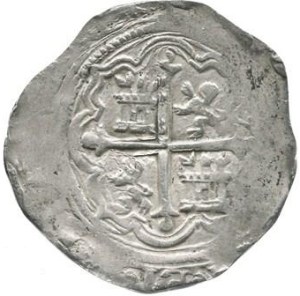
The reverse design is based heavily on Spanish colonial cob reales which circulated widely in North and South America. It was not uncommon to see reales circulating in the American colonies. The adage “two bits” descends from the 2 reales or 2 “bits” of an 8 reales, a denomination that traded at par with a US quarter dollar.

The CCAC-recommended design features a Spanish colonial-style cross in the center. In the four quadrants, there is a mission bell tower in the upper left, a heraldic lion in the upper right, wheat in the lower left and waves in the lower right.

The mission tower and the lion are very similar to the castles and lions found on Spanish colonial cobs, both in design and in placement. The bushel of wheat and waves are modern additions that symbolize the crops grown by the missions using water from the San Antonio River.

Around the design is a raised rim with the legends reading, “SAN ANTONIO MISSIONS,” “TEXAS,” and “E PLURIBUS UNUM” in addition to the date, 2019. The obverse design will be the standard Washington quarter design, shared across all America the Beautiful quarters.

8645290_1edit

Reverse of a Mexico City, Mexico cob 2 reales.

Fifteen concepts for the San Antonio Missions quarter were submitted for review. Most featured different views of a mission. Three featured a Spanish colonial cross: the CCAC recommended design, one with the tower and wheat positions swapped as well as a fish leaping out of water and one with the cross extending to the rims.

The San Antonio Missions quarter is one of five new designs set to release in 2019. Quarters commemorating Massachusetts’ Lowell National Historical Park, Commonwealth of North Mariana Islands’ American Memorial Park, Guam’s War in the Pacific National Historical Park and Idaho’s Frank Church River of No Return Wilderness will appear throughout the year. The CCAC discussed 64 total depictions for the five quarter designs.

The designs viewed by the CCAC were also considered by the Commission of Fine Arts (CFA). The CFA’s suggestions were not available at press time. Once both groups have selected designs, they will be sent to Secretary of the Treasury Steve Mnuchin for approval in early 2018.

In 2019, the United States Mint will strike the five quarter designs throughout the year. The San Antonio Missions quarter is expected to release in late August. If the CCAC-recommended design is chosen, Americans will once again find two bits in their pocket change.

How to grade coins: lessons from ANA’s Summer Seminar

12 Jul

Grading coins can be a difficult task. The difference between an AU-58 coin and an MS-62 coin can mean very little in terms of wear but matter greatly in value. If the coin isn’t under the right light or the grader isn’t experienced with the series, money could be left on the table. It’s for this reason that the American Numismatic Association (ANA) provides three grading courses at their annual Summer Seminar.

I recently attended the 2017 Summer Seminar from June 17 to 29 held at the Colorado College in Colorado Springs, Colo. The seminar offers a variety of courses on numismatic topics; everything from identifying counterfeits to grading coins. In addition, there are opportunities to meet with fellow numismatists, attend mini-seminars and visit some of Colorado’s sites.

I enrolled in the Grading United States Coins, Part 2 and Advanced United States Coin Grading and Problem Coins courses after testing out of the Coin Grading 1. Coin Grading 2 was held the first week of the seminar. It was taught by Steve Feltner of Americana Rare Coins, John Shuch of NGC, and David McCarthy of Kagin’s. Advanced Coin Grading went on the second week of the seminar and was taught by Charles Browne of Charles Browne Numismatic Consulting, Ken Park of The KMJ Group, Don Ketterling of D.H. Ketterling Consulting, and Bill Shamhart of Numismatic Americana, Inc.

The course involved multiple rounds of grading coins. We would grade a coin while timed and pass it to the next student while receiving another one in turn. Timing, as the instructors stated, is important because you can’t spend all day on one coin and people have a tendency to second guess themselves. We began with a minute per coin in Coin Grading 2 and went down to 30 seconds in Advanced Coin Grading.

The coins we graded were typically US coins and most were Mint State. Why Mint State? Because most people have difficulty with identifying a Mint State coin and the differences between Mint State grades are minute.

IMG_9249

The Practical Book of Cobs on sale at the American Numismatic Association headquarters.

When grading a Mint State coin, two of the most helpful pieces of advice I have ever heard were picked up in the classes. The first is “grade down from MS-70 rather than grade up for MS-60.” Graders with minimal experience in a particular coin series have a tendency to focus on marks and award lower grades than expected. As someone who has a tendency to be conservative when grading, this helped me to give coins the MS-64s or -65s they deserved rather than the MS-63s I would award them.

The other piece of advice that matters most to me is to “use light to your advantage.” Lighting while grading is a big factor. A dark room is necessary. Graders should use incandescent bulbs in adjustable lamps that they can get the coin as close to as possible. Rotating the coin all around is necessary to pick up the marks and lines that may affect the grade.

I also learned an interesting technique to use on AU-58 coins that appear to be Mint State. By holding the coin vertically and moving it away from the light source, I could see areas of wear take on a darker tone than the rest of the coin. Bringing it back into the light and taking a closer look revealed the marks and smooth patches that wear leaves.

IMG_9713

The author, Connor Falk, holds up a very rare 1943 Lincoln Wheat cent graded PCGS XF45 CAC.

Another helpful technique I learned was to grade based on my first look at the coin. If I looked at a coin for too long or took a second look, I had a tendency to second guess my grade. Marks that seemed minimal before were more serious now that I knew where they were. Graders should also take care not to fall into the trap of “counting” marks.

Lastly, another key phrase I heard in the classes was that the “reverse of a coin never helps and always hurts.” This means that a coin with a MS-67 reverse but an MS-64 obverse is going to get an MS-64 grade. Likewise, a coin with an MS-67 obverse but an MS-64 reverse will trend around MS-65. Almost all of the coin’s grade derives from the obverse since it is the side of the coin that people see first but a bad reverse can bring a grade down.

While most of my time was spent grading, I also got the chance to visit Colorado. Some fellow numismatists and I went to a Rockies-Diamondbacks game in Denver, an arcade in Manitou Springs, and the local coin show in Colorado Springs.

The Colorado Springs coin show was a welcomed respite in between the two weeks of classes. Roughly 50 dealers had booths at the show and offered the range of numismatics. I sold quite a bit of Spanish colonial coinage we had in inventory and bought a little bit. One coin I brought back with me is a nice NGC certified 1853-O Arrows and Rays Seated Liberty half dollar from the SS Republic shipwreck. It has very minimal corrosion and some nice toning throughout. It’ll be up on the Daniel Frank Sedwick, LLC online store soon.

I highly recommend attending the ANA’s Summer Seminar and taking the coin grading courses. Quite a few numismatists have taken the grading classes multiple times to hone their grading skills. Even Ken Bressett, editor of the Red Book, stopped by my Coin Grading 2 class to adjust his grading scale. The classes provide a great environment for knowledgeable instructors to teach numismatists the techniques needed to accurately grade coins. Having those skills could pay dividends when it comes to buying a raw coin, sending it in for grading and getting back a coin that you can then resell for a profit.

Time to SELL in Sedwick’s next Treasure, World, U.S. Coin & Paper Money Auction

8 Jul

cropped-10451071_735653903139294_9095171355971243803_n Now is not too early to consign to our Treasure, World and U.S. Coin & Paper Money Auction #22, which will be our Fifth LIVE PUBLIC FLOOR sale. As usual this event will take place at the DoubleTree by Hilton at Lake Buena Vista in Orlando, FL, with live floor auction on Thursday-Friday, November 2-3, 2017 and lot viewing and guest speakers the day before (Wednesday, November 1).

The special room rate will be available until October 9th or until the group block is sold out, whichever comes first. Booking a reservation is simple: Just click here to receive our preferred group rate: “Book a Room
If you prefer to make your reservation by phone, please call the hotel at 407.934.1000 and specify group code “SED” 1-800-222-TREE(8733). Hotel address and details as follows: Walt Disney World, 2305 Hotel Plaza | Lake Buena Vista, Orlando, Florida – USA 32830 – Tel: +1-407.934.1000 | Fax: +1-407.934.1015

This will be the MOST IMPORTANT auction of the year, featuring Part II of selections from the Richard Stuart collection, with exceptional exposure both from the LIVE FLOOR and simultaneous INTERNET BIDDING.

We urge you not to wait till the last weeks to consign. Please consult with us about your consignments now. Also there is plenty of time to meet to discuss and deliver your consignments in person. We will travel to you for qualified consignments. Also note you will be able to see us in person at ANA World’s Fair of Money in Denver, August 1-5. We will also be offering much new inventory at this show!

We are seeking consignments of better shipwreck coins and gold cobs, world gold coins, high-grade Latin American coin collections and high-end shipwreck gold artifacts (particularly gold and silver ingots). Our buyers stand ready to bid on YOUR treasures!

We look forward to hearing from you, with thanks in advance. Do not forget to check our Online Store.

Daniel Frank Sedwick, LLC