How to grade coins: lessons from ANA’s Summer Seminar

12 Jul

Grading coins can be a difficult task. The difference between an AU-58 coin and an MS-62 coin can mean very little in terms of wear but matter greatly in value. If the coin isn’t under the right light or the grader isn’t experienced with the series, money could be left on the table. It’s for this reason that the American Numismatic Association (ANA) provides three grading courses at their annual Summer Seminar.

I recently attended the 2017 Summer Seminar from June 17 to 29 held at the Colorado College in Colorado Springs, Colo. The seminar offers a variety of courses on numismatic topics; everything from identifying counterfeits to grading coins. In addition, there are opportunities to meet with fellow numismatists, attend mini-seminars and visit some of Colorado’s sites.

I enrolled in the Grading United States Coins, Part 2 and Advanced United States Coin Grading and Problem Coins courses after testing out of the Coin Grading 1. Coin Grading 2 was held the first week of the seminar. It was taught by Steve Feltner of Americana Rare Coins, John Shuch of NGC, and David McCarthy of Kagin’s. Advanced Coin Grading went on the second week of the seminar and was taught by Charles Browne of Charles Browne Numismatic Consulting, Ken Park of The KMJ Group, Don Ketterling of D.H. Ketterling Consulting, and Bill Shamhart of Numismatic Americana, Inc.

The course involved multiple rounds of grading coins. We would grade a coin while timed and pass it to the next student while receiving another one in turn. Timing, as the instructors stated, is important because you can’t spend all day on one coin and people have a tendency to second guess themselves. We began with a minute per coin in Coin Grading 2 and went down to 30 seconds in Advanced Coin Grading.

The coins we graded were typically US coins and most were Mint State. Why Mint State? Because most people have difficulty with identifying a Mint State coin and the differences between Mint State grades are minute.

IMG_9249

The Practical Book of Cobs on sale at the American Numismatic Association headquarters.

When grading a Mint State coin, two of the most helpful pieces of advice I have ever heard were picked up in the classes. The first is “grade down from MS-70 rather than grade up for MS-60.” Graders with minimal experience in a particular coin series have a tendency to focus on marks and award lower grades than expected. As someone who has a tendency to be conservative when grading, this helped me to give coins the MS-64s or -65s they deserved rather than the MS-63s I would award them.

The other piece of advice that matters most to me is to “use light to your advantage.” Lighting while grading is a big factor. A dark room is necessary. Graders should use incandescent bulbs in adjustable lamps that they can get the coin as close to as possible. Rotating the coin all around is necessary to pick up the marks and lines that may affect the grade.

I also learned an interesting technique to use on AU-58 coins that appear to be Mint State. By holding the coin vertically and moving it away from the light source, I could see areas of wear take on a darker tone than the rest of the coin. Bringing it back into the light and taking a closer look revealed the marks and smooth patches that wear leaves.

IMG_9713

The author, Connor Falk, holds up a very rare 1943 Lincoln Wheat cent graded PCGS XF45 CAC.

Another helpful technique I learned was to grade based on my first look at the coin. If I looked at a coin for too long or took a second look, I had a tendency to second guess my grade. Marks that seemed minimal before were more serious now that I knew where they were. Graders should also take care not to fall into the trap of “counting” marks.

Lastly, another key phrase I heard in the classes was that the “reverse of a coin never helps and always hurts.” This means that a coin with a MS-67 reverse but an MS-64 obverse is going to get an MS-64 grade. Likewise, a coin with an MS-67 obverse but an MS-64 reverse will trend around MS-65. Almost all of the coin’s grade derives from the obverse since it is the side of the coin that people see first but a bad reverse can bring a grade down.

While most of my time was spent grading, I also got the chance to visit Colorado. Some fellow numismatists and I went to a Rockies-Diamondbacks game in Denver, an arcade in Manitou Springs, and the local coin show in Colorado Springs.

The Colorado Springs coin show was a welcomed respite in between the two weeks of classes. Roughly 50 dealers had booths at the show and offered the range of numismatics. I sold quite a bit of Spanish colonial coinage we had in inventory and bought a little bit. One coin I brought back with me is a nice NGC certified 1853-O Arrows and Rays Seated Liberty half dollar from the SS Republic shipwreck. It has very minimal corrosion and some nice toning throughout. It’ll be up on the Daniel Frank Sedwick, LLC online store soon.

I highly recommend attending the ANA’s Summer Seminar and taking the coin grading courses. Quite a few numismatists have taken the grading classes multiple times to hone their grading skills. Even Ken Bressett, editor of the Red Book, stopped by my Coin Grading 2 class to adjust his grading scale. The classes provide a great environment for knowledgeable instructors to teach numismatists the techniques needed to accurately grade coins. Having those skills could pay dividends when it comes to buying a raw coin, sending it in for grading and getting back a coin that you can then resell for a profit.

Time to SELL in Sedwick’s next Treasure, World, U.S. Coin & Paper Money Auction

8 Jul

cropped-10451071_735653903139294_9095171355971243803_n Now is not too early to consign to our Treasure, World and U.S. Coin & Paper Money Auction #22, which will be our Fifth LIVE PUBLIC FLOOR sale. As usual this event will take place at the DoubleTree by Hilton at Lake Buena Vista in Orlando, FL, with live floor auction on Thursday-Friday, November 2-3, 2017 and lot viewing and guest speakers the day before (Wednesday, November 1).
The special room rate will be available until October 9th or until the group block is sold out, whichever comes first. Booking a reservation is simple: Just click here to receive our preferred group rate: “Book a Room
If you prefer to make your reservation by phone, please call the hotel at 407.934.1000 and specify group code “SED” 1-800-222-TREE(8733). Hotel address and details as follows: Walt Disney World, 2305 Hotel Plaza | Lake Buena Vista, Orlando, Florida – USA 32830 – Tel: +1-407.934.1000 | Fax: +1-407.934.1015

This will be the MOST IMPORTANT auction of the year, featuring Part II of selections from the Richard Stuart collection, with exceptional exposure both from the LIVE FLOOR and simultaneous INTERNET BIDDING.

We urge you not to wait till the last weeks to consign. Please consult with us about your consignments now. Also there is plenty of time to meet to discuss and deliver your consignments in person. We will travel to you for qualified consignments. Also note you will be able to see us in person at ANA World’s Fair of Money in Denver, August 1-5. We will also be offering much new inventory at this show!

We are seeking consignments of better shipwreck coins and gold cobs, world gold coins, high-grade Latin American coin collections and high-end shipwreck gold artifacts (particularly gold and silver ingots). Our buyers stand ready to bid on YOUR treasures!

We look forward to hearing from you, with thanks in advance. Do not forget to check our Online Store.

Daniel Frank Sedwick, LLC


Shipwreck artifacts and coins top Sedwick auction

12 May

Strong collector demand provoked intense bidding and high prices for both shipwreck and non-shipwreck items in Daniel Frank Sedwick, LLC’s May 3-4 auction. The 2,086 lot auction realized $1.725 million in winning bids. All prices listed include a 17.5 percent buyer’s premium.

Rosary (2)

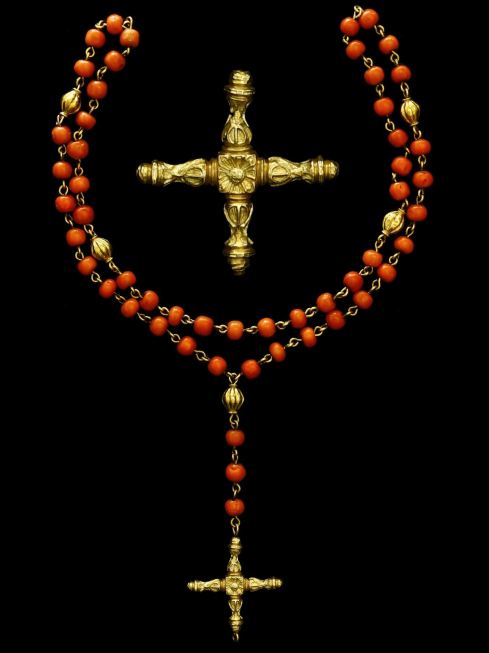
A gold and red-coral rosary recovered from the Atocha that sold for $85,187.

A gold and red-coral rosary recovered from the shipwreck of the Atocha, which sank in 1622 west of Key West, Florida, greatly surpassed its $25,000-up estimate to sell for $85,187. The rosary, in the sale as lot 2020, has been well publicized since its discovery in 1973, having appeared in the June 1976 issue of National Geographic and offered in a 1988 Christie’s auction.

Atocha bar

A 83 troy pound, 7.52 troy ounce silver bar from the Atocha was purchased for $64,883.

Another Atocha relic in the sale was lot 319, an 83 troy pound, 7.52 troy ounce silver bar that went for $64,883 on a $35,000-up estimate.

Salvation coin

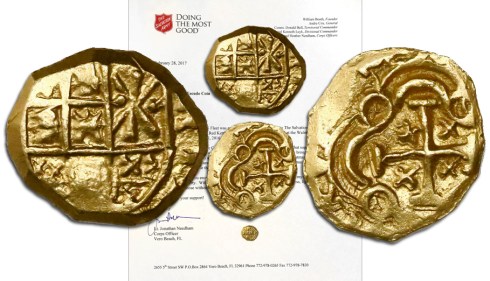
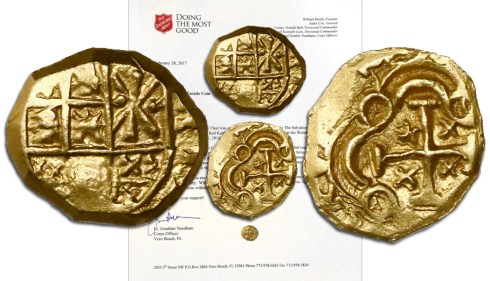
A Bogota gold escudo from the 1715 Fleet and donated to the Salvation Army sold for $3,819.

Hundreds of shipwreck coins appeared in the sale as well. One of the most viewed items in the sale was lot 46, a Bogota gold escudo recovered from the shipwrecked 1715 Fleet and famously donated to the Salvation Army red kettle campaign during the 2016 holiday season. It flew by its $2,000-$3,000 estimate and sold for $3,819.

Cuzco

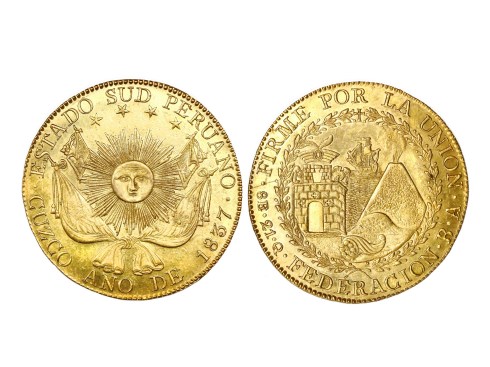
A MS-64 1837 Cuzco, Peru, gold 8 escudos hammered at $38,775.

Many non-shipwreck pieces saw high prices and, in some instances, record breaking prices. Lot 203, a Cuzco, Peru, 1837 gold 8 escudos graded NGC MS 64 went for $38,775. It was estimated at $20,000-$30,000.

Panama coins and paper money saw spirited bidding in the auction. A rare Panama 1930 matte proof set consisting of the half-, quarter- and tenth-balboas pedigreed to the Richard Stuart collection was offered as lot 1648. The set sold for $18,800, well past its $2,000-$3,000 estimate. Likewise, a Panama (then a state in Colombia) 1869 3 pesos banknote graded PMG VF 25 realized $3,055 on a $1,500-$2,250 estimate.

1864

This Sovereign State of Panama 3 pesos note from 1869 graded PMG VF 35 realized $3,055.

Other top lots include:

  • Lot 24, a Lima 1697/66H cob 4 escudos from the 1715 Fleet graded NGC MS 63 sold for $31,725.
  • Lot 3, a 1713 Mexico gold 8 escudos from the 1715 Fleet graded NGC MS 66 sold for $28,200.
  • Lot 556, a Mexico cob 4 reales from the pirate ship Whydah sold for $16,450.
  • Lot 320, a 35 troy pound, 1.81 troy ounce silver bar from the Maravillas shipwreck sold for $15,275.
  • Lot 1666, a Paraguay white-metal pattern 10 reales (ca. 1861-67) graded NGC MS 61 sold for $15,862.
  • Lot 1644, a Panama copper-nickel 1918 2-1/2 centesimos pedigreed to the Richard Stuart collection and graded NGC MS 63 sold for $13,512.

Full auction results can be viewed online at auction.sedwickcoins.com. Daniel Frank Sedwick, LLC is currently accepting consignments for their Treasure, World, U.S. Coin and Paper Money Auction #22 to be held Nov. 1-3, 2017. For more details, please contact Daniel Frank Sedwick, LLC at office@sedwickcoins.com.

Red Kettle-donated gold shipwreck coin to be auctioned

13 Apr

A 300-year-old Spanish colonial gold coin recovered from a 1715 Plate Fleet shipwreck and donated during the Salvation Army’s 2016 Holiday Red Kettle campaign will be auctioned on May 3, 2017.

46

The Bogota cob 1 escudo recovered from the 1715 Fleet and donated to the Salvation Army in December of 2016.

The coin will appear as lot 46 in Daniel Frank Sedwick, LLC’s Treasure, World, U.S. Coin and Paper Money Auction #21, held May 3-4 online at auction.sedwickcoins.com. The lot is estimated at $2,000 to $3,000. The Salvation Army will receive the full final hammer price from the sale.

Also included with the coin is a letter on its provenance from Lt. Jonathan Needham, corps officer of the Salvation Army of Vero Beach, as well as the case the coin was donated in.

The gold escudo was anonymously handed to volunteer bell ringer Jim Bessey on Dec. 23, 2016 outside of a Sebastian, Fla. Walmart store. The donation made national news as one of the more interesting pieces given to the Salvation Army during the holiday season.

The donated coin was minted at the Spanish colonial mint in Bogota, Colombia sometime between 1700 and 1715 as a posthumous issue of King Charles II (1661-1700).

In 1715, the escudo, along with many others, was shipped aboard the 1715 Plate Fleet, one of the largest treasure fleets of its time. Several ships from the fleet sank during a storm off the east coast of Florida. Much of the treasure remained on the ocean floor until modern day salvage operations recovered many coins and artifacts, which are in demand on the collectibles market.

Bidders can register for the auction at auction.sedwickcoins.com. The auction catalog is available for ordering at www.sedwickcoins.com. For more details, please contact Daniel Frank Sedwick, LLC at office@sedwickcoins.com.

Rarities, shipwreck notes in Sedwick sale

6 Apr

Rare U.S., world and even shipwreck recovered bank notes will appear in Daniel Frank Sedwick, LLC’s Treasure, World, U.S. Coin and Paper Money Auction 21. The sale will be held live online on May 3-4 at auction.sedwickcoins.com.

The U.S. paper money section contains federal and obsolete issues in addition to Texas, Confederate and Philippine notes. The top U.S. piece is lot 1782, an 1882 $20 gold certificate graded PCGS Apparent Gem New 65, estimated at $7,500 to $11,000. The note features then recently assassinated President Garfield on the obverse and an eagle on the reverse clutching electric bolts over the ocean, symbolizing the transatlantic telegraph lines of the time.

1782_press2

A 1882 $20 gold certificate graded PCGS Gem New 65 Apparent, estimated at $7,500 to $11,000.

The world paper money section features a key Puerto Rican note: lot 1994, a 1909 Banco de Puerto Rico $5 graded PCGS Fine 12 and pedigreed to the Eric P. Newman collection. Newman collected Puerto Rican currency because of their close ties to U.S. history and this example, authorized just after the Spanish-American War, fits the bill. The note has an estimate of $2,000 and up.

1994_press2

A 1909 Banco de Puerto Rico $5 graded PCGS Fine 12 and pedigreed to the Eric P. Newman collection, estimated at $2,000 and up.

A high grade 1922 Canadian La Banque Nationale specimen set will also appear in the sale as lot 1845. The set features all five denominations certified by PMG in grades ranging from UNC 62 to 66 and has a $2,000 to $3,000 estimate.

1869_press2

A 1936 Costa Rican 2 colones “Mona Lisa” note graded PCGS VF 30, estimated at $1,750 to $2,500.

Other important lots in the sale include:

  • Lot 1786, a series 1935E $1 silver certificate “star note” graded PCGS Grade A recovered from the Andrea Doria, sunk in 1956 off Massachusetts, estimated at $500 to $750.
  • Lot 653, three British India 10 rupees recovered from the SS Camberwell, sunk in 1917 by a German mine off the Isle of Wight, England, estimated at $100 to $150.
  • Lot 1869, a 1936 Costa Rican 2 colones “Mona Lisa” note graded PCGS VF 30, estimated at $1,750 to $2,500.
  • Lot 1819, a series 1912 Philippines 50 pesos graded PCGS VF 35 Net – Toning, estimated at $1,400 to $2,100.
  • Lot 1965, a complete set of eight high grade Mexican Banco Yucateco specimens graded by PMG, estimated at $3,000 to $4,500.
  • Lot 1844, a set of five 1929 Bulgarian specimens from 200 levas to 5,000, estimated at $3,000 to $4,000.

Bidders can register for the auction at auction.sedwickcoins.com. The auction catalog is available for ordering at www.sedwickcoins.com. For more details, please contact Daniel Frank Sedwick, LLC at office@sedwickcoins.com.