

Payday by Liliya Skubish, cover for our upcoming Sedwick Treasure Auction #19
We’re busy getting ready for our next auction, which is quite a production! First we collect consignments, then we assign lot numbers to each auction lot, and then we photograph everything. While that’s going on, Dan writes a detailed description about each lot. After layout is complete, catalogs are ordered and voila, the fun really begins.
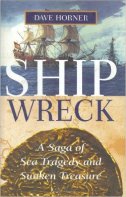
Book by Dave Horner, 1999
Speaking of consignments, we are very proud and pleased that two important collectors, Tom Gray and Dave Horner, are allowing us to auction all or some parts of their collections for them. The coins from Dave Horner’s collection (Dave is a well-known treasure hunter and writer) include 1715 Fleet gold cobs and shipwreck coins from the San Martin, the Capitana, the Maravillas, and the Jupiter Wreck.
Tom Gray’s collection, which was previously exhibited as “Treasures of the Deep: Galleons, Storms and Archeology,” last year at the American

Tom Gray with his mother, Anne Gray
Numismatic Association’s museum in Colorado Springs, concentrates on shipwreck coins and ingots. As a result, our shipwreck coin section features some shipwrecks that you don’t normally see (and many that you do). There are over 50 shipwrecks represented, from ancient Egyptian galley wrecks to the SS Crescent City which sank off Cork, Ireland in 1871. In between there are 16 lots from the previously mentioned San Martin, which at the time of its salvage, was the earliest documented shipwreck ever salvaged off the east coast of Florida. We have coins from famous shipwrecks like the Vergulde Draeck (which sank in 1656 off Western Australia and whose coins must be accompanied by the original Western Australian Museum certificate) and the Whydah (a true pirate ship which sank in 1717 off Cape Cod and whose coins are almost all housed at the Whydah Pirate Museum in Provincetown, MA). Also extremely rare are coins we will auction from such wrecks as the Aguila Volante, which sank in 1701 off Punta Santa Elena, Ecuador;the Wendela, which sank in 1737 off the Shetland Islands, north of Scotland; the Colossus, which sank in 1798 off the Scilly Isles, southwest of England; and the aforementioned S.S. Crescent City.
So, if you’re a collector of shipwreck coins, this is the auction for you!
Next time, I’ll highlight more tidbits from our auction and we’ll be that much closer to catalog publication and online viewing. Back to work now!


 Granted that there are many reasons for the 75% increase in storage facility use since 1995, but one is that when we clean out the house of a deceased relative, the last thing we want to do is inventory his or her possessions and figure out who gets what. So we load up the UHaul, sign a rental agreement, and put them in a locked facility until such time (if ever) we want to deal with them.
 Artifacts can be small or quite large. I have a beautiful whole giant clam shell that my


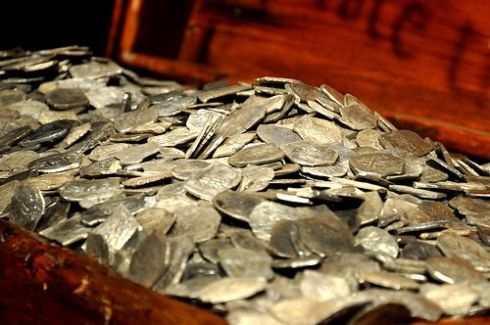 d have become a European colonial superpower. Each quantity of silver or gold mined in the colonial mines around Mexico City, Potosi, Lima, etc. and sent to the mint for smelting and/or coining would have a tax, a fifth (or quinto), charged by the crown and hence referred to as the “king’s fifth.” It all adds up after a while, and the king didn’t appreciate being cheated out of any of his money.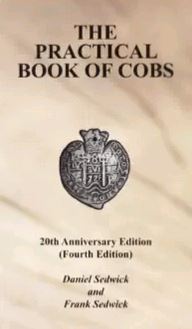
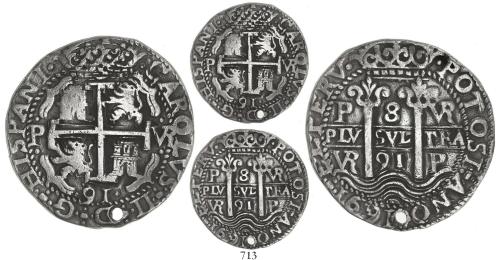
 in you just bought is genuine, weight it! If it’s significantly underweight, then there’s your red flag. The BIG exception is shipwreck silver coins. Silver corrodes in salt water so many shipwreck cobs are underweight, sometimes significantly. This is not true of gold which comes out of the ocean as intact as the day it went down with the ship.


 SEDWICKCOINS BLOG