
One of the more unusual collections in our Treasure, World Coin & Paper Money Auction 40 asks us to look at Mexican cobs in a slightly different way. Normally we begin with the date, assayer, mintmark, shield, cross and other elements impressed by the dies. With these coins, however, the first thing that attracts our attention is the silver itself.
The Special Collection of Odd Shaped Mexican Cobs consists of 67 pieces assembled over more than fifteen years for the extraordinary forms of their planchets. The collection ranges from the 1/2 real through the 8 reales denomination and focuses mainly on Mexico City issues of Charles II and Philip V.
Some are long and narrow. Others terminate in knobs, points or sweeping projections. Several have natural bubble holes or voids in the silver. In a few exceptional cases the resulting shapes happen to resemble recognizable animals or objects.
These forms are much more than curiosities. They preserve direct evidence of the process by which the silver was prepared before striking.
Daniel Frank Sedwick discussed this subject in “Straps for Cash”, originally published in our Treasure Auction 7 catalog. The evidence indicates that silver for cob coinage was prepared in relatively flat strips or straps known as rieles. Molten silver spread irregularly as it cooled, and individual blanks were then separated and adjusted according to weight.
The natural sides and ends of the original strip could therefore survive into the finished coin. Straight cuts, hammered points, natural curves, indentations and bubble holes can all tell us something about the preparation of the planchet before it was placed between the dies.
This also helps explain the traditional expression cabo de barra, particularly appropriate for certain terminal pieces that appear to have come from the end of a silver strap.
The collection was also recently discussed by the 1715 Fleet Society, following its October 2026 Treasure of the Month feature highlighting two Fleet related pieces from the group.
As explained in our catalog introduction, the collection was organized using a shape classification from S1 through S4. The collector also assigned descriptive names to many individual pieces. We retain those names below only where they belong, alongside the collector’s original tag designation.
Here are some of the pieces we find particularly memorable.
Lot 584. Mexico City, cob 8 reales, 1701 (L), posthumous Charles II
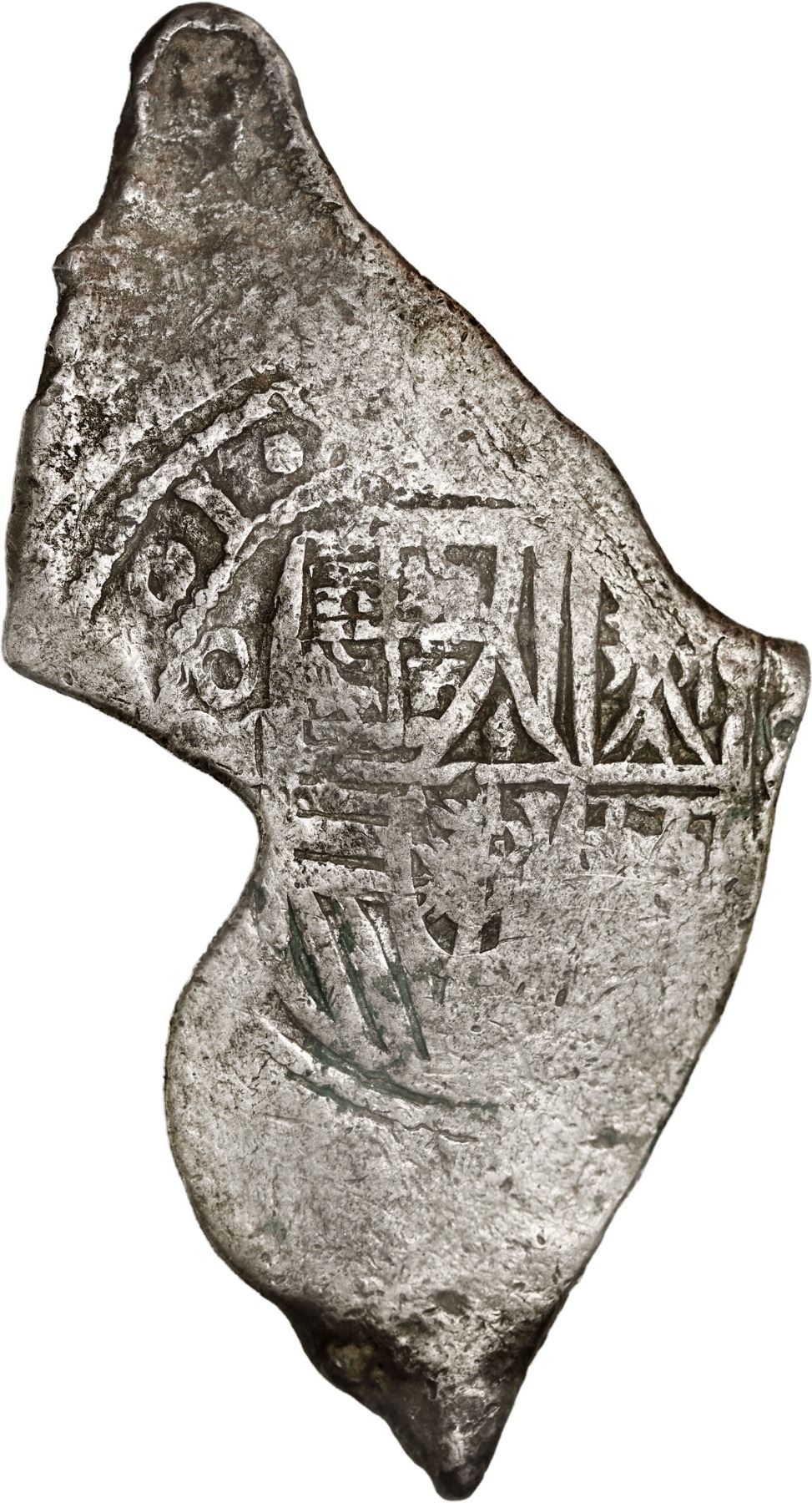
This coin is unusual even before its shape enters the discussion. The bold full 701 is surely one of the clearest examples of the posthumous 1701 issue we have encountered. The mintmark is also full, while the assayer is off the flan because of the extreme curvature of the planchet.
The irregular outline is long, curved and pointed at the ends. Despite the shape, the coin retains a full shield and cross, with particularly well detailed castles.
With collector tag M S3 39 (“New Jersey”). Pedigreed to the Plvs Vltra Collection, Soler y Llach auction of October 2021, lot 1381, acquired from J. A. Herrero in July 1991.
Lot 585. Mexico City, cob 8 reales, Charles II, assayer L

At 26.94 grams, this coin is recognizable immediately because of the long curved projection extending from one end. The central body is worn, with peripheral flatness, but portions of both shield and cross remain visible and the surfaces are attractively toned.
The Louis Hudson pedigree is particularly appropriate, as Hudson was known for collecting cobs whose natural or altered shapes suggested animals.
With collector tag M S4 23 (“Silver Cat”). Pedigreed to the Louis Hudson Collection.
Lot 586. Mexico City, cob 8 reales, Charles II, assayer L
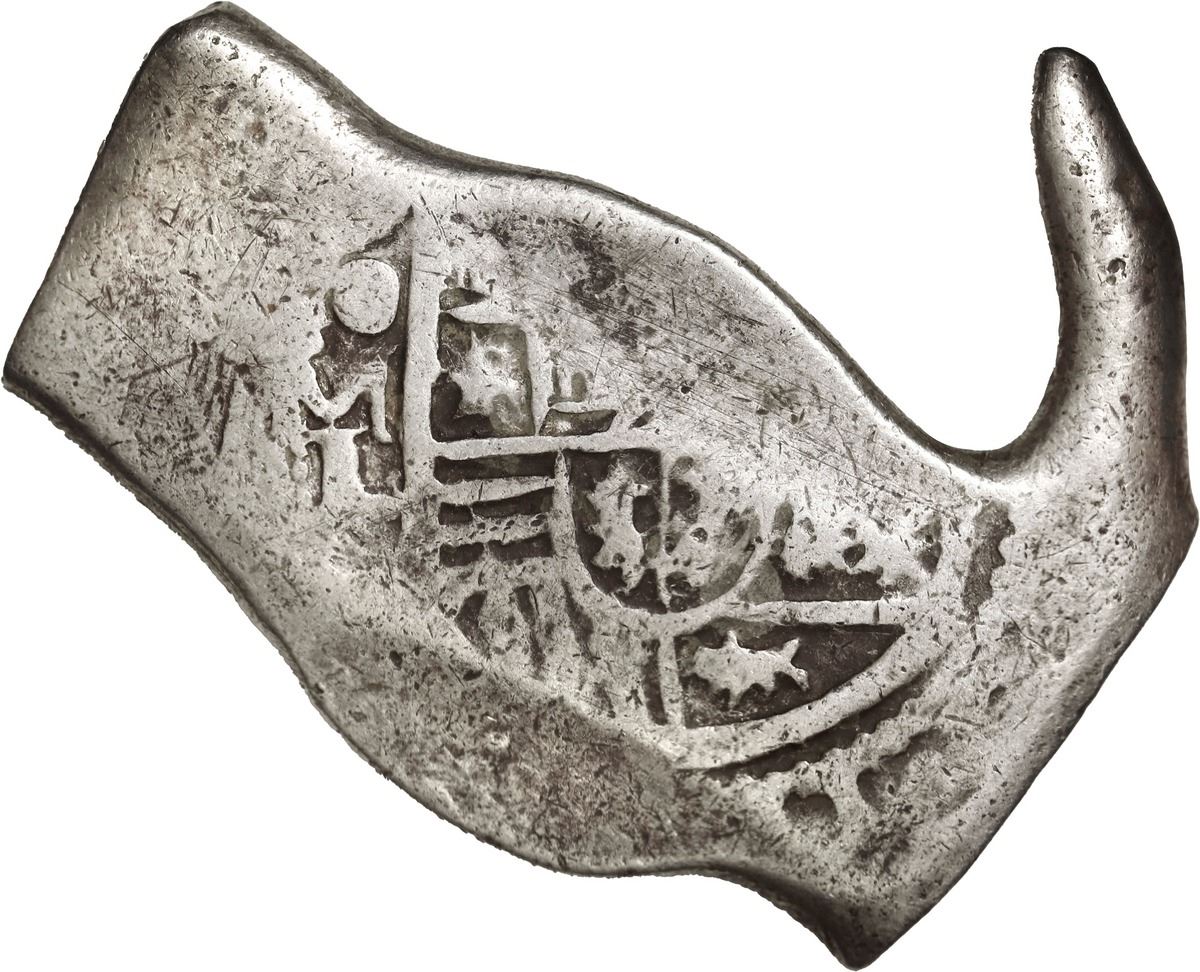
This 26.54 gram coin has a narrow barrel shaped body from which an exceptionally long projection extends at one end. The mintmark and assayer are bold and complete, most of the cross remains present and the king’s ordinal appears outside the shield.
The projection makes this one of the clearest pieces for visualizing just how irregular the original silver could be before striking.
With collector tag M S4 15 (“Rhino”). Pedigreed to the Richard A. Long auction of August 1984.
Lot 589. Mexico City, cob 8 reales, Charles II, assayer L, with Guatemala countermark
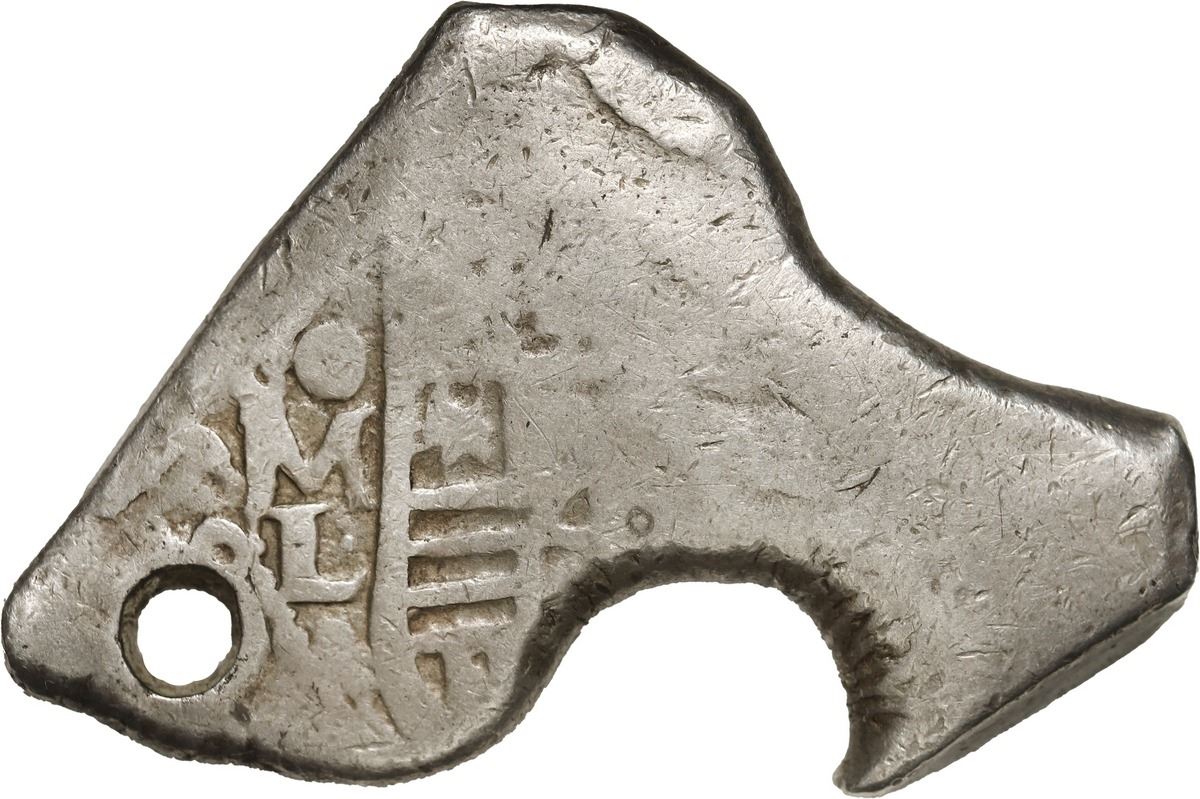
Here the original irregular planchet is only the beginning of the story. The coin later received a Guatemala sun over mountains countermark, giving us two separate stages in the life of the same piece of silver.
The odd outline belongs to its manufacture at Mexico City. The later countermark records its continued monetary use generations afterward.
Lot 591. Mexico City, cob 8 reales, Charles II, assayer not visible
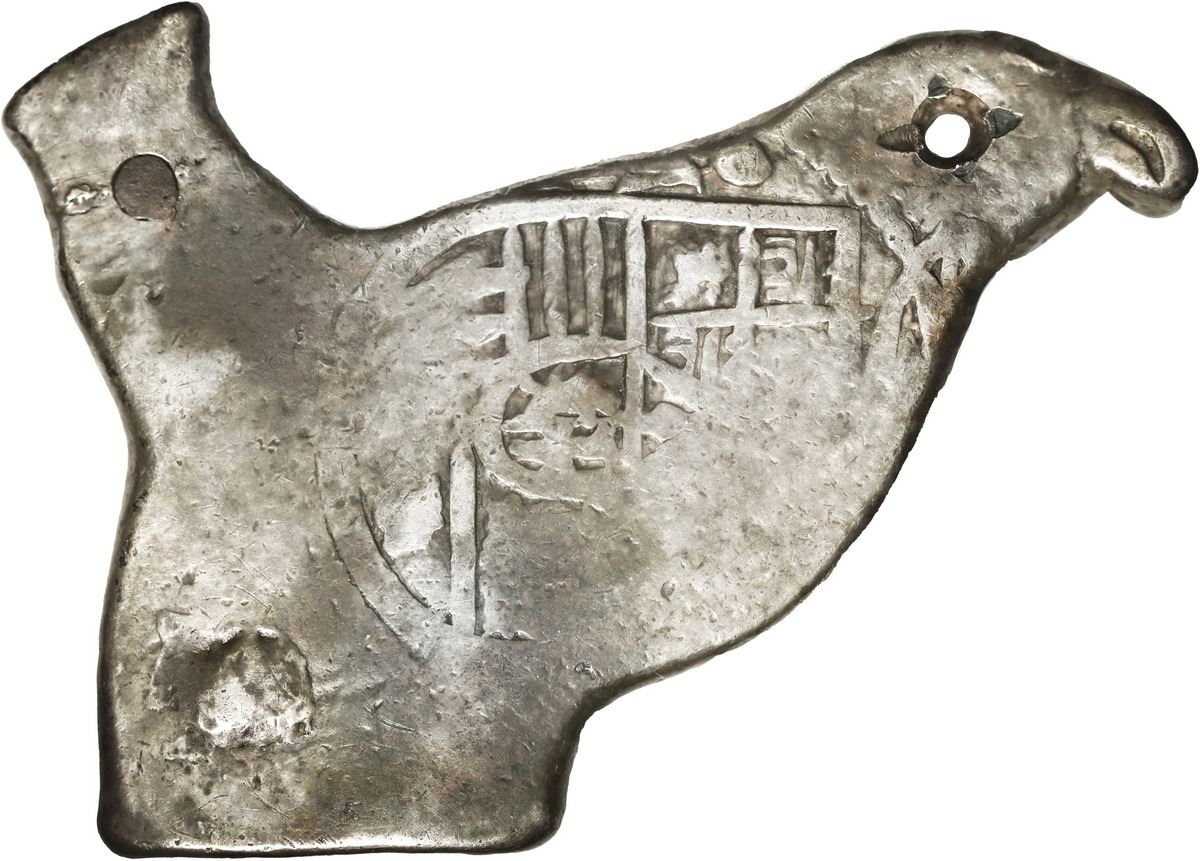
This is one of the great character cobs of the collection. The 27.46 gram coin naturally forms the profile of a bird or parrot, with a pronounced curved beak at one end and an erect tail at the other.
More important, the coin remains full weight. The profile was not created later by cutting away silver. The principal later modification is the remarkably well placed piercing where the bird’s eye would appear.
The coin was formerly in the Louis Hudson Collection and was illustrated in The Practical Book of Cobs.
Lot 592. Mexico City, cob 8 reales, Charles II, ex 1715 Fleet
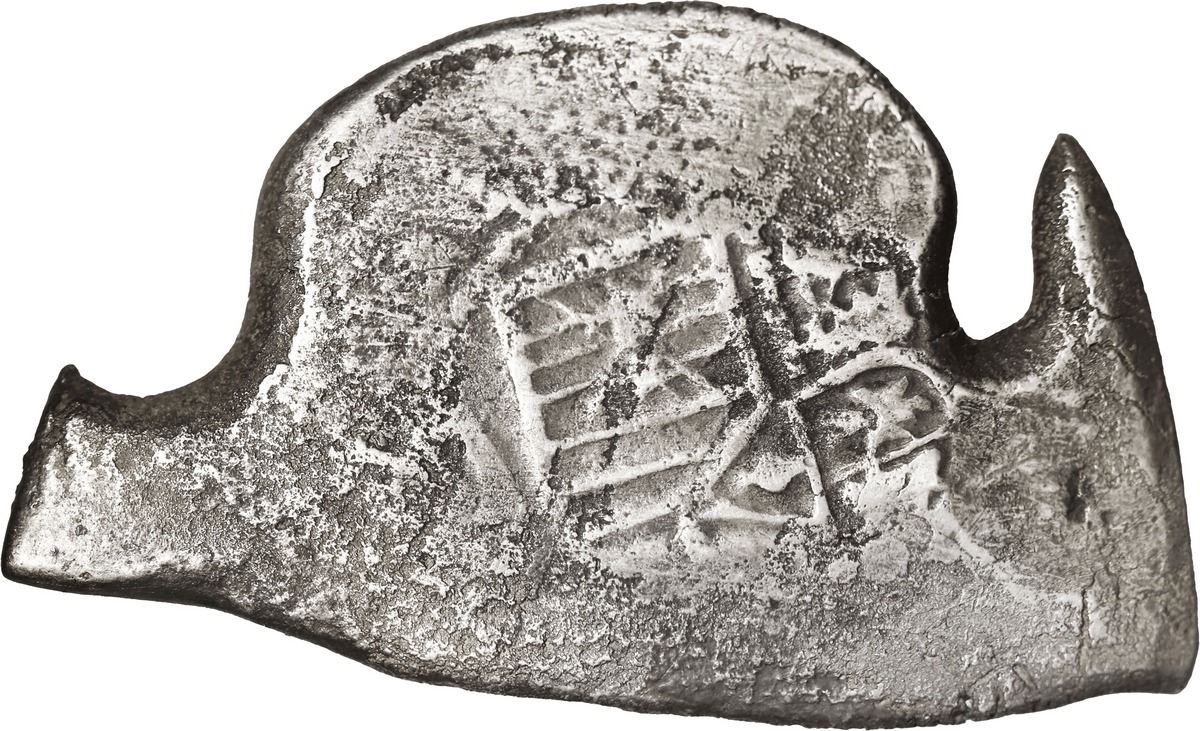
The 1715 Fleet Society recently selected this coin for its October Treasure of the Month feature. It weighs 23.11 grams and combines a highly unusual natural planchet with an important shipwreck pedigree.
The cross is choice, much of the shield remains visible and the obverse shows only light surface corrosion.
With collector tag M S4 20 (“Snail”). From the 1715 Fleet, John Bamberg division, and pedigreed to Sedwick Auction 9, lot 818.
Lot 593. Mexico City, cob 8 reales, Charles II, assayer not visible
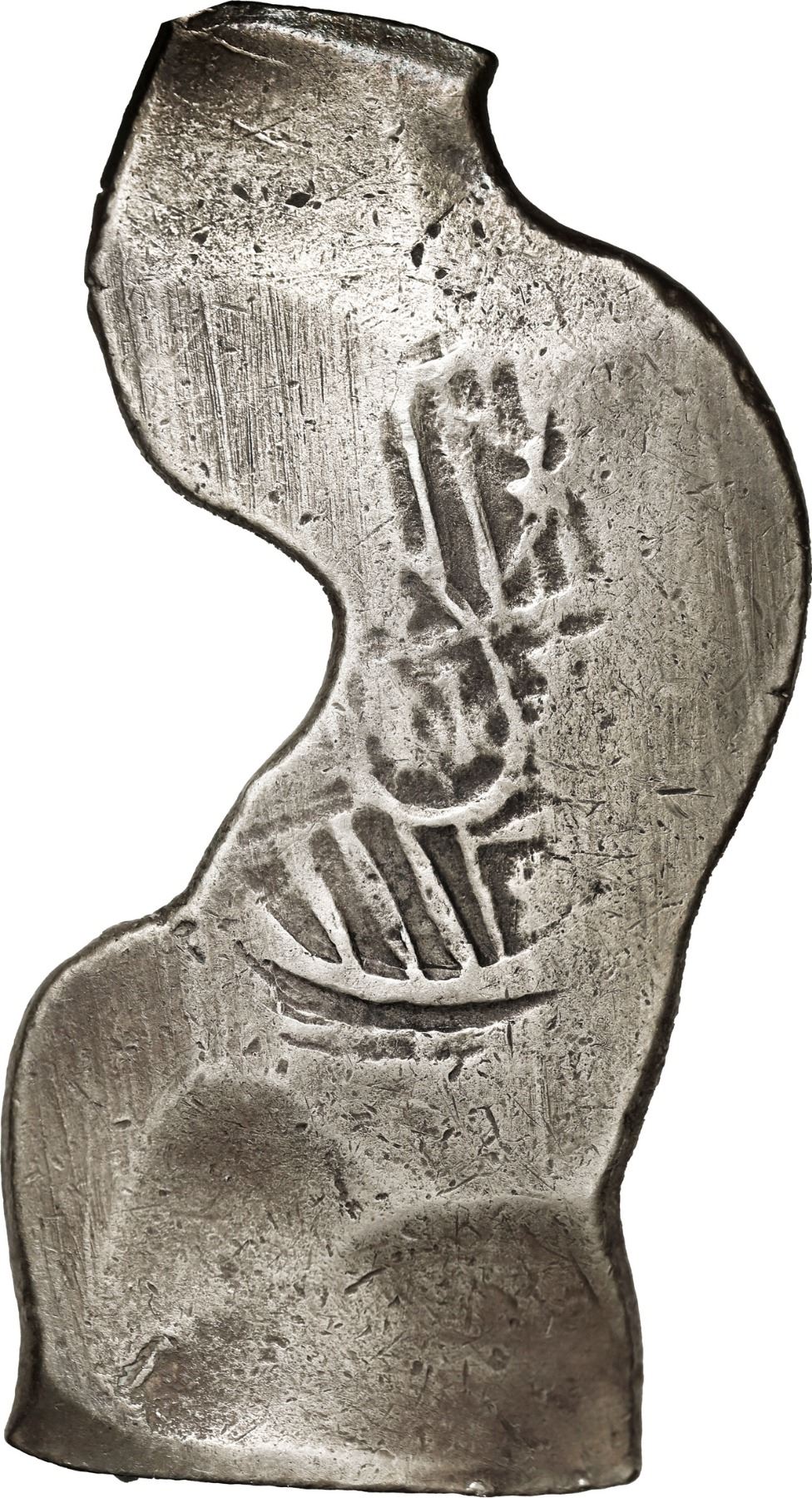
At 27.59 grams this is essentially a full weight coin, yet the planchet stretches into an exceptionally long natural curve. Most of the shield and cross are visible, together with a bold cross pattée in the surrounding legend.
We described it in the catalog as definitely one of the most dramatic shapes in the collection, and we see no reason to change that assessment.
With collector tag M S4 19 (“Worm”).
Lot 601. Mexico City, cob 8 reales, Charles II, with Guatemala countermark
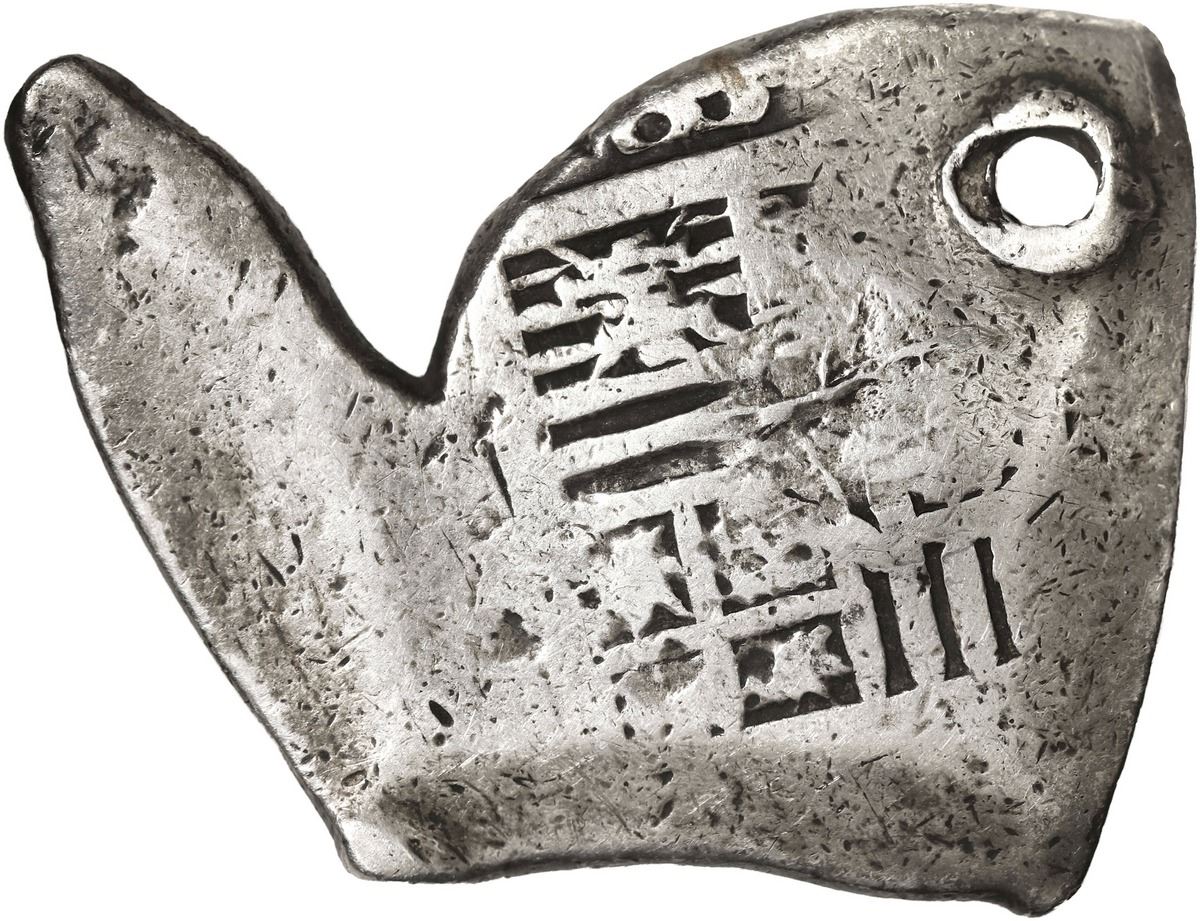
This full weight 27.16 gram coin possesses a long, thick projection extending from its otherwise squarish body. A crude old hole occupies one corner while the later Guatemala sun over mountains countermark is strongly impressed.
The original planchet, subsequent piercing and later countermark make this a particularly good example of the several different histories that can accumulate on one cob.
Lot 607. Mexico City, cob 8 reales, Charles II, assayer not visible
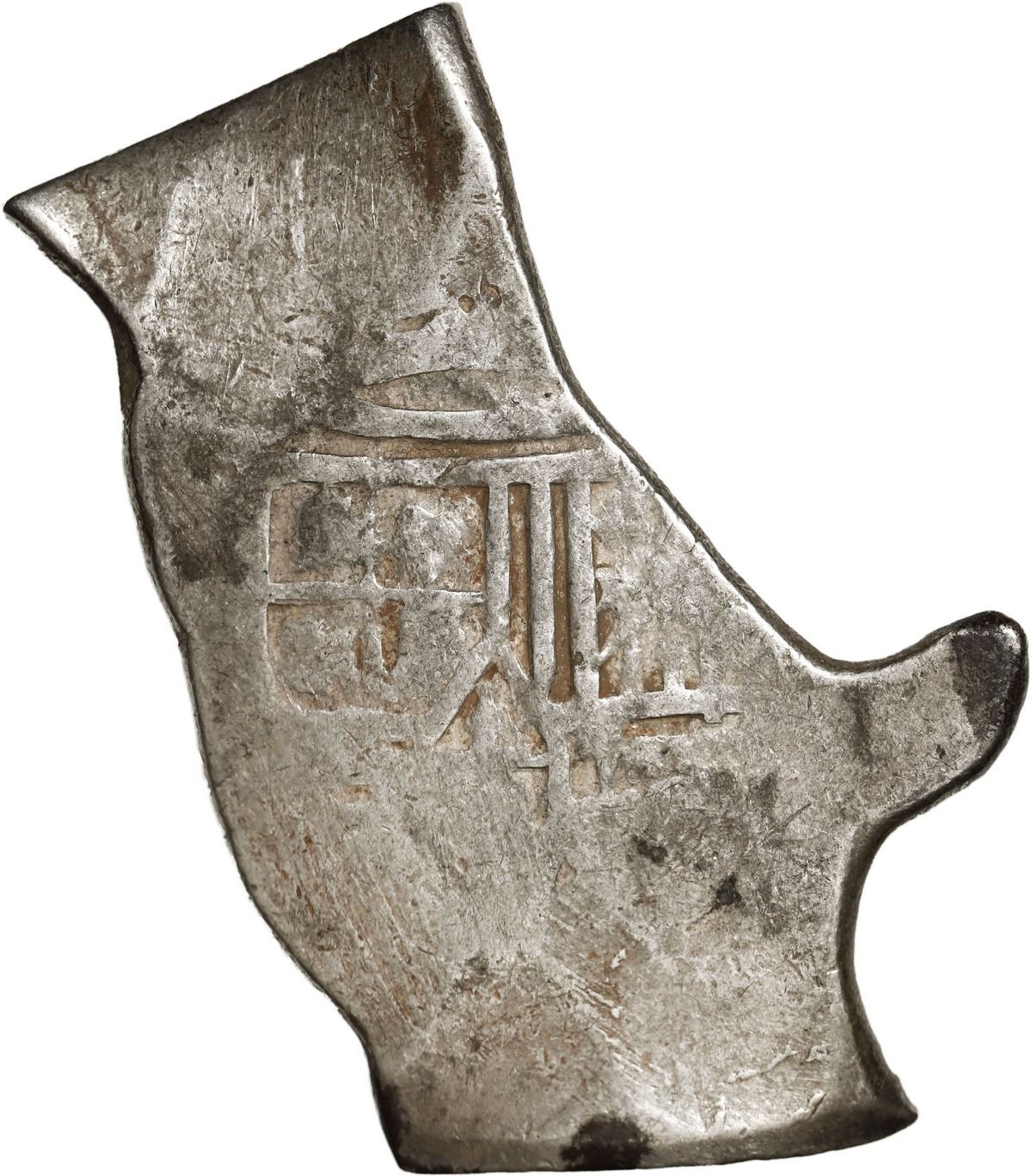
The basic shape is a long rectangle, but a pronounced lateral projection interrupts one side. At 24.71 grams, the coin retains most of its cross and roughly half of the shield.
With collector tag M S4 07 (“Cowboy Boot”).
Lot 608. Mexico City, cob 8 reales, Charles II, with Guatemala countermark
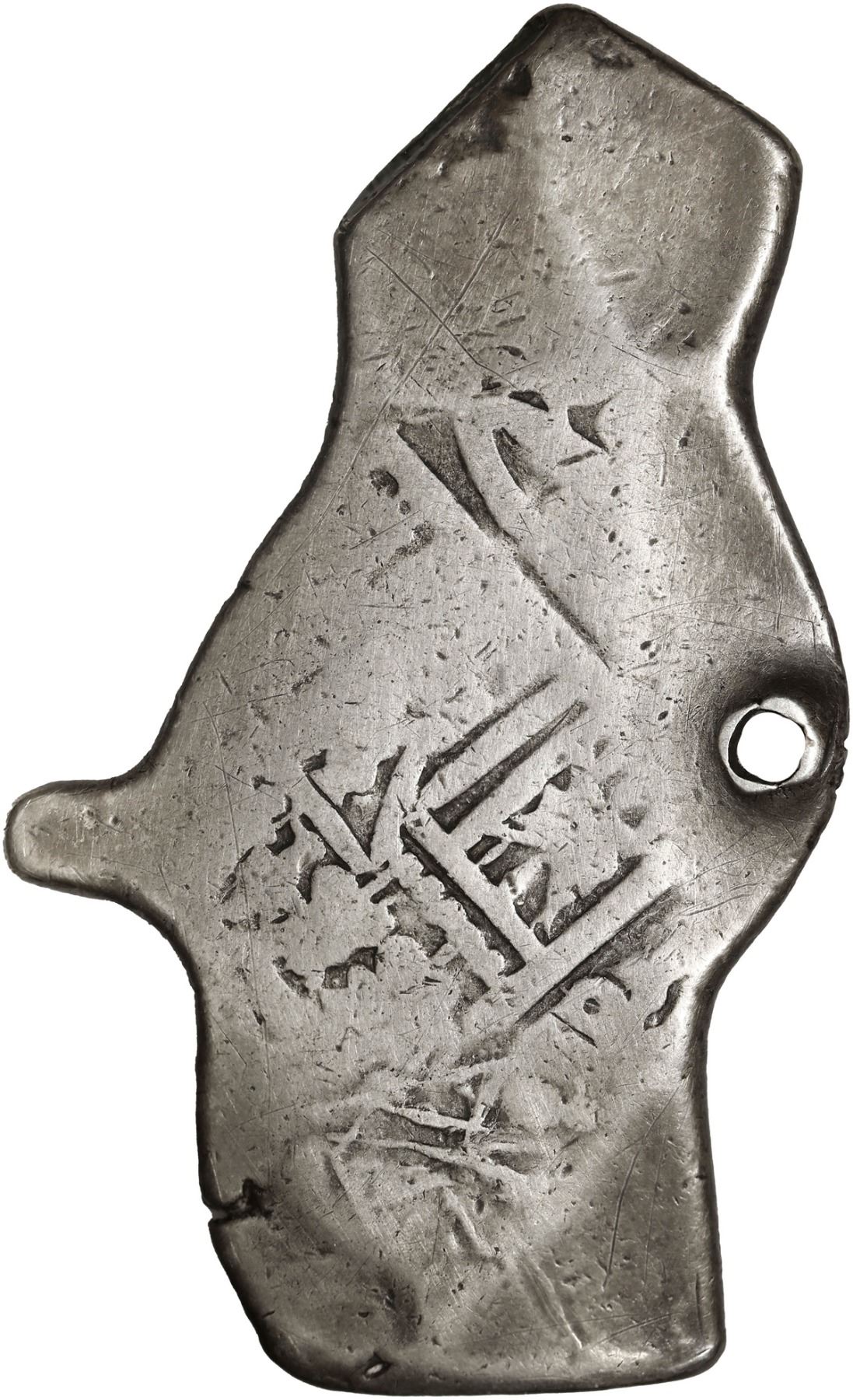
This 24.50 gram cob is long and slightly rectangular, with curving sides, a projection at one end and an old piercing opposite it.
The Guatemala sun over mountains countermark is especially bold, impressed into a flat peripheral area beside the cross.
Lot 620. Mexico City, cob 8 reales, Philip V, style of 1712 to 1714
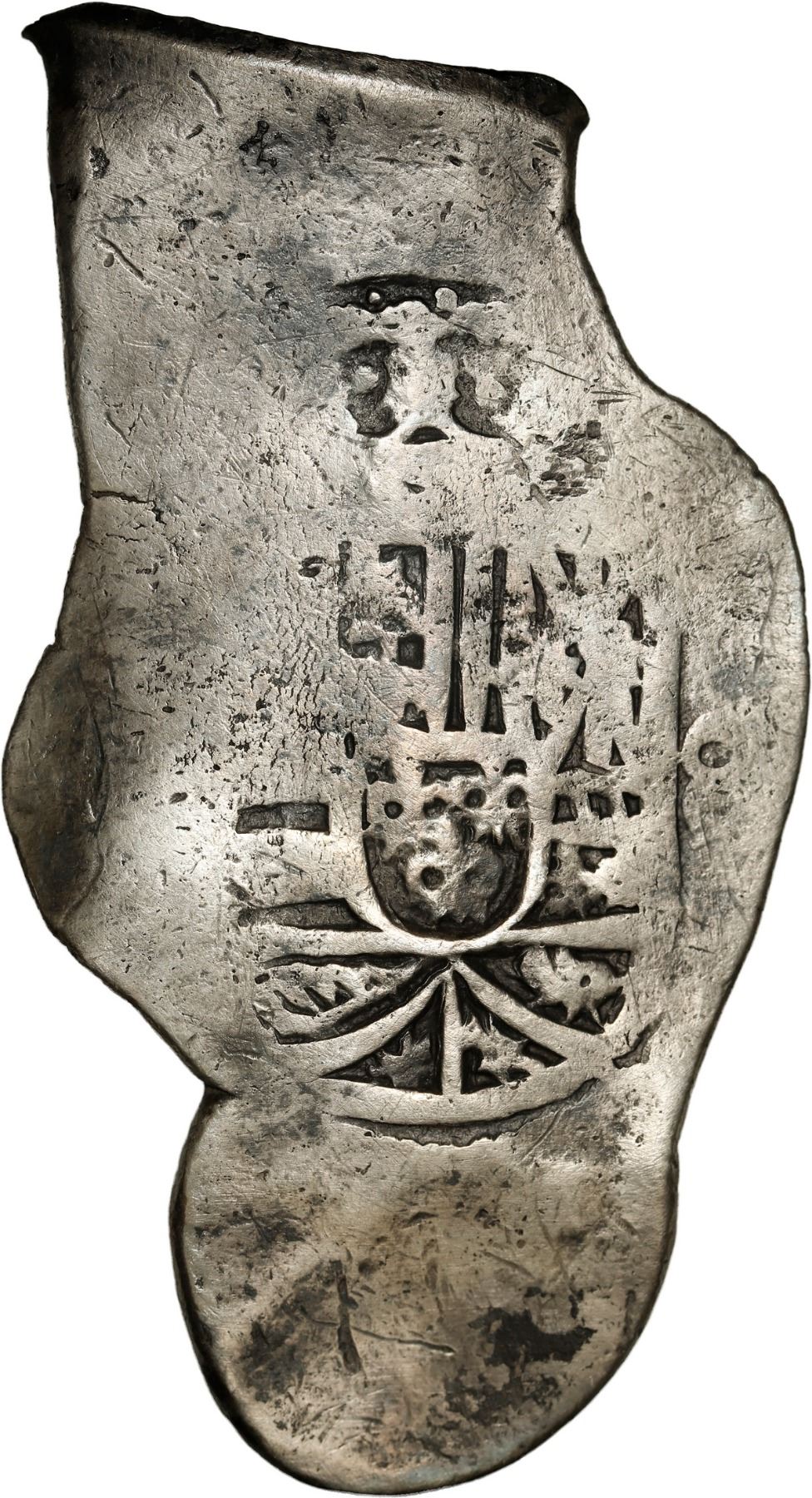
This 27.15 gram piece is particularly useful when considering the old term cabo de barra. Three sides are naturally rounded while the remaining side is comparatively straight, suggesting a terminal portion separated from a longer strap of silver.
The shield is nearly full, the cross is weaker and the denomination 8 is visible.
With collector tag M S2 41 (“Powder Flask”).
Lot 628. Mexico City, cob 8 reales, 1729 R
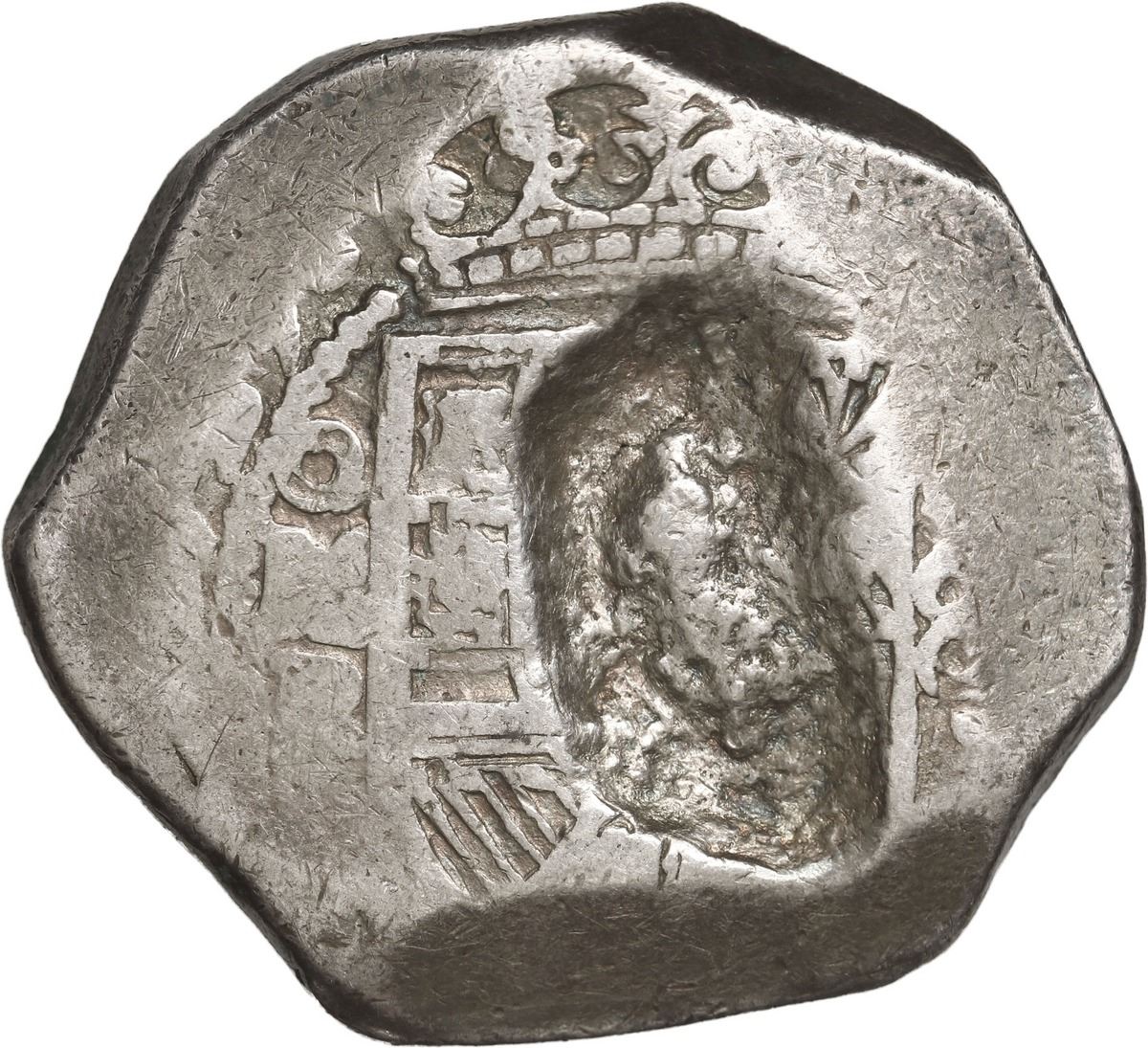
Not every important irregularity in the collection occurs at the edge. This 26.79 gram coin has a large natural depression in the center of the shield side.
Most of the crown is present, the mintmark and assayer are clear and the cross is full with a sunken center. The piece demonstrates that irregularities created during cooling could remain inside the body of the finished blank as well as around its perimeter.
With collector tag, including the collector name “Moon Step.”
Lot 631. Mexico City, cob 8 reales, Philip V, style of 1714 to 1733
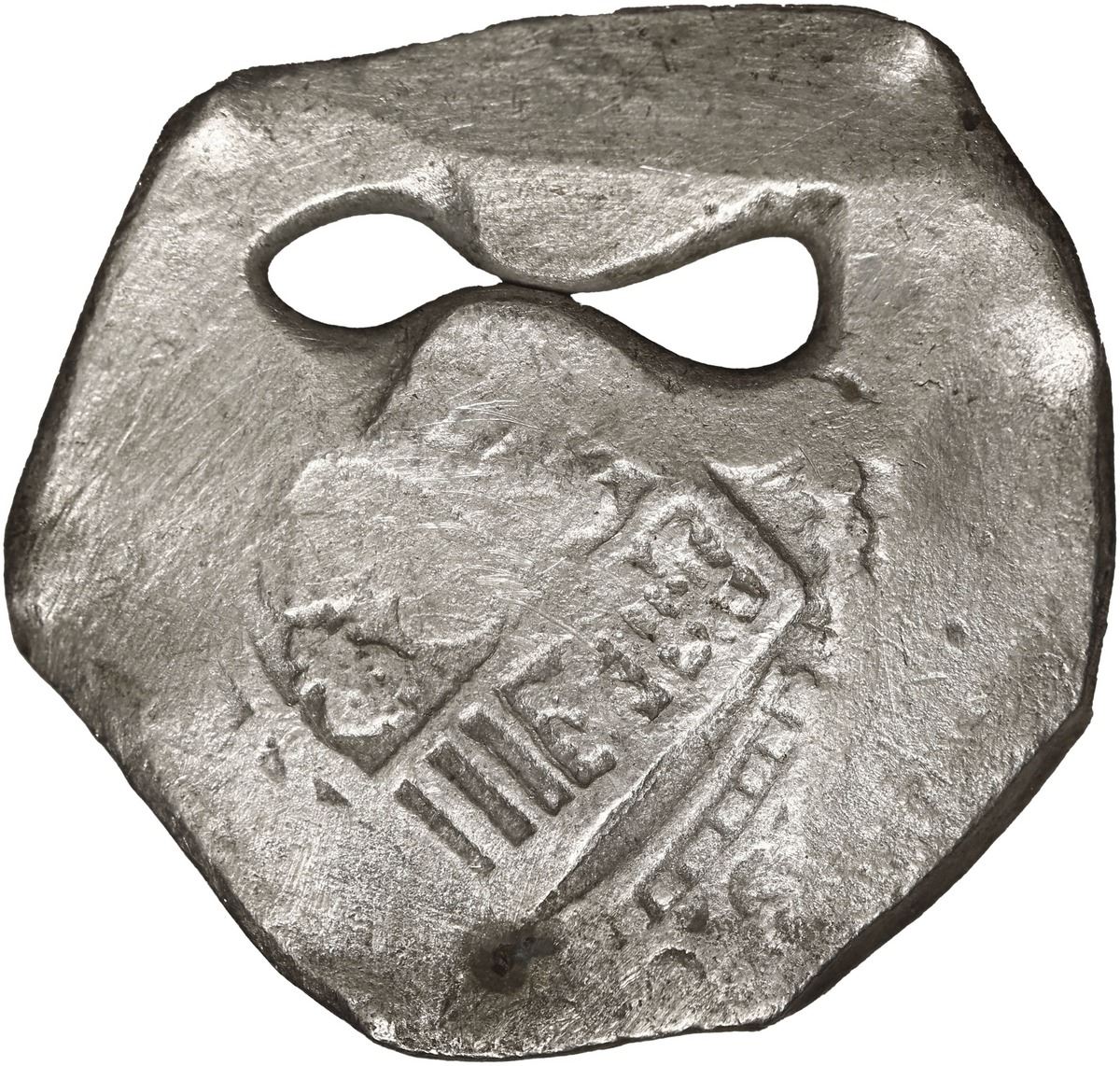
This 26.30 gram cob contains a narrow double bubble void near the edge. The feature is natural and represents another surviving defect from the original silver blank.
The surfaces are comparatively high grade even though the strike itself is weak.
With collector tag, including the collector name “Donatello.”
Lot 642. Mexico City, cob 4 reales, Philip V, style of 1705 to 1712, ex 1715 Fleet
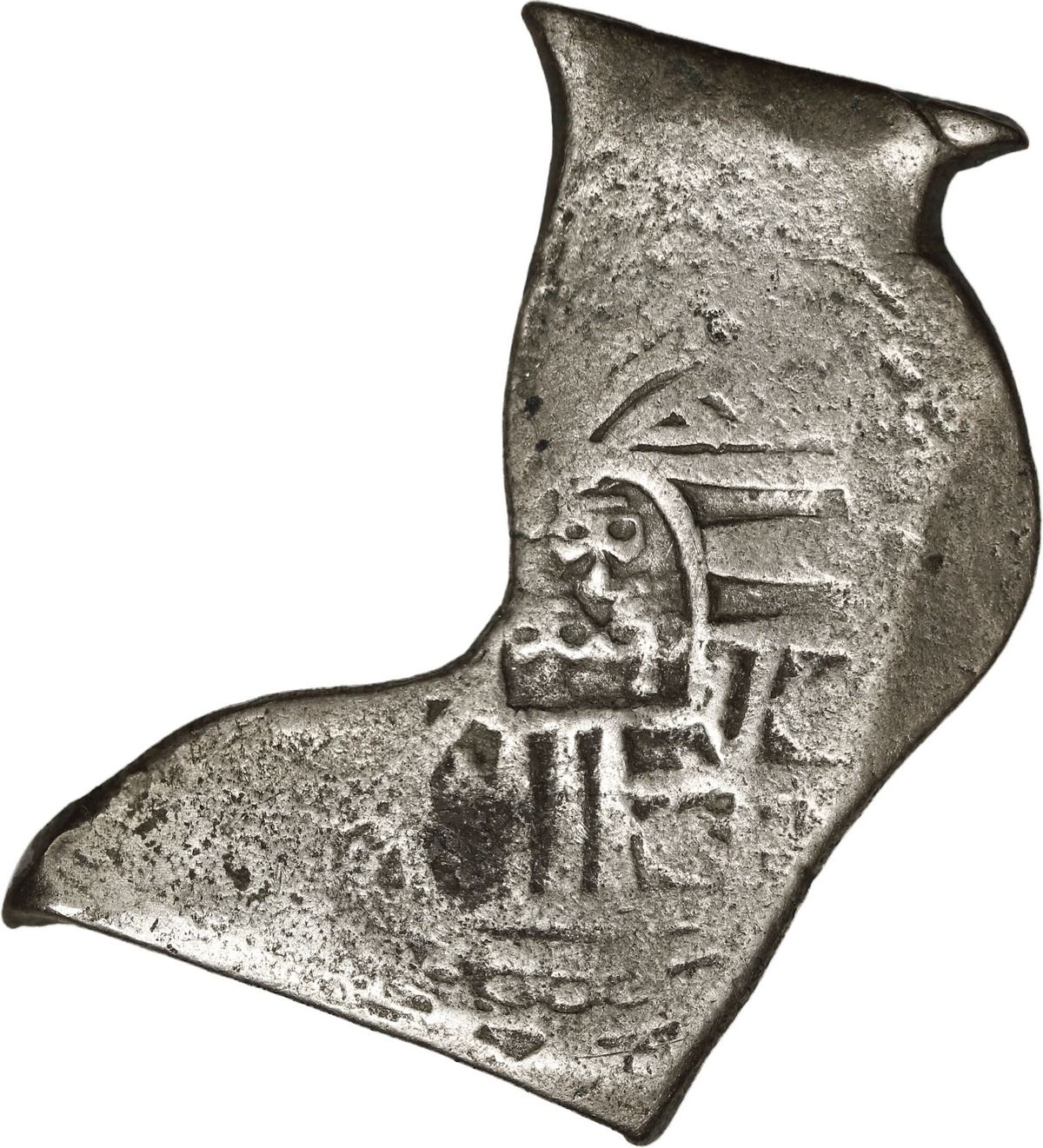
This is one of the most historically interesting coins in the collection. The narrow, curving 12.90 gram planchet still carries a good full cross and much of the shield.
The coin was recovered from the 1715 Fleet and comes from Lou Ullian, one of the original Real Eight Company members. Its reported association with Ullian’s famous forty pound clump gives it a direct connection with the early history of modern Fleet salvage.
With collector tag, including the collector name “Cardinal.” Ex 1715 Fleet and ex Lou Ullian.
Lot 643. Mexico City, cob 4 reales, Philip V, style of 1712 to 1714
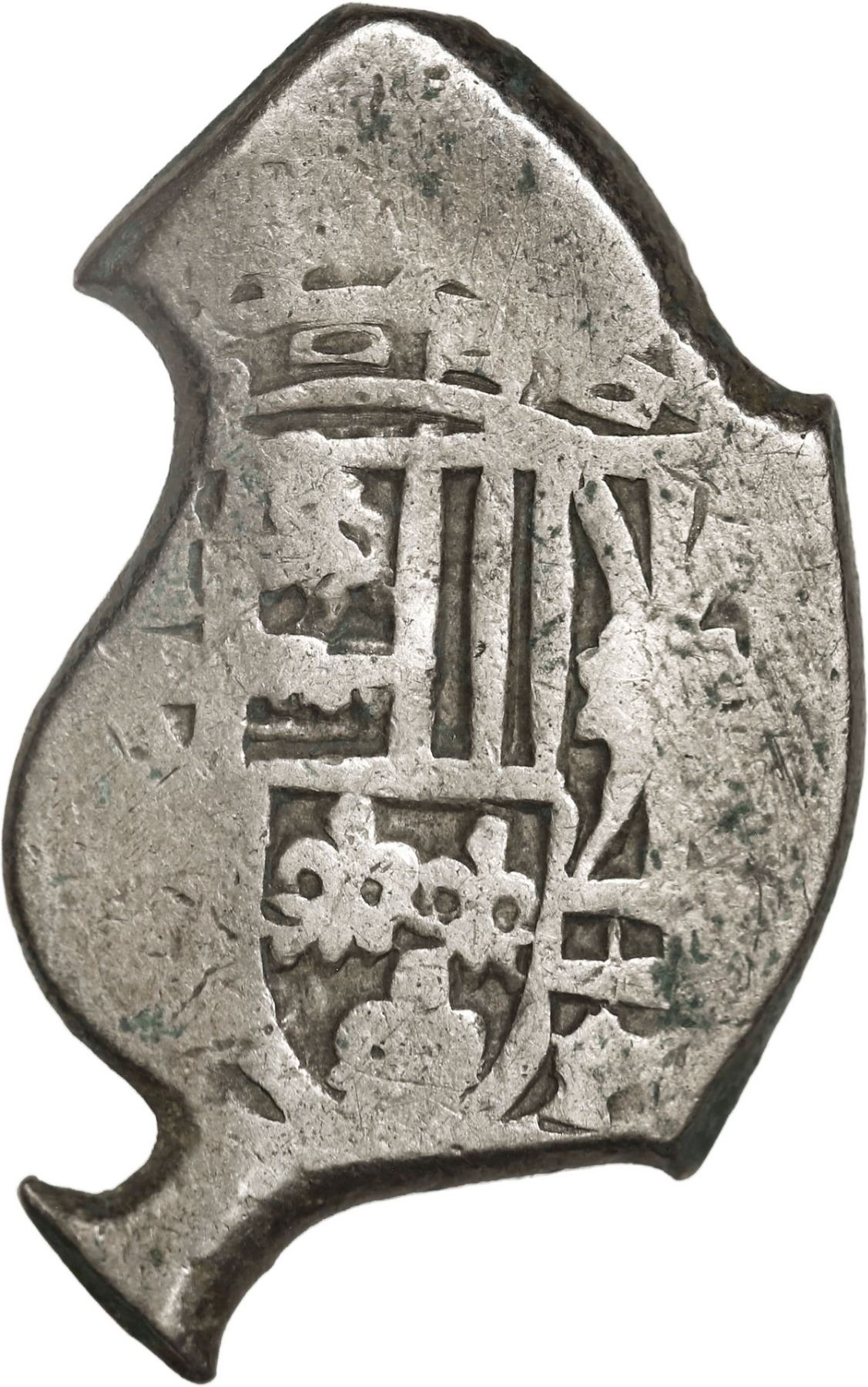
This 10.91 gram 4 reales forms a broad curve terminating in a flat ended projection. The coin retains most of its shield and cross and shows that the same irregular planchet preparation found among the 8 reales also affected smaller denominations.
With collector tag M S3 57 (“Little Penguin”).
Lot 644. Mexico City, cob 2 reales, Charles II, assayer not visible
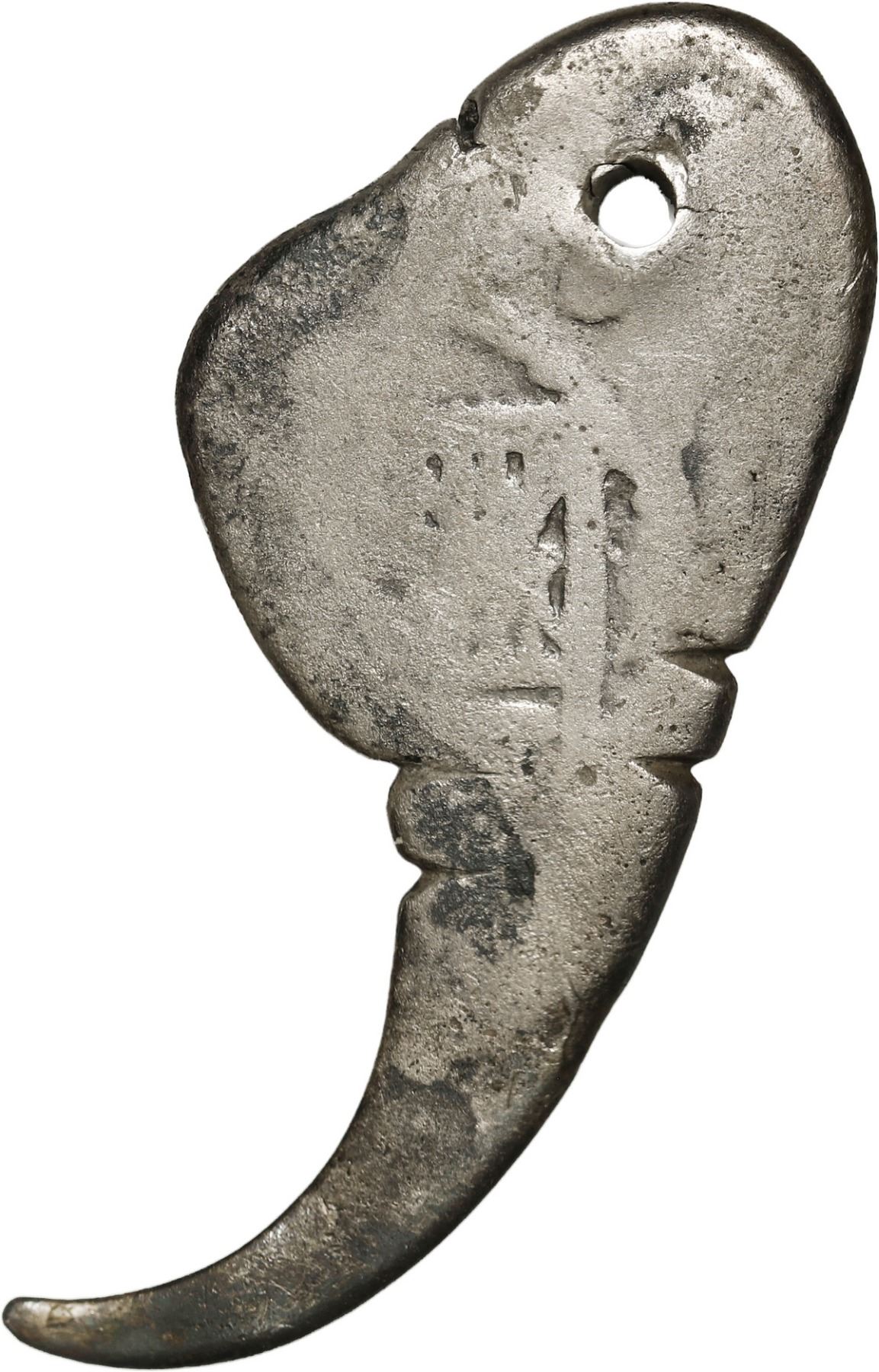
At only 5.30 grams this is one of the smallest pieces selected here, yet its long curved projection is one of the most dramatic.
The coin is heavily worn, with an old piercing at the opposite end and small notches near the tip of the extension. Whatever use it may have seen after leaving the mint, the underlying form remains another striking example of the variety possible among Mexican cob planchets.
With collector tag M S4 59 (“Sailor’s Toothpick”). Pedigreed to the Isaac Rudman Collection.
Reading the Silver
It is easy to enjoy these pieces simply for the accidental forms created by their unusual outlines. We do too. But the real value of the collection becomes apparent when the shapes are treated as evidence.
A straight edge can represent a cut. A broad rounded edge can preserve part of the natural side of the original silver strap. A pointed or hammered end can show adjustment toward the proper weight. Bubble holes and pits record imperfections that developed before striking.
Other histories were added later. Some coins crossed the Atlantic and disappeared in shipwrecks. Some were pierced. Others received countermarks after decades or even more than a century of circulation.
That combination is what makes this collection particularly interesting to us. The dies tell us what the mint intended to place on the coin. The planchets tell us how the mint actually made it.
For this collection, we look first at the silver.
Auction Information
Sedwick & Associates Treasure, World Coin & Paper Money Auction 40
Auction dates: November 5 through 7, 2026
Location: Winter Park, Florida
Total sale: Nearly 1,950 lots offered across six sessions
Buyer’s premium: 22 percent
The Special Collection of Odd Shaped Mexican Cobs is offered in Session 3, Cobs of Mexico, Lima & Potosí, beginning Thursday, November 5, 2026, at 6:00 PM Eastern Time.
The pieces discussed above represent only a selection of the collection. We encourage collectors to browse the complete group in the Auction 40 catalog, where the unusual planchets can be compared across denominations, periods and individual minting characteristics.
New bidders should register in advance. Our auction terms request that new bidders register at least 72 hours before the auction so references and bidding approval can be completed when necessary.
A buyer’s premium of 22 percent is added to the winning bid. The online auction listing remains the definitive source for descriptions, corrections, bidding status and any updates made before the lots are sold.
Sedwick & Associates, LLC
P.O. Box 1964
Winter Park, Florida 32790
United States
407 975 3325
Browse Treasure, World Coin & Paper Money Auction 40 and bid online
Further Reading
Daniel Frank Sedwick, “Straps for Cash”
1715 Fleet Society, October 2026 Treasure of the Month
1715 Fleet Society, “Special Collection of Odd Shaped Mexican Cobs”


Leave a Reply